Topics
- Article
- Health & Wellness
- Biomarkers
- Recovery
The Biomarkers That Define Your Performance, Sleep, and Recovery: A Conversation with Dr. Kristen Holmes

WHOOP has long helped members understand how their behaviors impact sleep, recovery, and performance. Now, with WHOOP Advanced Labs, you can see your daily health data alongside your lab results — integrating 65 biomarkers into your continuous health story.
To understand how this integration is redefining human performance, we sat down with Dr. Kristen Holmes, PhD, WHOOP Global Head of Human Performance, Principal Scientist.
Why Biomarkers Matter
For someone new to this concept, what are biomarkers — and why do they matter for health and performance?
“Biomarkers are objective, quantifiable measures that tell you what’s happening inside your body” explains Dr. Holmes. “Each marker is a window into how well your body is adapting to life’s demands, and they help you ask, which system needs attention right now?”
Paired with 24/7 biometrics, biomarkers give members context and precision. While your WHOOP Recovery Score or Strain quantifies daily stress, biomarkers can help pinpoint inflammation, hormonal fluctuations, or metabolic stress that might explain changes in recovery.
“WHOOP already gives you daily as well as trend views of physiological functioning visualized through the lens of strain, sleep, recovery and stress. Biomarkers go a step deeper to help validate, explain, and contextualize those signals. Is it inflammation? Hormonal fluctuations? Metabolic stress? Biomarkers unlock the ability for more precise interventions.”
Biomarkers That Drive Performance
Performance is not only built in the gym, but also in recovery, nutrition, and physiological balance. Dr. Holmes highlights several key indicators of physical potential and adaptation:
- Testosterone (T) — Reflects anabolic balance and overall physiological readiness; levels can be influenced by sleep deprivation, illness, or low energy availability.
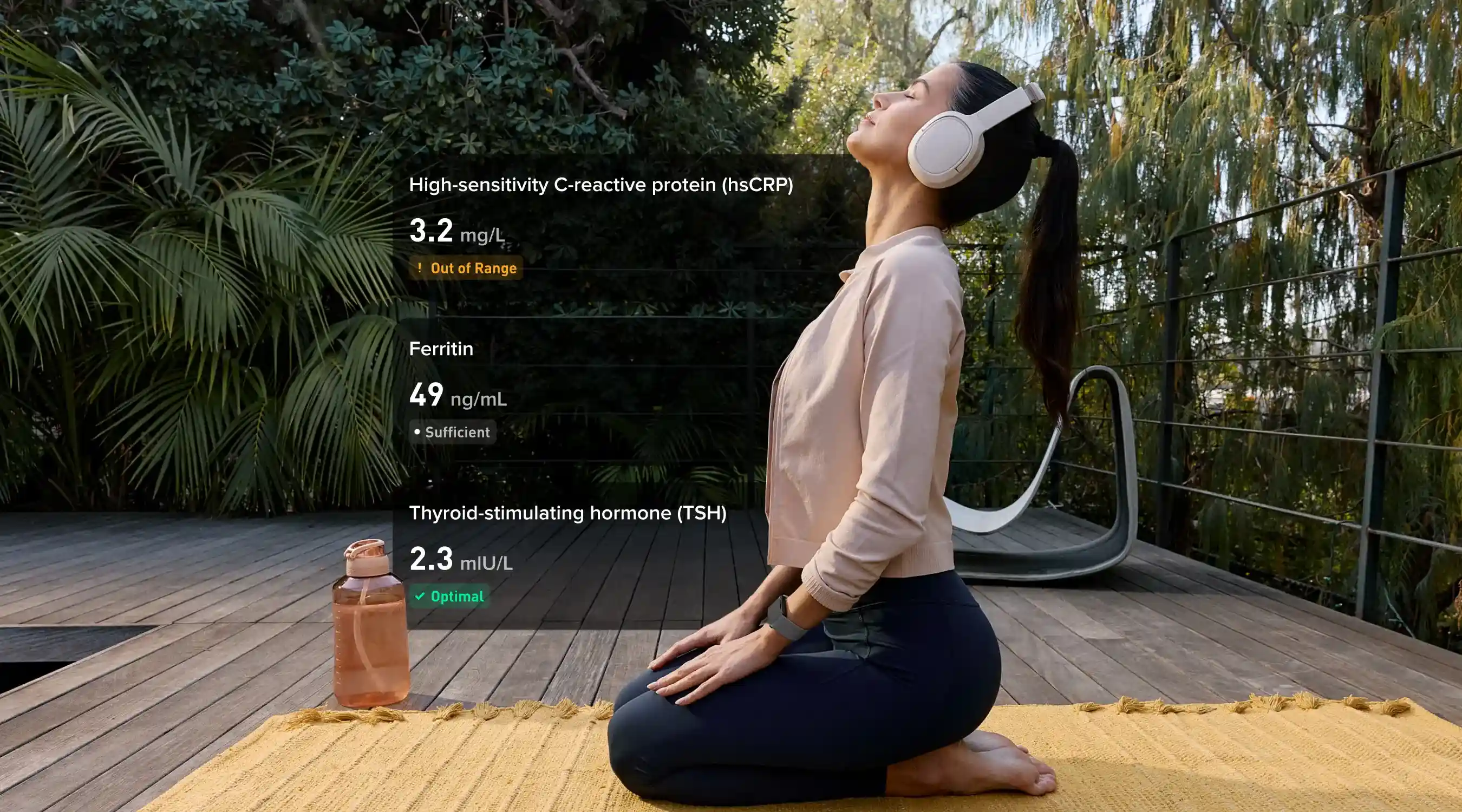
- Ferritin — Indicates iron storage and supports oxygen transport, both critical for aerobic performance.
- hs-CRP — Marker of systemic inflammation.
- HbA1c — Tracks long-term blood glucose regulation how effectively you’re managing metabolic stress.
Together, they tell a story about energy potential — the body’s capacity to meet and recover from stress.
Dr. Holmes says that “in female athletes, if testosterone and ferritin levels are off, energy and motivation will likely be low. They could check many of the clinical boxes for depressive symptoms — low mood, lack of interest, fatigue. To find out that the root of the problem was iron deficiency.”
Biomarkers That Influence Sleep
Sleep is the foundation of adaptation — and these biomarkers reveal why some nights restore you, while others don’t. They reflect the systems that regulate recovery, circadian rhythm, and long-term health.
- Vitamin D — Supports melatonin production and reduces inflammation, promoting deeper, more consistent sleep.
- TSH (Thyroid-Stimulating Hormone) — Reflects thyroid function that regulates metabolism and circadian rhythm, helping stabilize sleep and energy levels.
- Cortisol — Balances the body’s stress response to support deeper sleep and protect muscle and cardiovascular health.
- BUN/Creatinine Ratio — Indicates hydration and kidney function, both key for restorative sleep and recovery.
- Potassium — Stabilizes nerve and muscle function, supporting uninterrupted sleep and efficient recovery.
- Ferritin — Reflects iron stores that enable oxygen transport and energy production, improving sleep quality and reducing fatigue.
- Hemoglobin — Carries oxygen throughout the body, supporting sleep quality, aerobic performance, and recovery.
Tracking these biomarkers with WHOOP Advanced Labs helps uncover what’s influencing your sleep — from stress and hydration to nutrient balance — so you can make adjustments that support restorative rest and long-term health.
Biomarkers That Reflect Recovery
Recovery is multi-systemic — and WHOOP Advanced Labs captures that complexity.
Dr. Holmes says that “Recovery overnight is best judged not by one metric, but by how different systems behave together. Which is why WHOOP and Advanced Labs is such a powerful combination.”
“Trends over time carry more weight than any single night’s number — if HRV is steadily declining or resting heart rate drifting upward, it’s a warning sign. And to make sense of the biomarkers, you should always interpret them in context — your baseline, your recent training load, life circumstances and constraints,” Dr. Holmes adds.
Key biomarkers include:
- CRP (C-Reactive Protein) — A marker of systemic inflammation. Elevated levels can indicate your body is under stress or struggling to repair after intense training or illness.
- Nighttime cortisol suppression — Reflects the body’s ability to regulate stress. Balanced levels overnight signal effective recovery for the next day’s strain.
- Ferritin — Represents iron stores that support oxygen transport and energy metabolism, helping sustain recovery and reduce fatigue.
- Vitamin D — Supports immune resilience, inflammation control, and muscle repair — all essential for recovery and long-term adaptation.
When these systems stay in sync, your body is truly recovering. But if HRV declines or resting heart rate rises alongside elevated inflammation, it can be a sign that stress is winning the recovery race — often before you even feel it.
The Future of Biomarker Science
Dr. Holmes sees this convergence of wearable and biological data as part of a new paradigm in predictive, personalized coaching:
“Biomarkers will help bridge performance and longevity, ensuring that your best years are not just your prime but your continued prime.”
For anyone ready to start, the first step is simple: see your biomarkers alongside your WHOOP data and start translating numbers into actionable insights that drive performance, recovery, and longevity.
Learn more about WHOOP Advanced Labs → whoop.com/advanced-labs
DISCLAIMER: WHOOP Membership required to access WHOOP Advanced Labs. Regional restrictions apply. Not for under 18 or pregnant members. WHOOP is not a laboratory or a healthcare provider. Lab testing and clinical advice are provided by Quest Diagnostics and SteadyMD. WHOOP Coach and the Action Plan are not medical advice.
Related Articles
Dr. Dan Henderson on How We Developed WHOOP Advanced Labs

Topics
- Health & Wellness
- Biomarkers
Podcast 348: WHOOP Advanced Labs — Using Data To Take Control of Your Health with Dr. Dan Henderson

Topics
- Health & Wellness
- Biomarkers
- Behavior Impact
WHOOP Advanced Labs: Lab results meet daily coaching
Topics
- Health & Wellness
- App & Features
- Biomarkers