Topics
- Post
- Health & Wellness
- Women’s Performance
How to understand perimenopause symptoms and menopause hormones
Podcast episode originally published on September 18, 2025
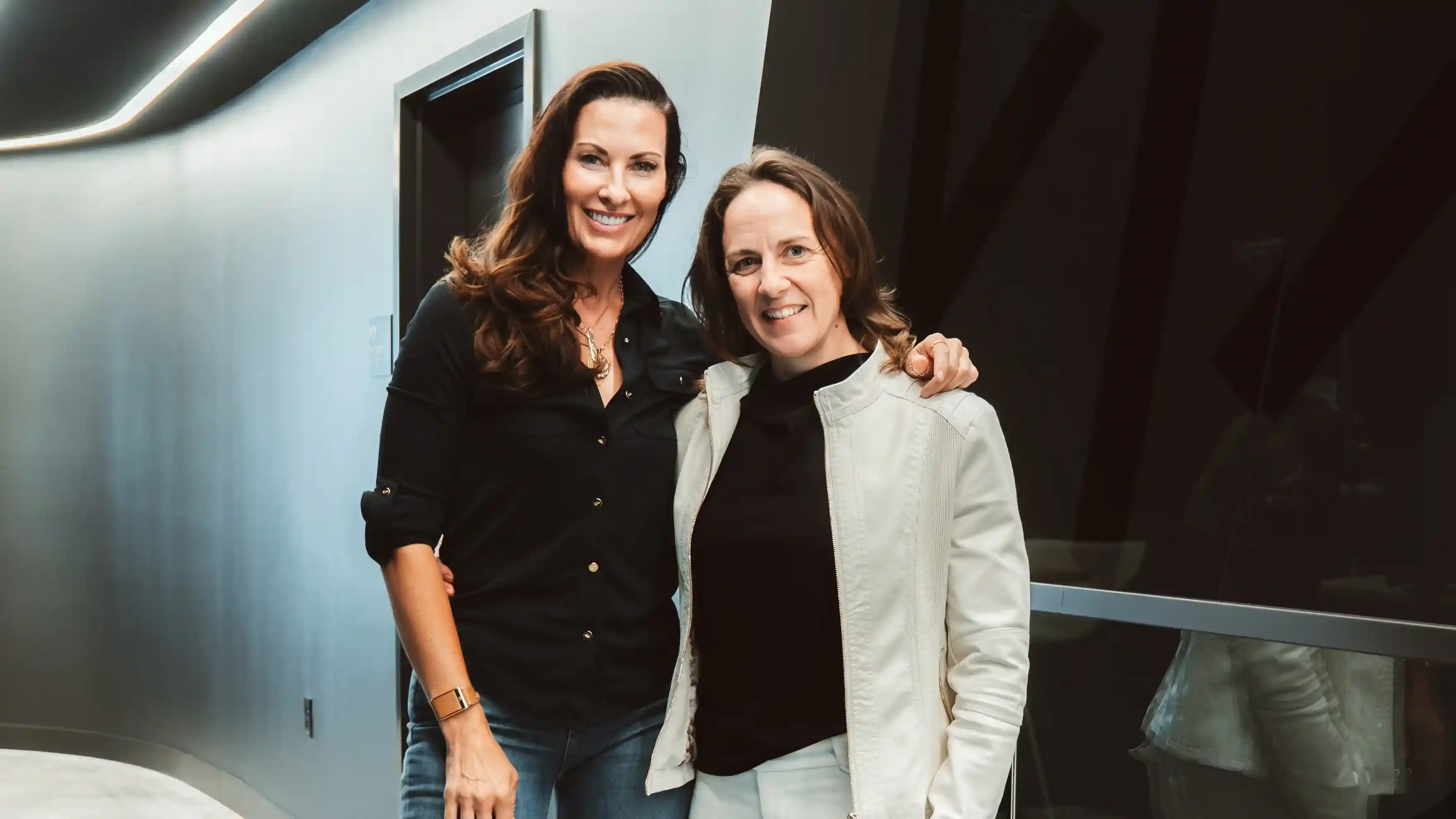
Perimenopause symptoms often start before periods become obviously irregular, and learning to spot that shift early can change how you sleep, train, recover, and ask for care. In Episode 341 of the WHOOP Podcast, Dr. Mariza Snyder, a women’s health expert and author of The Perimenopause Revolution, joins Kristen Holmes, Global Head of Human Performance, Principal Scientist at WHOOP, to explain how cyclical mood changes, sleep disruption, weaker recovery, and midlife metabolic changes can signal a hormonal transition that many women and clinicians still miss. This article breaks down the patterns Snyder watches first, the WHOOP metrics and lab trends that can add context, and the daily habits she uses to support sleep, blood sugar, movement, and hormone conversations with a clinician.
To listen to episode 341 in full, head to the WHOOP Podcast on YouTube.
How do you know if perimenopause has started before your periods change?
Perimenopause can start while your cycle still looks regular on a calendar. Snyder says the earliest clues are repeating late-luteal symptoms such as sleep disruption, irritability, dread, lower stress tolerance, slower recovery, and a feeling that normal daily demands suddenly take much more effort.
The first job is pattern recognition. At 43, Snyder found that writing symptoms down and matching them to her cycle changed the whole picture. After postpartum recovery, and while also dealing with back-to-back concussions, she stopped treating each hard week as a one-off event. Three months of tracking showed the same pattern nearly every month: around a week before her period, sleep and mood shifted hard, and by day 22 the change felt impossible to miss.
Before explaining how she confirmed the pattern, Snyder gave the timeline that made it obvious to her.
"About 7 days prior to my period, I would wake up with this deep sense of dread [...] and then with day 22, everything started to unravel."
Snyder argues that this is why cycle tracking matters even in the late reproductive years, around age 35 and beyond. Some cycles become anovulatory, meaning ovulation does not happen, and a weaker ovulation can mean less progesterone in the second half of the cycle. In practical terms, that can show up as worse sleep, more mood volatility, lower resilience, and brain fog before period timing becomes clearly irregular. She also tells women to watch the whole cycle, not only the hard days. If your follicular phase stops feeling as good as it used to, or you no longer feel noticeably better by day 5, that shift is useful information too. WHOOP members who want to log these patterns across life stages can do that with WHOOP reproductive health features.
What you should take away
- Perimenopause can begin with repeatable cycle-linked symptoms before your cycle length changes
- Tracking three months of symptoms against cycle timing can reveal patterns that feel random when you only look at one bad week
- Late-luteal sleep disruption, irritability, dread, and lower stress tolerance can be early signs that progesterone support is changing
- Watching the full cycle, including whether you still feel good in the follicular phase, gives a clearer picture than focusing on period timing alone
Which WHOOP metrics and lab markers can show that something is changing?
Once you spot a pattern, the next question is whether physiology is moving with it. WHOOP data will not diagnose perimenopause, but Snyder says it can show that your baseline is shifting, especially when HRV, resting heart rate, sleep quality, stress load, and recovery stop behaving the way they usually do.
That was the case for her. Snyder says her hormone labs looked broadly normal and even relatively optimal on paper, which is one reason single snapshots can miss the bigger story in early perimenopause. What stood out more were indirect signs that something in the system was off: high-sensitivity C-reactive protein was elevated, uric acid was a little high, vitamin D was low, and Hashimoto’s thyroiditis antibodies had flared. At the same time, her WHOOP data no longer looked as steady as it had during a healthier stretch a few months earlier.
When Snyder talks about early measurement, she keeps returning to the same set of signals.
"The things that I’m always looking at is heart rate variability, resting heart rate, how is my stress overall, what is my body recovery?"
Her point is practical. If symptoms, cycle timing, and physiology all start drifting together, you have a stronger case for action than you do with symptoms alone. Snyder also makes the case for trending labs over time instead of waiting until something is far outside range. A timeline helps you separate your normal from a real change. For women who already track Sleep, Recovery, HRV, and resting heart rate on WHOOP, that baseline can make an inflection point easier to see.
If you want to hear Snyder unpack how she used labs, HRV, and resting heart rate to spot change sooner, head to the WHOOP Podcast on YouTube.
What you should take away
- WHOOP trends can show that your baseline recovery and sleep pattern is shifting before one lab panel gives a simple answer
- Hormone labs can look normal in early perimenopause, so trend data often matters more than one isolated result
- Snyder watched HRV, resting heart rate, stress load, and recovery together, not as separate numbers
- A timeline of symptoms, cycle timing, labs, and WHOOP data gives a clinician far more context than symptoms alone
Why do so many women struggle to get perimenopause care?
Even when the pattern is clear, care can still lag. Snyder says the main problem is a knowledge gap, not a lack of symptoms, and she describes being dismissed by her own OB-GYN even when she arrived with a written symptom list and specific labs she wanted ordered.
Snyder recounts being told that because she had already come in several times with similar symptoms, her clinician had nothing more to offer. She pushed back and asked for the labs anyway. That moment mattered to her because it matched what many of her patients had already experienced: subjective symptoms get minimized, stress gets blamed, and the hormonal transition goes unnamed for too long.
Snyder ties that care gap to clinician training, not to a lack of patient effort.
"Only 6.8% of internalists [...] and OB-GYNs feel adequate in taking care of women with perimenopause and menopause."
On the episode, Snyder also cites [education data showing that menopause training in OB-GYN residency only recently rose from about 20% to about 30%] and [figures suggesting women often need four to six office visits before symptoms are connected to perimenopause]. Her message is clear: if the first answer does not fit your lived experience, keep asking better questions. WHOOP has covered that same self-advocacy theme in How to Support Your Body Through Menopause with Dr. Jessica Shepherd, which also emphasizes earlier preparation and stronger symptom tracking.
What you should take away
- Snyder says delayed perimenopause care often reflects clinician education gaps
- Bringing a written symptom timeline and clear lab requests can make a clinical visit more productive
- A first dismissal does not settle the question if your cycle, sleep, mood, and recovery have clearly changed
- Self-advocacy becomes easier when you can show repeatable patterns instead of trying to recall symptoms from memory
What lifestyle habits help manage perimenopause symptoms day to day?
After the care gap comes the daily work. Snyder puts lifestyle first, and her hierarchy starts with sleep consistency, blood sugar control, nervous system regulation, and asking for enough support at home to protect those basics.
She treats sleep like a fixed appointment, not a leftover task. Snyder describes her evening routine as a million-dollar meeting, meaning the hour before bed gets protected from bright lights, screens, random chores, and low-value demands. In the morning, she wants the same wake time, outdoor light exposure, water and electrolytes before coffee, and a protein-forward, fiber-forward breakfast that does not kick off a blood sugar spike.
Snyder is unusually specific on one nutrition target that many women miss in midlife.
"I aim for 30 grams of fiber every single day."
That number sits inside a bigger plan. Snyder wants food that keeps glucose steadier, which usually means less added sugar, fewer refined grains, more protein, more fiber, and more color from plants. She tells women to think about whether a meal is helping the future brain they want to protect, especially in a phase when sleep, mood, and concentration already feel less stable. She also says that if waking up is becoming unusually hard, a clinician may consider a diurnal cortisol curve to see whether the cortisol rhythm across the day is off.
Just as important, Snyder started telling her partner what late-luteal days felt like and where she needed help. That meant more alone time, fewer competing demands, and more deliberate handoffs for bedtime or weekend childcare. The daily goal was simple: protect enough nervous system bandwidth to show up the way she wanted to show up.
For Snyder’s full take on sleep routines, morning light, and blood sugar control, head to the WHOOP Podcast on YouTube.
What you should take away
- Snyder treats evening wind-down and morning light exposure as non-negotiable parts of symptom management
- A protein-forward and fiber-forward breakfast can support steadier energy and a calmer stress response through the day
- Aiming for about 30 grams of fiber per day gives women a specific target to build meals around
- Asking for more help at home during predictable hard days can protect stress tolerance, sleep, and patience
How should movement, strength training, and fueling change in midlife?
Snyder’s training argument is simple: movement has to happen all day, not only during one formal workout. She wants women in midlife walking more, strength training regularly, and adding short bursts of movement between meetings and after meals because recovery, blood sugar, mood, and focus all respond to that frequency.
This section of the episode bridges directly from food and sleep into the next big lever, which is how often you move. Snyder says she once believed a single gym session made up for a sedentary day. Continuous glucose monitor data changed her mind. Regular movement throughout the day, especially walking and short exercise snacks, helped keep glucose in a tighter range and left her feeling more alert, more regulated, and more ready for work.
Snyder’s examples are intentionally small because she wants movement to fit real life.
"I do usually 60 jump squats. So 3 sets of 20 jump squats."
She also mentions walking stairs with weights, post-meal walks, and one- to five-minute movement breaks. Kristen Holmes echoes the same idea in the conversation and ties strength training to muscle tissue, metabolic health, longevity, and daily capacity. WHOOP has explored that life-stage training shift in Episode 212: How to Train Through All Phases of Life.
Fueling matters here too. Snyder says heavy lift days are different from easy aerobic work, and she does not like women showing up to a demanding strength session fully fasted. Her reason is practical, not dogmatic: if the workout quality drops, the training stimulus drops with it. A small protein snack before lifting can be enough to change the session.
What you should take away
- Midlife training works better when all-day movement supports the formal workout instead of competing with long sitting blocks
- Walking and short exercise snacks can support steadier glucose, better alertness, and a calmer stress response
- Strength training becomes more important in perimenopause because muscle supports metabolic health, daily function, and later-life capacity
- Fueling heavy strength sessions can improve workout quality when fasted lifting leaves you flat
What should women know about birth control, bioidentical hormone therapy, and alcohol in perimenopause?
After lifestyle, Snyder turns to interventions that change hormones more directly. Her key distinction is between symptom suppression and hormone replacement. She says hormonal birth control can help some women, especially when bleeding is very heavy or symptoms are severe, but it shuts down ovulation and does not fully address the brain-related symptoms she sees most often in perimenopause.
Snyder defines hormonal birth control as contraception that suppresses the ovulatory cycle, which means hormone levels stay in a low, controlled state. In her view, that can be useful in the right case, yet it can also flatten the picture without solving sleep issues, brain fog, irritability, and low stress tolerance. She is more enthusiastic about bioidentical hormone therapy because the molecules match the structure of estradiol and progesterone made in the body, and she thinks women should at least understand that option before defaulting to the pill. WHOOP has covered the broader physiology behind these shifts in The Changes that Happen During Menopause.
Snyder’s first medication step in her own case was specific and cyclical.
"The first step was really getting on oral micronized progesterone in the second half of my cycle [...] starting between 100 milligrams and 200 milligrams."
She presents that as her own pathway, not as a universal prescription, and pairs it with symptom tracking, labs, and lifestyle changes. The same applies to alcohol. Snyder says women often believe they are doing everything right while two nightly glasses of wine quietly erode sleep quality, HRV, recovery, and next-day resilience. Her advice is to test the tradeoff honestly with a 30-day break. If sleep improves and recovery stops tanking, the data usually makes the decision easier.
For Snyder’s full take on progesterone, birth control, and alcohol during perimenopause, head to the WHOOP Podcast on YouTube.
What you should take away
- Snyder separates hormonal birth control from hormone replacement and says the distinction changes what symptoms a plan is likely to help
- Oral micronized progesterone was her first medication step because her symptoms pointed toward weaker second-half-of-cycle support
- Bioidentical hormone therapy is, in Snyder’s view, an option women should understand before assuming birth control is the only answer
- A 30-day alcohol break can show whether wine is quietly worsening sleep, HRV, recovery, and next-day function
The bottom line
- Perimenopause often starts as cycle-linked changes in sleep, mood, focus, and recovery before periods become obviously irregular
- Three months of symptom tracking alongside cycle timing can reveal repeatable late-luteal patterns that are easy to miss week by week
- WHOOP trends in HRV, resting heart rate, Sleep, and Recovery can show that baseline physiology is shifting even when a single hormone lab panel looks normal
- Snyder says clinician education gaps still delay care, which makes self-advocacy and clean symptom tracking more important
- Sleep consistency, morning light exposure, protein-forward meals, and about 30 grams of daily fiber sit at the center of Snyder’s day-to-day plan
- All-day movement, post-meal walks, exercise snacks, and regular strength training can support metabolic health, mood, and later-life capacity
- Snyder distinguishes hormonal birth control from bioidentical hormone therapy and urges women to understand whether a plan is suppressing symptoms or replacing hormones
- A short alcohol break can make the effect of wine on sleep, HRV, and next-day resilience much easier to see
Frequently asked questions about things discussed in this episode
How does WHOOP help you spot possible perimenopause patterns?
WHOOP helps you spot possible perimenopause patterns by giving you a baseline for sleep, HRV, resting heart rate, and recovery that you can compare with symptom timing across your cycle. When those metrics start drifting in the same part of the month, the pattern becomes easier to document and discuss.
What does WHOOP measure that is useful when sleep starts changing in perimenopause?
WHOOP measures sleep duration, sleep consistency, resting heart rate, HRV, and recovery, which are all useful when perimenopause starts changing how rested you feel. Those trends can show whether disrupted nights are staying isolated or becoming a repeatable pattern.
How can WHOOP data help conversations with a clinician about menopause symptoms?
WHOOP data can make a clinician conversation more concrete by showing when recovery, sleep, HRV, and resting heart rate changed over time. A symptom description paired with timing and physiology is easier to act on than a vague memory of feeling off.
What does WHOOP show when alcohol is hurting recovery in midlife?
WHOOP often shows alcohol stress through worse sleep, lower HRV, higher resting heart rate, and weaker recovery the next day. That pattern can help you decide whether alcohol is worth the tradeoff during perimenopause.
How does WHOOP support strength training and movement during perimenopause?
WHOOP supports strength training and movement during perimenopause by helping you see how sleep, recovery, and daily strain respond to lifting, walking, and short exercise snacks. That feedback can help you build a routine that fits your actual recovery capacity.
What does WHOOP do for tracking menstrual and life-stage patterns?
WHOOP lets members log reproductive and life-stage context so cycle-linked patterns can be reviewed alongside sleep, recovery, and daily behaviors. That added context is useful when symptoms rise and fall across the month instead of staying constant.
For perimenopause, the value of WHOOP is seeing when your late-luteal sleep, HRV, resting heart rate, and recovery stop matching the rest of your month, so you can act before the pattern turns into a crash.
Related Articles
How stress, safety, and desire shape sex, intimacy, and recovery

Topics
- Behavior Impact
- Health & Wellness
- Mental Health
Podcast 339: Powerful Strategies to Improve Human Performance with Expert Rachel Vickery
Topics
- Health & Wellness
- Mental Health
- Behavior Impact
Podcast 338: Defending US Open Champion Aryna Sabalenka’s Guide to Training Your Mind and Body to Win

Topics
- Health & Wellness
- Training & Exercise
- Tennis