Topics
- Post
How to prevent frailty and support healthy aging with Dr. Linda Fried
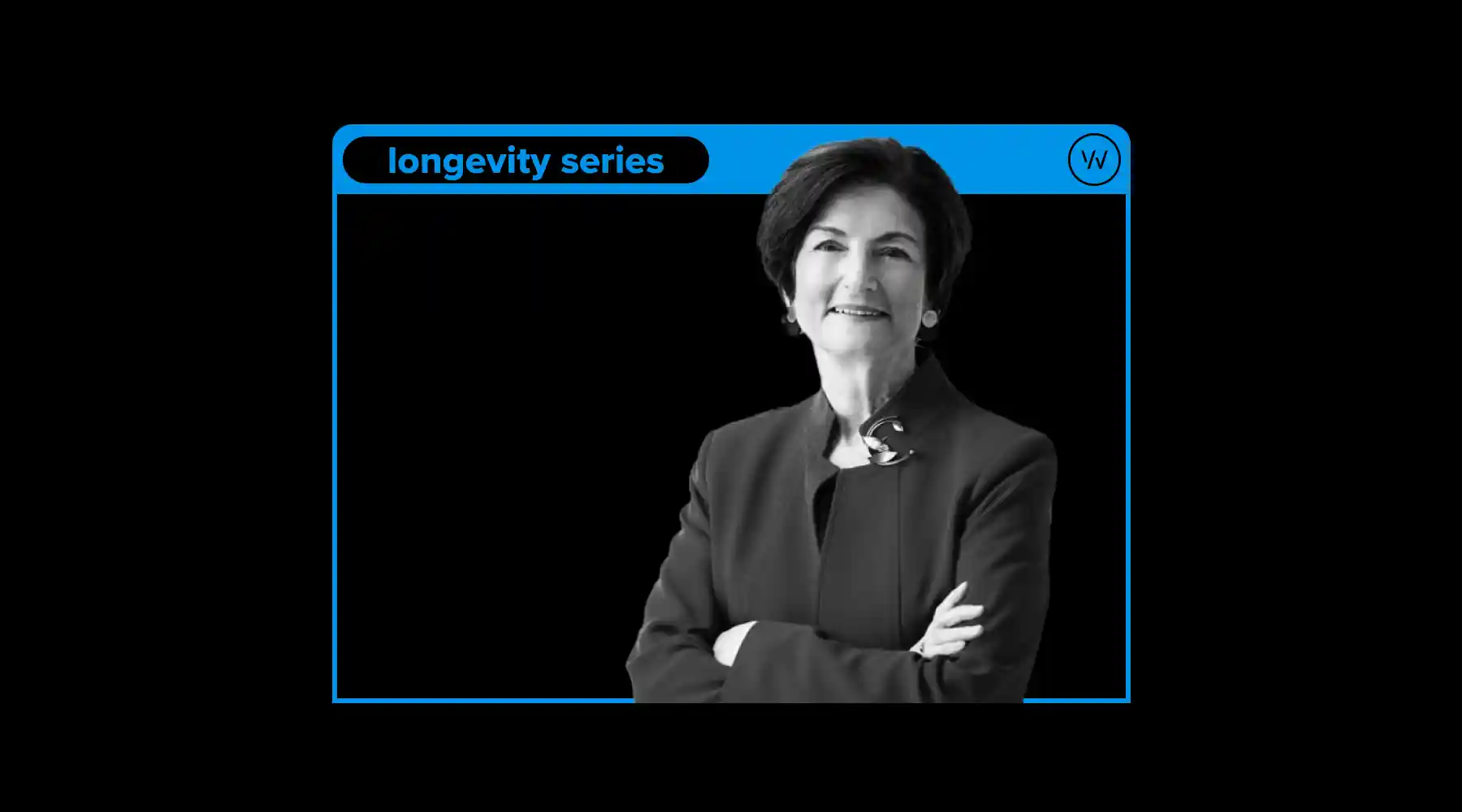
Originally published on June 25, 2025
Frailty is one of the clearest warning signs that aging has outpaced strength, reserve, and resilience, and this conversation explains how people can act long before that decline becomes obvious. In Episode 329 of the WHOOP Podcast, Emily Capodilupo, Senior Vice President of Research, Algorithms, and Data at WHOOP, speaks with Dr. Linda Fried, a geriatrician, Dean of Columbia University Mailman School of Public Health, and founder of Experience Corps, about what frailty actually is, when aging changes begin, and why purpose, connection, and public health matter as much as exercise and diet. The result is a practical framework for staying stronger longer, both as an individual and as a society.
To listen to Episode 329 of the WHOOP Podcast in full, head to the WHOOP Podcast on YouTube.
What is frailty, and how is it different from normal aging?
Frailty is a medical syndrome with a recognizable pattern, not a vague impression that someone looks old. Fried helped establish a phenotype of frailty that includes weakness, slower walking speed, low physical activity, exhaustion, and, in more advanced cases, unintentional weight loss, a framework she and colleagues formalized in a landmark paper on frailty in older adults.
Before that work, clinicians often used the word frailty to mean very different things, including advanced age, disability, multiple diseases, or dependence in daily life. Fried argues that this lack of definition kept geriatric care from being as preventive as it could be. If a condition is poorly defined, it is hard to study, hard to track, and hard to treat early.
Her model matters because these features do not just coexist. They feed one another. Lower activity contributes to weakness, weakness makes walking slower, slower walking reduces activity again, and the whole cycle can erode physiologic reserve. Once that reserve is low, even common stressors, such as a viral illness, surgery, heat, or hospitalization, can hit much harder.
"When there are 3 or more of those manifestations present, people are clinically frail, and there is a diminished physiologic and biologic reserve going on underneath it."
What you should take away
- Frailty is a distinct clinical syndrome, not a casual label for older age.
- The core frailty pattern includes weakness, slow walking, low activity, exhaustion, and sometimes unintentional weight loss.
- Frailty reflects lower physiologic reserve, which makes illness, surgery, and other stressors harder to recover from.
- Clear definitions make earlier prevention and treatment more possible.
If you want to hear Fried unpack how frailty becomes a self-reinforcing cycle, listen to the full episode on Spotify
When does the path toward frailty actually start?
Once frailty is defined clearly, the next question is timing. Fried's answer is that the process is usually chronic and progressive, and it can begin far earlier than most people expect.
She points to work from Dan Belsky and colleagues, who found measurable differences in biological aging among adults ages 26 to 38 in the Dunedin Study. Fried summarized the practical takeaway this way: even in the 20s and 30s, groups can be distinguished by slightly slower walking speed, weaker strength, and lower cognitive performance, and those patterns can foreshadow a faster pace of aging later.
For most people, that does not mean a sudden symptom appears at 30 and announces itself as aging. Fried's point is more useful than that. By the time someone is clearly frail, the process has been building for years. People often move through an earlier phase with one or two warning features before they cross the threshold into clinical frailty. That makes earlier action more valuable than waiting for obvious decline.
This also changes how people should think about prevention. Frailty is not only an issue for late life medicine. It is a life course issue, which means the behaviors and environments that shape strength, movement, recovery, and resilience in midlife also shape the odds of remaining independent later
"In Dr. Belsky's studies of whole populations of people 26 to 37 years of age, you can distinguish groups who have a little slower walking time, a little slowed in cognition, and a little weaker, and those findings predict a more rapid pace of aging subsequently."
What you should take away
- The path toward frailty usually develops slowly rather than appearing all at once.
- Aging-related differences can be measured in population studies as early as the 20s and 30s.
- One or two early warning features can appear before someone meets the threshold for clinical frailty.
- Prevention works best when it starts long before decline is obvious.
If you want to hear Fried go deeper on why aging changes can show up decades before frailty, watch the full episode on YouTube
Which habits actually lower frailty risk across the lifespan?
If the process starts earlier than people think, the next issue is what actually changes the trajectory. Fried's answer is straightforward: protect muscle, keep moving, eat well, avoid smoking, reduce exposure to polluted air, stay meaningfully connected to other people, and cultivate a sense of purpose.
Physical activity and muscle strength sit at the center of her framework. Fried argued that maintaining strength across life supports both muscles and brain function. That aligns with other WHOOP conversations on protein and skeletal muscle for longevity, how to build a strength training program, and how exercise supports cognitive function. The through line is simple: stronger tissues and consistent movement help preserve function.
Diet belongs in the same conversation. Fried did not promote a branded eating philosophy. Her emphasis was access and sustainability. A healthy diet matters, but telling people to eat well is incomplete if healthy food is unaffordable or unavailable in the places where they live.
Smoking and polluted air also belong on the list. Fried framed air pollution as a serious health threat in its own right and as something that can compound the harms of smoking. In other words, healthy aging is partly about personal behavior, and partly about the conditions surrounding those behaviors.
Her final two factors are less often discussed in mainstream longevity advice but just as central in this episode: meaningful social connection and meaning or purpose. Fried separated these carefully from a simple count of contacts or activities. The key question is whether relationships matter to you and whether daily life contains roles that feel worthwhile.
"There is kind of a one handful of things to do for oneself: stay physically active and maintain muscle strength, eat a healthy diet, avoid smoking, demand no air pollution, build meaningful social connection, and find meaning and purpose."
What you should take away
- Muscle strength and consistent physical activity are central to lowering frailty risk.
- Healthy eating matters, but access to affordable healthy food shapes whether people can act on that advice.
- Smoking and air pollution both raise risk for worse aging outcomes.
- Meaningful relationships and a clear sense of purpose are part of healthy aging, not extras.
For Fried's full take on the personal habits that shape longevity, listen to the full episode on Spotify
Why do purpose and social connection matter so much for healthy aging?
That list of habits leads naturally to the factors people often overlook. Fried made the case that purpose and connection are biologically and behaviorally relevant, not sentimental add-ons.
She described learning from older patients that not having a reason to get up in the morning could make people visibly less well. That observation helped inspire Experience Corps, a program Fried founded and that is now run by AARP. The model places older adults in public elementary schools as volunteers in carefully designed roles that support children and teachers while also increasing the volunteers' physical, cognitive, and social engagement.
Fried's insight was that many older adults do not want token volunteer jobs. They want work that uses their skills, lets them contribute, and makes their time feel well spent. Experience Corps was built around that reality. Older adults joined to make a difference for children, but the structure of the work also created more walking, more mental challenge, more social contact, and more routine.
The program also points to a larger idea. Healthy aging is easier when people have roles that require them to stay engaged. Fried argued that collective, purposeful action may be especially powerful because it combines movement, cognition, relationships, and a reason to show up. That same theme comes up in WHOOP conversations about embracing aging as an active process.
"I launched Experience Corps to place older people in public elementary schools as volunteers, not as teachers and not as paraprofessionals, to support the success of the kids, and hidden inside of it is a pretty powerful public health program to improve the health and well-being of the older volunteers."
What you should take away
- Purpose can change health behavior because people are more likely to stay engaged when their role feels useful.
- Meaningful volunteering can add movement, cognitive challenge, social contact, and routine to later life.
- Social connection is most protective when relationships feel important, not simply numerous.
- Programs that match older adults' skills with real community needs can benefit both sides.
If you want to hear Fried go deeper on Experience Corps and the health value of purposeful roles, watch the full episode on YouTube
How can societies reduce frailty and make longer lives healthier?
From there, Fried widens the frame. Personal habits matter, but she argues that healthy longevity also depends on public health, social design, and stronger connections across generations.
Her blunt summary is that medical care explains only part of population health. In this episode, Fried estimated that about 20 percent comes from medical care, less than 10 percent from genes, and the rest from public health and the conditions societies create. That includes food access, safe places to move, clean air, education, work structures, and whether people can build supportive relationships over time.
Fried also argued that the United States has become deeply age-segregated. When generations stop mixing, people lose mentorship, perspective, and the practical help that comes from knowing one another well. She pointed to work and community life as natural starting points for rebuilding those connections. Junior people benefit from being around more experienced colleagues, and older adults benefit from roles where their knowledge still matters. That theme lines up with broader WHOOP discussions about living longer through habits that protect function over time.
The optimistic part of Fried's argument is easy to miss if you focus only on the warnings. Her central message is that longer lives are a public success. The next job is to make that added time healthier, more connected, and more useful. She sees older adults as a growing source of knowledge, generosity, patience, conflict resolution, and what psychologist Erik Erikson called generativity, the desire to leave the world better than you found it.
"The U.S. is now the most age-segregated society in the history of the world, and generations do not know each other."
What you should take away
- Healthy longevity depends on public health conditions as well as personal habits.
- Education, food access, clean air, and safe environments shape whether good advice is actionable.
- Age-segregated societies lose mentorship, perspective, and shared problem-solving across generations.
- Longer life expectancy is a public success, and the next task is to build systems that turn extra years into healthier years.
The bottom line
- Frailty is a clinical syndrome marked by weakness, slower walking speed, low activity, exhaustion, and sometimes unintentional weight loss.
- Clinical frailty reflects reduced physiologic reserve, which makes stressors such as illness, surgery, heat, and hospitalization harder to tolerate.
- The path toward frailty can begin decades before late life, with measurable differences in strength, gait, and cognition appearing in some people as early as their 20s and 30s.
- Physical activity and maintained muscle strength are among the clearest lifelong protections Fried highlighted for staying independent longer.
- Healthy aging depends on more than exercise and diet, because smoking, air pollution, loneliness, and lack of purpose also shape risk.
- Meaningful social roles can support better health by adding routine, movement, cognitive challenge, and a reason to stay engaged.
- Public health conditions, including education, food access, clean air, and safe communities, shape whether people can follow healthy aging advice at all.
- Longer life expectancy creates an opportunity to build stronger intergenerational communities, not just a larger care burden.
Frequently asked questions about things discussed in this episode
How does WHOOP help you track habits linked to frailty prevention?
WHOOP helps you track the daily behaviors most connected to Fried's framework, including sleep, recovery, activity, and training consistency, so the habits that support strength and resilience are easier to see over time.
What does WHOOP do for spotting harder recoveries as you age?
WHOOP can make unexpected drops in Recovery more visible, which may help you notice when illness, stress, travel, or accumulated strain is hitting harder than usual and decide whether to pull back or check in with a clinician.
How can WHOOP support strength and movement consistency over time?
WHOOP helps you see whether training and daily movement are happening often enough to stay consistent, which matters when Fried's core prevention message is to remain physically active and maintain muscle strength across the lifespan.
Does WHOOP diagnose frailty?
WHOOP does not diagnose frailty. WHOOP gives you ongoing data about sleep, recovery, strain, and behavior patterns that can support earlier discussions with a healthcare professional if function or resilience seems to be trending in the wrong direction.
What does WHOOP show about sleep in the context of healthy aging?
WHOOP shows how much sleep you are getting and how consistently you are getting it, which can make it easier to build the stable routines that support better recovery and long-term function.
How does WHOOP help you spot long-term change instead of only daily ups and downs?
WHOOP makes trends visible across weeks and months, which is useful when Fried's core point is that decline is usually gradual and easier to address before it becomes obvious.
For people trying to stay strong and independent longer, WHOOP keeps the daily patterns behind healthy aging visible enough to adjust before loss of reserve becomes harder to reverse.