Topics
- Post
- Member Stories
- Mental Health
How meditation affects sleep, focus, and athletic performance
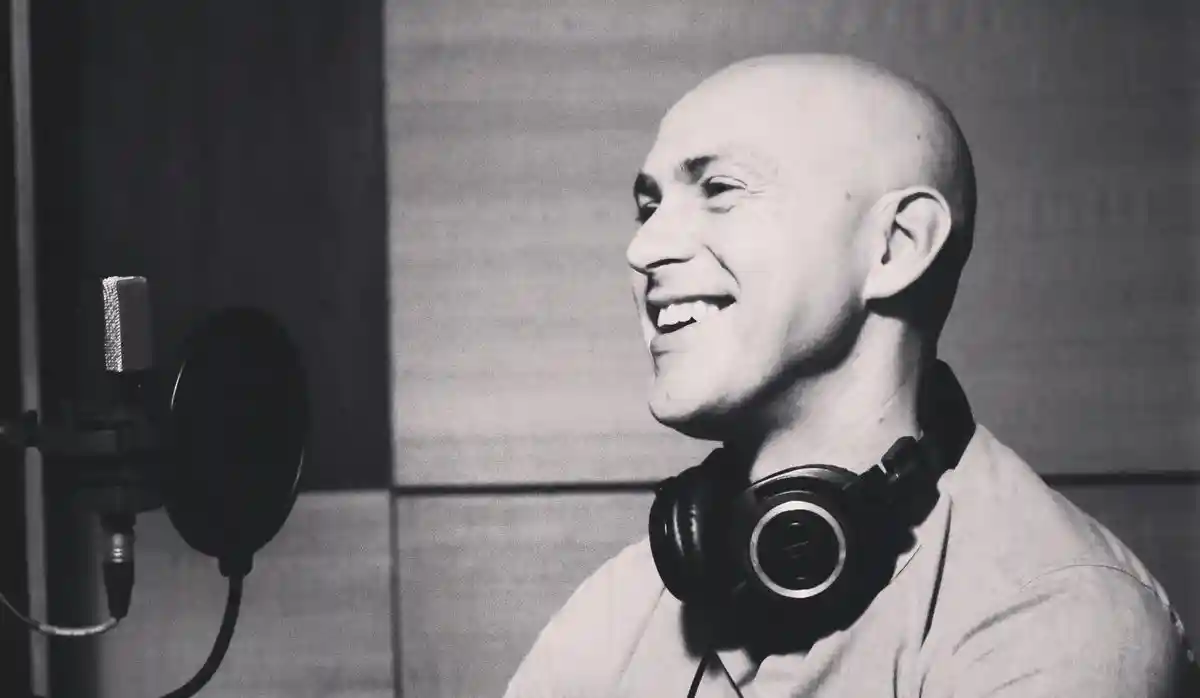
Originally published on February 26, 2019
Meditation can change how you handle stress, sleep, training, and attention, and this conversation shows what that looks like in practice. In Episode 12 of the WHOOP Podcast, Andy Puddicombe, former Buddhist monk and co-founder of Headspace, explains how a childhood meditation habit turned into a decade of monastic training, then into one of the most recognizable mindfulness products in the category. He also breaks down what meditation did to his body, how it shaped visualization and performance, and what he learned from wearing WHOOP about sleep, HRV, and recovery. If you want a clear starting point for mindfulness that stays practical, this episode delivers it.
To listen to Episode 12 of the WHOOP Podcast in full, head to Spotify.
How can meditation start shaping performance in childhood?
Meditation can start helping long before adulthood if it gives a child a repeatable way to settle attention and step back from stress. For Puddicombe, that started around age 10, when his mother brought him to meditation classes and he began practicing Transcendental Meditation with a simple routine.
He describes a childhood that was active and normal, full of rugby, football, tennis, and basketball, but also one that benefited from a regular mental reset. What mattered was not complexity. It was consistency. That early structure gave him a sense of grounding that he could return to later, even after years of sport, travel, grief, and career change.
Puddicombe describes that first routine in concrete terms:
"I did 20 minutes in the morning, 20 minutes in the evening."
What you should take away
- A simple meditation routine can start with one repeatable structure, such as the same duration each morning and evening.
- Early meditation practice can support calm and attention without requiring a major lifestyle change.
- Consistency matters more than making the practice feel advanced.
If you want to hear Puddicombe unpack how early meditation shaped his mindset, listen to the full episode on Spotify.
Why would a sports science student leave for the Himalayas?
That early grounding helps explain the next turn in his life. Puddicombe was studying sports science, working as a personal trainer, competing in gymnastics, and living a social life that did not point toward monastic training. What changed was the weight of unresolved loss and mental overwhelm.
He had lived through a car accident in which people died, and he had also lost his stepsister. By age 22, he felt that reading about peace was no longer enough. He wanted direct experience, so he left university and went to northern India, eventually starting in Dharamsala, where the Dalai Lama lives.
Puddicombe puts that decision plainly:
"I put down the meditation books and the sports science books, and I quit uni and headed off to the Himalayas instead."
What you should take away
- Meditation often becomes more urgent when stress, grief, or mental overload stop feeling manageable through information alone.
- Puddicombe made the shift at 22, during a period when sport, study, and loss were all colliding.
- Direct experience, not theory alone, drove his move toward monastic training.
If you want to hear Puddicombe go deeper on the decision to leave sports science for monastic training, listen to the full episode on Spotify.
What happens to the body and mind during long meditation retreat?
Once he made that leap, the romantic version wore off quickly. Intensive meditation retreat can feel physically restless, mentally crowded, and emotionally exposing before it feels calm.
Puddicombe says he went in too steeply at first. Outside retreat, monastery life could mean roughly 4 to 8 hours of meditation a day. During retreat, that could rise to 14 to 18 hours. He started with a month, then three months, later moving into a monastery where he could study philosophy and psychology with more balance. The hardest adjustment was physical. He had been training around four hours a day before leaving England, then suddenly had no exercise outlet at all. He lost weight, felt pent-up energy in his body, and needed a few months before stillness felt stable rather than explosive. WHOOP later explored a related overlap between physiological and psychological load in The Science of Strain with Dr. Andy Walshe.
Puddicombe gives the clearest picture of the volume here:
"When you're on retreat it's 14 to 18 hours of meditation a day."
What you should take away
- Long retreat changes the body as well as the mind, especially when exercise volume drops sharply.
- Monastic life can involve 4 to 8 hours of meditation on regular days and 14 to 18 hours during intensive retreat.
- The first gains may come from learning to stay with discomfort instead of escaping it with distraction.
If you want to hear Puddicombe unpack retreat volume, physical restlessness, and mental clarity, listen to the full episode on Spotify.
How does meditation change visualization and performance?
From that long retreat period, Puddicombe learned that meditation improves performance by sharpening awareness before reaction. He describes becoming better able to see the mind clearly, which creates a pause between emotion and action.
That same skill carries into visualization. Puddicombe prefers first-person visualization rather than watching yourself from the outside. His reason is performance-focused: first-person imagery keeps attention on the present task, while third-person imagery can pull attention toward outcome and storyline. He used that approach in acrobatics and still uses it in surfing. It also helps explain why athletes responded early to his work, even before Headspace existed as an app. For a related WHOOP conversation on mental performance under pressure, see Pressure of Performance with Dr. Jim Loehr and Advice From the Masters of Mindset.
Puddicombe summarizes the difference this way:
"You're less concerned with the end goal and more focused on the present moment."
What you should take away
- Meditation can improve performance by increasing awareness before an emotional reaction fully takes over.
- First-person visualization keeps attention on execution in the moment.
- Outcome-focused imagery can pull attention away from the task you are trying to perform.
If you want to hear Puddicombe go deeper on meditation, visualization, and sport, listen to the full episode on Spotify.
How did Puddicombe turn monastic training into Headspace?
That performance angle also shaped his next career move. While teaching in Moscow, Puddicombe saw strong demand for meditation from people living ordinary working lives, but he also saw that monastic presentation could create distance. He cared most about getting useful tools into people's hands.
After returning to the United Kingdom, he made another unusual turn. At age 32, he enrolled in a circus arts degree to reconnect with his body after years of stillness. He trained during the day, wrote in the mornings and evenings, and slowly built the material that later became Headspace. He spent about two years writing, then tested ideas in one-to-one sessions, then in larger events, before meeting Rich Pierson and moving toward an app. That sequence mattered. Headspace grew from repeated real-world testing, not a single flash of inspiration.
Puddicombe describes the writing stage with a useful timeline:
"I probably wrote for a couple of years, until it started to make sense."
What you should take away
- Headspace came from years of writing, teaching, and testing before it became an app.
- Puddicombe used circus arts training to reconnect with physicality after monastic life.
- The product direction became clearer through one-to-one coaching and live group teaching.
What did WHOOP reveal about meditation, sleep, and recovery?
That practical lens shows up in how Puddicombe uses WHOOP. He says he had been skeptical of wearables, but WHOOP helped him rebuild training structure, stay accountable, and learn how sleep, recovery, and exercise volume interacted in his own life.
The main lesson was individual context. Puddicombe says his HRV runs consistently low compared with some people around him, yet he still sees strong Recovery when he stays within his normal range. He also found that longer sleep duration did not always line up with better-rested mornings. That fits a core WHOOP principle: baseline trends matter more than comparison with someone else's numbers. If you want a primer on how WHOOP reads Recovery, HRV, resting heart rate, and Sleep, start with What is WHOOP?.
His daily routine is equally structured. He gets up just before 5, does an hour of morning cardio, meditates for 30 to 60 minutes, lifts three days a week, and tries to keep that rhythm when traveling. One of his best travel habits is meditating soon after arrival, which he says helps him feel grounded in a new place.
Puddicombe describes the front end of that routine simply:
"I get up just before 5. I do an hour of cardio in the morning."
What you should take away
- WHOOP helped Puddicombe reconnect daily habits with measurable changes in sleep and recovery.
- A consistently low HRV can still pair with strong Recovery when it is normal for your body.
- Sleep duration and sleep quality are different signals, and WHOOP can help separate them.
- Keeping the same wake time, exercise, and meditation rhythm can make travel more manageable.
The bottom line
- A childhood meditation habit can build repeatable skills for calm and attention that stay useful for decades.
- Puddicombe left sports science for monastic training because direct experience mattered more than theory during a period of grief and mental overload.
- Intensive meditation retreat can involve 4 to 8 hours of practice on regular days and 14 to 18 hours during deeper retreat blocks.
- Meditation supports performance by creating more awareness before reaction and by improving present-moment execution.
- Headspace grew from years of writing, one-to-one coaching, live events, and repeated testing before it became an app.
- WHOOP helped Puddicombe see that sleep quantity, sleep quality, HRV baseline, and training load each tell a different part of the recovery story.
Frequently asked questions about things discussed in this episode
How does WHOOP help you see whether meditation affects recovery?
WHOOP makes meditation effects visible by tracking nightly Sleep, resting heart rate, HRV, and daily Recovery over time.
What does WHOOP do for people whose HRV is naturally low?
WHOOP treats HRV as a personal baseline metric, so a consistently low value can still pair with strong Recovery when that value is normal for your body.
How does WHOOP separate sleep quantity from sleep quality?
WHOOP separates total sleep time from sleep quality by showing sleep duration, sleep stages, efficiency, and next-day Recovery together.
What does WHOOP measure that can change when your routine gets more consistent?
WHOOP can reflect routine changes through trends in resting heart rate, HRV, sleep timing, and Recovery across repeated days.
How does WHOOP fit with meditation during travel?
WHOOP helps track whether keeping the same wake time, exercise schedule, and meditation habit during travel supports steadier Sleep and Recovery.
What does WHOOP do for people testing meditation and visualization in sport?
WHOOP can show whether mental skills line up with better recovery habits by connecting meditation routines to Sleep, Recovery, and daily Strain trends.
For people using meditation as a performance practice instead of an abstract idea, WHOOP gives that experiment a measurable daily record.