Topics
- Post
- Member Stories
How mindfulness improves focus, sleep, and performance daily
Originally published on February 5, 2020
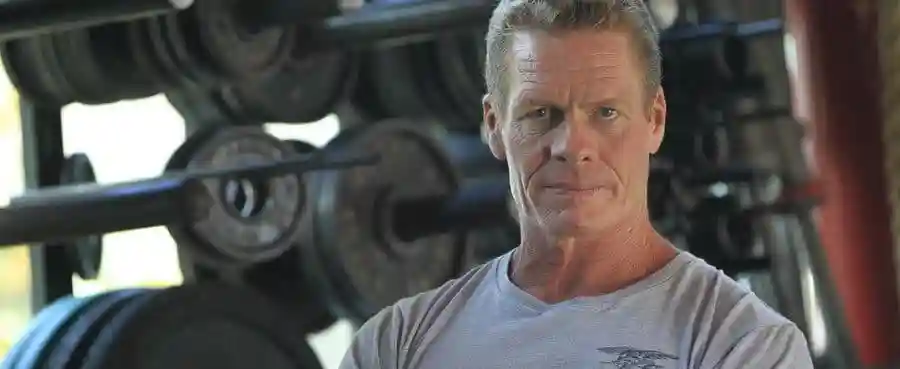
Mindfulness can improve focus, stress control, sleep, and training decisions when it becomes a daily practice instead of an occasional reset. In Episode 59 of the WHOOP Podcast, former Navy SEAL commander Mark Divine explains how meditation, breath control, mantra work, and visualization shaped his path from CPA to the top graduate in his SEAL class.
Divine spent 20 years in the Navy, retired as a commander in 2011, and later taught these skills through SEALFIT and Unbeatable Mind. His conversation with Will Ahmed offers a practical frame for people who want to train concentration, make better decisions under stress, and use WHOOP data to watch recovery respond over time.
Note: This article covers WHOOP 3.0. For the latest hardware, see WHOOP.
To listen to Episode 59 of the WHOOP Podcast in full, head to the WHOOP Podcast on YouTube.
How can mindfulness help you find direction and make better decisions?
Mindfulness can improve decision-making by giving you more space between a thought and a reaction. For Divine, that space was where a clear sense of direction showed up.
Before SEAL training, Divine was already on a successful business path as a CPA in New York City. Meditation changed how he interpreted that success. Instead of moving faster through a career that felt wrong, he used stillness to notice a repeated internal signal that he was heading away from the work he was meant to do. He described intuition as more than fast analysis. In his view, it also includes information that surfaces when the analytical mind quiets down enough to hear it.
Divine described meditation as a way to quiet analytical chatter and hear other signals more clearly:
“When you start to meditate and you get control of the rational cognitive kind of left brain aspect, and you can drop into these moments of silence where you’re not doing anything, [...] that’s when you can hear or sense what the gut is telling you.”
That idea shaped the rest of his career. He did not begin with a specific job title in mind. He kept returning to the broader idea that he was meant to be a warrior, then recognized the Navy SEAL path when it appeared.
What you should take away
- Mindfulness can sharpen decisions by creating enough silence to notice recurring signals about what matters most.
- Divine used meditation to test whether his career direction matched his deeper sense of purpose.
- A daily stillness practice can help you separate automatic thinking from more durable judgment.
If you want to hear Divine unpack intuition and career decisions, listen to the full episode on Youtube.
Why did meditation matter so much in Divine’s path to becoming a SEAL?
Meditation mattered because Divine believes it directly changed what he was capable of doing under pressure. He says his path to becoming a SEAL would have looked different without it.
His early practice was simple and structured. He had a teacher he trusted, a fixed weekly class, and enough consistency to keep going through the frustrating stage when progress is hard to measure. Divine makes an important point here for anyone starting a practice now. Meditation does not deliver obvious external feedback the way lifting, running, or swim times do. The first benefits are subtler: clearer thinking, less reactivity, better listening, and a steadier baseline under stress.
Divine put that point plainly:
“There’s zero chance that I would have been a SEAL had I not gotten into meditation.”
He also compared meditation to training. You may miss day to day changes, but the longer view becomes obvious. Looking back, Divine saw more peace of mind, sharper concentration, and more reliable decision-making. Ahmed also noted that mindfulness themes and recovery signals have surfaced in other WHOOP conversations, including Celebrating 100 Episodes of the WHOOP Podcast.
What you should take away
- Consistency and coaching can matter more than technique debates when you are starting meditation.
- Meditation progress often shows up first as lower stress, better listening, and clearer choices.
- Divine links his ability to become a SEAL directly to the concentration and self-control he built through practice.
If you want to hear Divine go deeper on why meditation changed his trajectory, listen to the full episode on Youtube.
What kind of meditation practice did Divine use to train concentration?
Divine used a Zen concentration practice built around slow breathing and strict attention control. The goal was to train the mind to stay with one target, notice distraction quickly, and return immediately.
He describes Zen as a concentration path, while mantra meditation and mindfulness train attention a little differently. In his case, the breath was the anchor. He focused on slow nasal breathing, matched inhale and exhale duration, and counted each full breath cycle. If his mind wandered, he restarted at zero. That reset rule is what made the drill so hard and so useful.
Divine gave unusually concrete detail on the pacing of that practice:
“Each inhale and exhale is going to be maybe like 5-count or 6-count. [...] You might be doing 2 breaths per minute and eventually 1 breath per minute.”
The performance benefit is clear. A mind that notices distraction faster in meditation can also notice distraction faster during work, training, or conflict. Divine later used mantra work as well because it can travel off the mat and into the rest of the day. A different performance version of visualization comes up in Episode 142 of the WHOOP Podcast, where Tom Daley describes rehearsing dives mentally.
What you should take away
- A concentration practice can be trained with slow breathing, counting, and immediate resets when attention drifts.
- Long exhale and inhale counts force attention to stay with the breath instead of chasing thoughts.
- The skill being trained is not relaxation alone, it is rapid recovery of focus.
If you want to hear Divine unpack his breath-counting practice, listen to the full episode on Youtube.
How did breathing, mantra, and visualization help during SEAL training?
These skills helped Divine control arousal, block distraction, and mentally rehearse hard events before they happened. He treated them as daily performance tools, not as background wellness habits.
That distinction mattered in SEAL training. Divine entered a class of 185 candidates. By Hell Week, about 85 remained. After Hell Week, about 40 were left. Eighteen graduated, and Divine finished as honor man, the top graduate in his class. He credits breath control, mantra, and visualization as central reasons he could stay steady while instructors tried to create doubt, fear, and emotional drift.
When Divine explained the outcome, he tied it directly to those mental skills:
“We graduated with 18 guys, and I was the honor man of my class, number one graduate in my class.”
His breathing practice kept his physiology from running away under stress. His mantra gave him a fast way to interrupt negative self-talk. His visualization let him mentally rehearse ocean swims, runs, obstacle courses, and likely setbacks before the day began. Similar ideas about performing under uncertainty appear in Episode 115 of the WHOOP Podcast, where Rich Diviney talks about controlling your “three-foot world.”
What you should take away
- Breath control can lower arousal before and during hard physical or mental efforts.
- A rehearsed mantra can interrupt negative self-talk before it spreads into performance.
- Visualization works best when it includes the event, the likely problems, and your response to those problems.
If you want to hear Divine go deeper on SEAL training and mental rehearsal, listen to the full episode on Youtube.
How can WHOOP help make mindfulness and recovery more measurable?
WHOOP can make a mindfulness practice easier to stick with by showing whether sleep and recovery patterns start to change over time. Ahmed said internal WHOOP analyses had observed lower resting heart rate, higher HRV, and better sleep architecture after people introduced regular mindfulness work.
That kind of feedback mattered to Divine because he started as a wearable skeptic. He did not want more tech burden, and he did not want another device that added friction to daily life. What changed his view was simplicity, passive wear, and the ability to see sleep and recovery data without interrupting training.
Divine explained what he needed from the device:
“I needed the proof that it was going to be useful and it wasn’t going to add complexity to my life.”
Ahmed also pointed out why the numbers matter in tactical groups. Competitive people often push hardest in the areas they can see. Once sleep, HRV, and Recovery are visible, those same people can start competing around recovery quality instead of only around output. Divine saw a second use case as well: veteran programs. He said objective tracking could help veterans follow through on breath work, sleep habits, exercise, and reconnection with team structure. That same pattern shows up in other tactical conversations, including Episode 7 of the WHOOP Podcast and Episode 223 of the WHOOP Podcast.
What you should take away
- WHOOP can turn a mindfulness practice into a trackable behavior by showing trends in sleep, resting heart rate, and HRV.
- Passive wear and simple charging mattered to Divine more than extra screen features.
- Recovery data can help competitive populations take sleep and downregulation as seriously as training output.
The bottom line
- Divine says meditation was a direct factor in his path from CPA to Navy SEAL.
- A concentration practice can be trained through slow breathing, counting, and immediate resets when attention breaks.
- Breath control can help lower arousal before demanding events and preserve decision quality during stress.
- Mantra work gives you a fast way to interrupt negative self-talk and return to the task in front of you.
- Visualization is most useful when you rehearse both the event and the setbacks you may face during it.
- Divine moved through a SEAL class that started with 185 candidates and graduated 18, finishing as the top graduate in his class.
- WHOOP can help make mindfulness more measurable by showing how recovery, sleep, resting heart rate, and HRV respond over time.
- Data can improve adherence for people who need proof that recovery practices are doing something real.
Frequently asked questions about things discussed in this episode
How does WHOOP help you track whether mindfulness is affecting recovery?
WHOOP tracks nightly sleep, resting heart rate, HRV, and Recovery, which can show whether a consistent mindfulness practice is changing your baseline over time.
What does WHOOP do for people who want to take breathing exercises more seriously?
WHOOP gives breathing work a measurable context by showing whether your sleep, resting heart rate, and HRV trends improve after you practice it regularly.
How does WHOOP measure the recovery changes discussed in this episode?
WHOOP measures recovery through a mix of signals that include heart rate variability, resting heart rate, sleep performance, and other overnight physiological data collected during wear.
What does WHOOP show if you are training hard but sleeping poorly?
WHOOP shows the cost of poor sleep through lower Recovery, incomplete Sleep performance, and trends in metrics such as resting heart rate and HRV.
How does WHOOP help coaches or teams use recovery data?
WHOOP gives teams a shared view of recovery trends so coaches and leaders can spot patterns, compare workloads, and push recovery habits into the same conversation as performance.
What does WHOOP add for people who already meditate every day?
WHOOP adds objective feedback for people who already meditate by showing whether the practice is lining up with better sleep, steadier recovery, and more durable training readiness.
For people building a mindfulness practice, WHOOP turns changes in sleep, resting heart rate, and HRV into feedback you can watch from one day to the next.