Topics
- Post
- Alcohol
- Behavior Impact
- Training & Exercise
Resilience with Spencer Matthews: how consistency builds mental strength
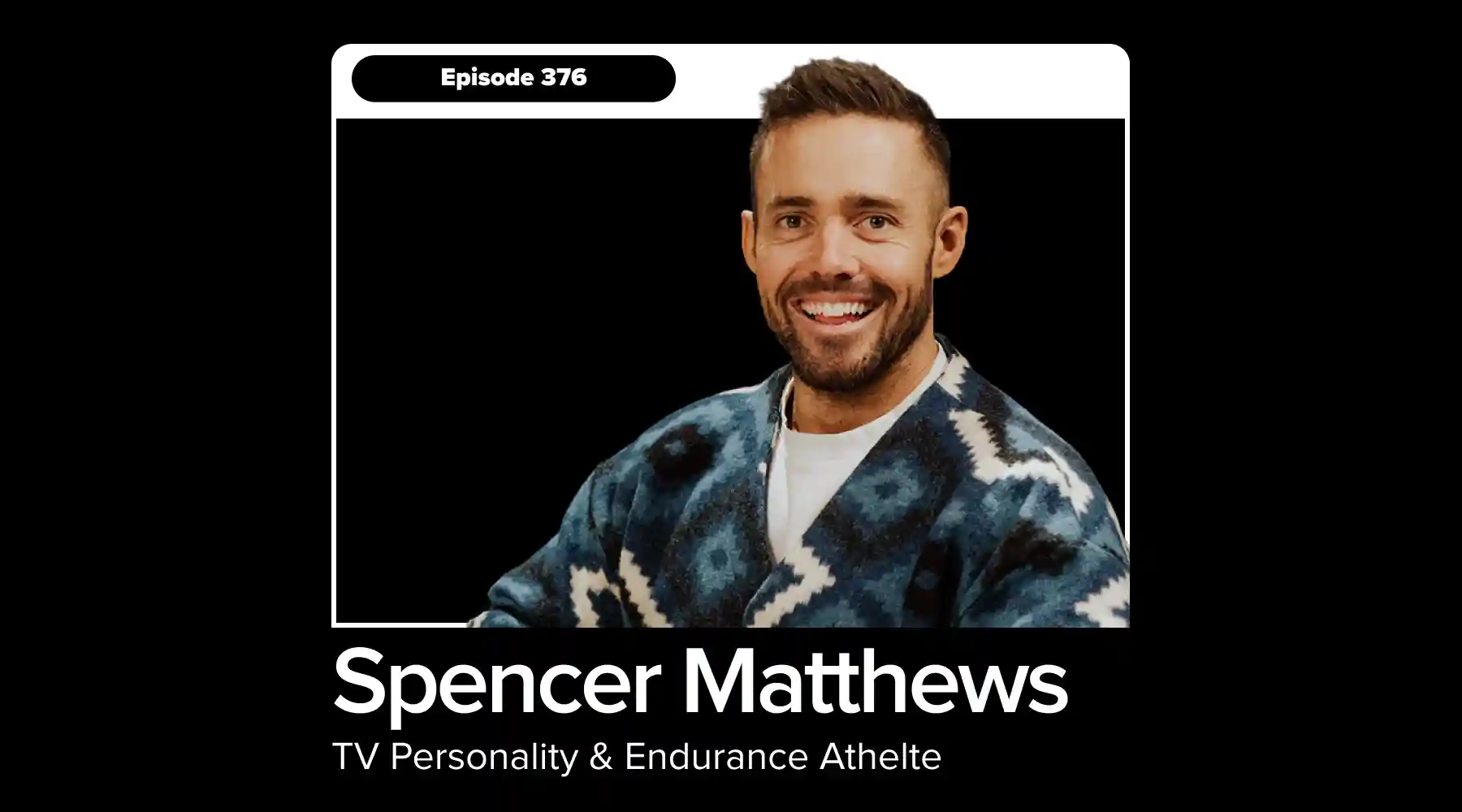
Most people overestimate how much intensity it takes to build resilience. On this episode of the WHOOP Podcast, WHOOP founder and CEO Will Ahmed talks with Spencer Matthews, the entrepreneur and endurance athlete who went from daily drinking to Marathon des Sables and 30 desert marathons in 30 days, about what changed once he stopped relying on motivation and started building resilience the same way he built training capacity. This article covers what Matthews says about honest self-assessment, consistency, emotional control under pressure, and the recovery habits that make resilience sustainable.
To watch episode 376 in full, head to the WHOOP Podcast on YouTube.
How does resilience actually start when life is off track?
Resilience starts with honest self-assessment of the behavior that keeps knocking you off course. Matthews' turning point was not a race. It was the moment he saw that alcohol was no longer something he controlled, and the life around it was costing him his health, relationships, and direction.
That kind of admission is uncomfortable, and it is usually where change begins. Matthews is specific that the issue was loss of control, not the drink itself. Once he created periods away from alcohol, he found clearer thinking, better stability, and a foundation he could train on top of. That tracks with what WHOOP data tends to show around alcohol and recovery: sleep quality, resting heart rate, and next-day readiness can all shift when alcohol enters the picture.
"I had lost control of my ability to drink normally."
For more on Matthews' turning point with alcohol, watch the full podcast on YouTube.
What you should take away
- Matthews names loss of control over normal drinking as the moment that forced change
- Periods away from alcohol gave him the clearer thinking and stability he needed before training could become a foundation
- His turning point arrived once he saw alcohol was costing him his health, relationships, and direction
What is the simplest way to start building resilience?
The first step has to be small enough to repeat. Once Matthews decided to change, he did not go hunting for a system. He started running regularly and let capacity build on top of repetition.
That sounds basic, and that’s the point. Resilience grows from doing the work often, tolerating the discomfort that comes with being new to it, and letting time compound. In training language, that is progressive overload: give your body a manageable challenge, recover, and repeat. The same logic applies outside of training. Pride grows out of repeated actions that match your standards, which makes the next good decision a slightly easier choice.
"It's a boring answer but it's just consistency."
For more on consistency, pride, and identity, watch the full podcast on YouTube.
What you should take away
- Matthews calls consistency "a boring answer" and credits it as the actual foundation of his endurance work
- After deciding to change, he started by running regularly and let capacity build instead of chasing a system
- Pride from repeated actions matching his own standards is what he leans on when motivation runs out
How do you stay clear-headed when stress spikes?
Holding onto clear thinking for one more step is what protects you under stress. Matthews describes hard environments like cold exposure, exhaustion, and high-pressure endurance moments as situations where panic compounds the problem.
His approach is grounded. Narrow the focus. Reduce catastrophic thinking. Ask what is true, what is controllable, and what needs to happen next. That is emotional regulation in plain language. Keep your reasoning online so the stress does not get to decide for you.
"The more you lose your ability to think clearly, and the more you let panic seep in, the less you're gonna be able to help yourself."
The skill carries outside of extreme events. Bad travel, a rough workout, a low-sleep night, or a stressful workday can trigger the same spiral. The WHOOP Stress Monitor can help you spot when physiological stress is running high, and the mental move is still the same: notice the rise, then return to the next controllable action.
For more on panic, risk, and staying functional under pressure, watch the full podcast on YouTube.
What you should take away
- Matthews points to cold exposure, exhaustion, and high-pressure endurance moments as the situations where panic compounds the problem
- His move under stress is to narrow focus and ask what is true, what is controllable, and what needs to happen next
- He frames losing the ability to think clearly as the point you stop being able to help yourself
How do sleep, recovery data, and fueling support resilience?
Resilience gets easier to sustain when sleep is stable, alcohol is reduced, training is fueled, and data is used with perspective. Matthews frames resilience as something that gets easier when your physiology is working with you instead of against you.
Sleep is the obvious starting point. If you are training hard, traveling, or carrying a lot of life stress, sleep consistency becomes a stabilizer. Matthews also raises a point many people with wearables will recognize: data can improve decision-making, and it can also affect mindset. If a low Recovery score is going to get in your head before a race or major effort, it can be smarter to skip checking it in that window and use the data as a longer-term signal instead.
The same logic shows up in fueling. Matthews found that using carbs during long training sessions improved the quality of the work itself, not only race-day performance. He also questioned whether fasting made sense during heavy training blocks. Cortisol, the main stress hormone, can rise when you stack hard training, fasting, and caffeine together. If you feel flat, wired, or harder to recover than usual, the stress load may be the variable to look at first.
For more on recovery scores, alcohol, fasting, and fueling during training, watch the full podcast on YouTube.
What you should take away
- Matthews shifted to using carbs during long training sessions and noticed the quality of the work itself improved, beyond race-day performance
- He questions whether fasting belongs inside heavy training blocks once hard training, fasting, and caffeine start stacking together
- If a low Recovery score is likely to get in his head before a major effort, he skips checking it in that window and treats the data as a longer-term signal
The bottom line
- Resilience grows out of repeated daily behavior over time.
- Spencer Matthews describes loss of control around alcohol as the turning point that forced a more disciplined approach to health and performance.
- Consistency is the foundation of resilience because your body and mind adapt to what you do often.
- Pride becomes a practical resilience tool when repeated difficult choices build self-respect.
- Clear thinking under stress matters because panic reduces your ability to solve the problem in front of you.
- Sleep, fueling, and recovery habits make resilience easier to sustain during hard training and high-stress periods.
- Wearable data helps most when it supports perspective without undermining confidence at the wrong moment.
WHOOP gives you the sleep, Recovery, and stress data to see whether the behaviors you are repeating are building the resilience you want.
Frequently asked questions about things discussed in this episode
How does WHOOP measure the recovery side of resilience? WHOOP measures the recovery side of resilience through nightly sleep, HRV, resting heart rate, respiratory rate, and daily Strain context. Those signals help you see whether your body is adapting well to training, travel, alcohol, and other stressors over time.
How does WHOOP help you understand alcohol and resilience? WHOOP shows how alcohol can affect the behaviors that support resilience, especially sleep quality and next-day Recovery. Your data can make it easier to compare nights with and without alcohol and spot patterns that affect training, mood, and consistency.
How does WHOOP support resilience during travel or disrupted sleep? WHOOP helps you see how travel and inconsistent sleep change Recovery before the effects pile up. Sleep need, sleep consistency, and Recovery trends can guide decisions about training intensity, bedtime, and when extra recovery is the better call.
What can you do if Recovery data starts affecting confidence before a big effort? WHOOP gives you objective context, and how you respond to that context still matters. If a single low Recovery score is likely to increase doubt before an event, using WHOOP for longer-term trends and limiting pre-event checking can be a smarter way to keep the data useful.
What does WHOOP show when training stress may be outpacing your fueling? WHOOP can reveal when hard training is creating more fatigue than your current routine is supporting. Lower Recovery, rising resting heart rate, higher stress, and weaker sleep patterns can all be clues that fueling, hydration, or total load need attention.
Related Articles

How to Train for Endurance like Mathieu van der Poel

Topics
- Habit Guidance
- Metrics
- Cycling
- Strain
- Strength Training
- Behavior Impact
- Training & Exercise