Topics
- Post
- Metabolic Health
- Longevity
- Alcohol
How Bert Kreischer uses WHOOP data for everyday health decisions
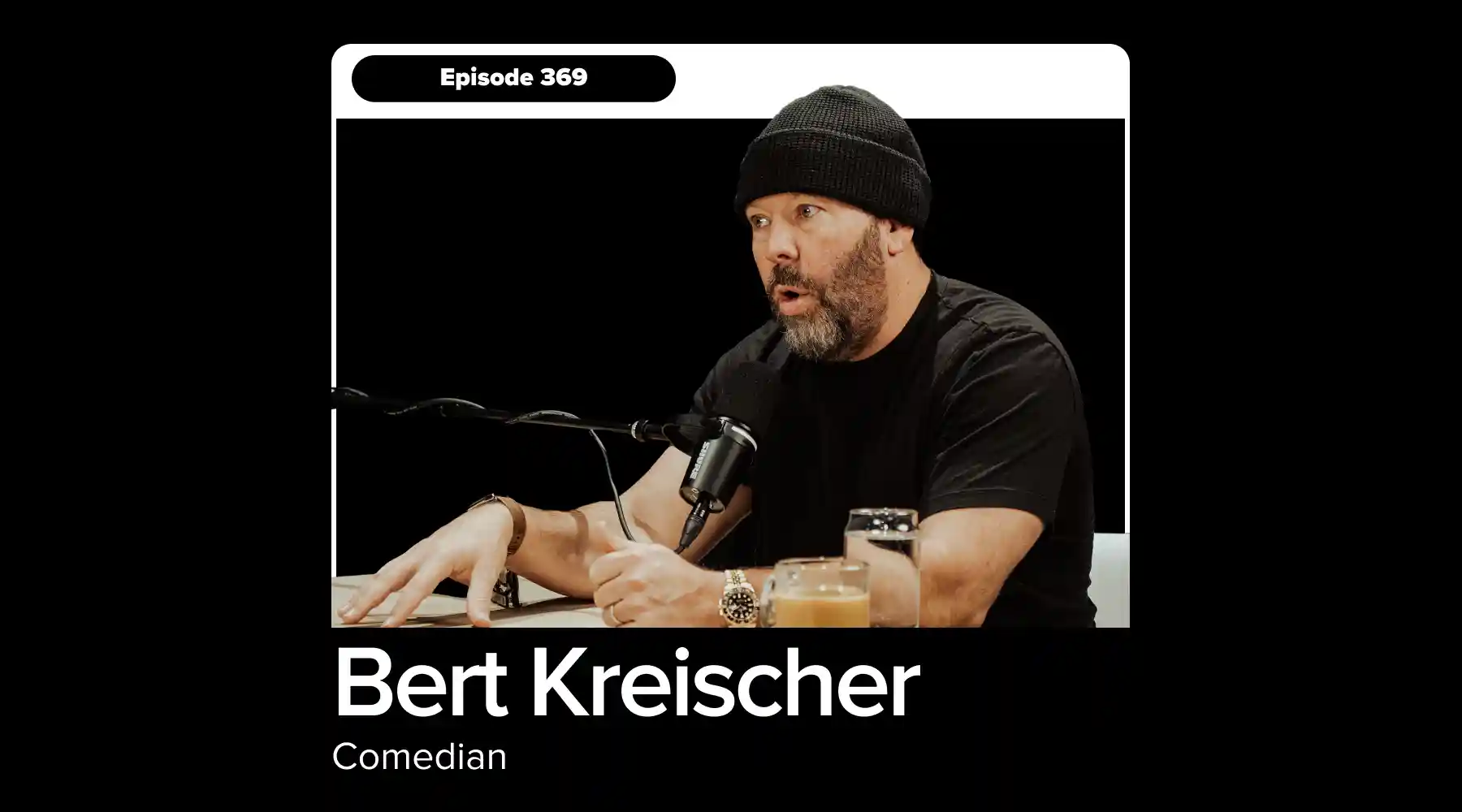
Most wearable conversations focus on elite athletes chasing peak numbers. This episode goes the other direction. Comedian Bert Kreischer, a longtime WHOOP member, sat down with WHOOP founder Will Ahmed to talk about how WHOOP data fits into a real, busy life: travel weeks, late nights, dry stretches, and the daily decisions that move sleep, recovery, and resting heart rate. The conversation covers practical levers you can use right away: alcohol and resting heart rate, hydration, sleep consistency, and how to read a daily strain target. Together they offer a usable framework for making better health decisions without trying to live like a pro athlete.
How can WHOOP help with everyday health decisions?
The point Bert keeps coming back to in this episode is that WHOOP works as a feedback loop you can actually use. He is not chasing a perfect score or trying to beat an elite athlete's data. He is using daily numbers to make small, specific changes and see whether they pay off.
That framing matters because most people are in the same boat. Real life includes late dinners, travel, and weeks that make consistency hard. With WHOOP, you can pick a metric you understand, change one behavior, and watch the trend.
"WHOOP is a tool to help you do a little bit better."
Bert's framing is how WHOOP delivers value day to day. The data shows the cause and effect between everyday choices and physiology, so the next better choice becomes easier.
What you should take away
- Pick one metric you care about, whether it be resting heart rate, sleep, or recovery etc.
- Make one behavior change.
- Watch the trend over a week or two before judging the result.
Listen to the full episode for Bert's framing of why relatable data beats elite-athlete benchmarks.
How does alcohol affect resting heart rate and recovery?
Alcohol shows up in your data fast, and that is exactly what makes it a useful behavior-change lever.
Bert described what happened when he stopped drinking for a few days: his resting heart rate dropped from the mid-80s into the mid-60s, with his lowest reading landing at 64 within roughly three alcohol-free days.
"Stop drinking for [...] 1, 2, 3 days, resting heart rate, 64."
That is a meaningful shift, and the speed of the change is the point. When you can see the cost of alcohol on your physiology within a couple of days, skipping a drink becomes a concrete tradeoff rather than an abstract guideline.
Resting heart rate is what it sounds like, how fast your heart beats at rest, typically measured during sleep. When it trends down toward your healthy baseline, it is a useful signal that your body is recovering well. Alcohol pushes resting heart rate up by increasing cardiovascular load and disrupting overnight recovery, both of which show up in your WHOOP data the next morning.
What you should take away
- Run a short alcohol-free experiment. Compare resting heart rate and recovery to your recent average over three to five nights.
- Use the speed of the response as motivation: the payoff is visible quickly.
- Combine it with the hydration test below for a clearer read on which lever moved your numbers most.
Listen to the full episode for Bert's full alcohol experiment.
How does hydration affect resting heart rate and recovery?
Hydration is the other quick lever Bert tested, and it is the one most people underestimate.
When Bert drank more water, his sleep score, resting heart rate, and recovery all improved, even on nights when the extra water meant waking once during the night to use the bathroom. That tradeoff sounds counterintuitive until you see the numbers, but the broader cardiovascular effect of being well hydrated outweighed the brief wake-up.
The mechanism is straightforward: hydration supports overnight cardiovascular recovery, sleep architecture, and a lower resting heart rate. All three feed your daily WHOOP recovery score.
What you should take away
- Test hydration timing. If extra water close to bed disrupts sleep, shift your last full glass earlier in the evening.
- Track the effect on resting heart rate and recovery over five to seven days.
- A small wake-up to use the bathroom is not automatically a worse night, check what the data says.
Listen to the full episode for Bert's hydration test.
What does a WHOOP strain target actually tell you to do?
It tells you how hard to work today, given how recovered you are.
WHOOP Strain is a 0-21 scale that measures cardiovascular load across your day. The strain target is a daily number based on your overnight recovery, so it adjusts to where your body actually is rather than where you wish it was. That removes the guesswork on days when motivation is uncertain and protects you from overcooking it on days when your body needs less.
Bert described how it lands for him on a typical morning:
"Your strain coach takes a look at your sleep throughout the night and says, 'Hey man, a great workout for you would be 11.1 today.'"
The number is personalized, the call is concrete, and the workout type is up to you.
The practical effect is that hitting your target counts as a successful day. A brisk walk, a steady incline treadmill session, or a controlled interval workout can all get you there. You do not need to chase a number near the top of the scale.
What you should take away
- Treat the daily target as a dose, not a test.
- On low-recovery days, hit the number and stop. On better-recovered days, push if it serves your training.
- Over time, consistent work in higher heart rate zones helps build cardiovascular fitness and supports VO2 max improvements.
Listen to the full episode for how strain targets help on the days motivation is low.
How does sleep consistency affect WHOOP recovery?
Sleep duration matters, and so does the timing of when you go to bed and wake up.
Sleep consistency is the regularity of those bed and wake times across the week. WHOOP tracks it because it is a separate signal from sleep duration: you can sleep eight hours a night and still have low consistency if your schedule swings wildly.
Will defined it plainly for Bert in the episode:
"Sleep consistency is essentially do you go to bed and wake up at the same time?"
That distinction is especially relevant if you travel, work odd hours, or have a social calendar that varies through the week. A low consistency score on a heavy travel week is a description of your schedule, not a verdict on your sleep behavior.
The practical move is to treat consistency as a trend rather than a daily grade. Anchor your wake time first, since that is usually the easiest habit to hold, then keep your sleep and wake times within a similar window during the week. Get back to your normal schedule quickly after disruptions.
What you should take away
- Anchor your wake time first.
- Keep weekday sleep and wake times within roughly the same window.
- Treat travel and event weeks as known disruptions and focus on the recovery you can control.
Listen to the full episode for the conversation on how schedule chaos shows up in your data.
Are cold plunges and sauna worth doing for recovery?
The conversation also moved into the broader optimization landscape that surrounds modern training: cold plunges, sauna, red light, biomarker testing, GLP-1s. The framing Bert and Will land on is sensible. Experimentation is fine, but it has to come second to the basics that already move your data: alcohol, hydration, sleep timing, and consistent training.
Cold exposure is a useful example. For some people, regular practice helps heart rate come down over time as the body adapts to the stress. For others, the first response is the opposite, a heart rate spike, because the body reads the cold as a threat.
"There's some people [...] who get into a cold plunge and their heart rate spikes 'cause they freak out."
That spike is normal physiology, not a sign you are doing something wrong. Slow nasal breathing or a basic box-breathing pattern can reduce the panic response and make the exposure more controlled.
The honest answer is that cold plunges and sauna are nice-to-haves once the foundation is solid. If alcohol, hydration, sleep timing, and consistent training already move your numbers, that is the foundation. Add cold or sauna when you enjoy them and can measure a benefit. The most durable routine is the one you will still be doing in three months.
What you should take away
- Lock in the basics first.
- Add cold plunge or sauna only if you enjoy them and can see a measurable change in your data.
- Use breathing techniques to manage the initial cold-exposure spike.
What is the bigger lesson from this episode?
Bert's takeaway is practical: enjoy your life and pay attention to the data. When the numbers reflect the choices you actually made yesterday, they become a tool for getting a little better today.
That is the day-to-day version of WHOOP: a recovery score that responds to better hydration, a resting heart rate that drops after a few alcohol-free nights, a manageable strain target on a busy day, a sleep consistency trend that explains why your week felt the way it did. The data is most useful when you let it guide the next small change.
The bottom line
- Comedian Bert Kreischer told Will Ahmed his resting heart rate dropped from the mid-80s to as low as 64 within roughly three alcohol-free days, an example of how fast WHOOP data responds to behavior change.
- Drinking more water improved Bert's sleep score, recovery, and resting heart rate, even when it meant waking once during the night.
- WHOOP Strain is a 0-21 scale; the daily strain target adjusts to your overnight recovery, so it tells you how hard to work given how ready you are today.
- Sleep consistency, the regularity of your bed and wake times, is a separate signal from sleep duration and matters for recovery on its own.
- Cold plunges and saunas are useful only when added to a foundation of basics (alcohol awareness, hydration, sleep timing, consistent training); without that foundation, they are performative.
- The most durable health routine is the one you can still see yourself doing three months from now.
- The highest-leverage move is picking one metric, changing one behavior, and watching the trend over a week or two.
Frequently asked questions about things discussed in this episode
How does WHOOP measure sleep consistency?
- WHOOP scores sleep consistency on a 0-100 scale based on the regularity of your bed and wake times across rolling four-day windows, and treats it as a separate input to recovery from total hours slept. That separation matters because two people with identical sleep durations can have very different consistency profiles, and consistency independently affects your readiness score.
How quickly does resting heart rate drop after you stop drinking alcohol?
- In the conversation Bert described his resting heart rate falling from the mid-80s into the mid-60s within roughly three alcohol-free days, with a low reading of 64. Individual responses vary, but the directional finding (RHR drops within a few days of removing alcohol) is consistent with what alcohol does to overnight recovery and HRV.
What is a WHOOP strain target and how should I use it?
- A daily strain target on the 0-21 WHOOP Strain scale is calculated from your overnight recovery and tells you how much cardiovascular load is appropriate for the day. Treat it as a dose, not a test: on low-recovery days, aim to hit the number and stop. On better-recovered days, push harder if your training plan calls for it.
Why does drinking more water improve my recovery score?
- Hydration supports overnight cardiovascular recovery, sleep architecture, and resting heart rate, all of which feed WHOOP recovery. In the episode, Bert reported that better hydration improved his sleep score and resting heart rate even when it meant waking once during the night to use the bathroom.
How does cold exposure show up in WHOOP data?
- Cold exposure typically registers as a short heart rate spike during the plunge, followed by changes in resting heart rate and recovery over the days that follow as your body adapts. For some people the spike fades with regular practice; for others it stays sharp because the body keeps reading the cold as stress. Either response is normal physiology, and your WHOOP data is what tells you whether cold exposure is actually moving your numbers in the direction you want.
Should I add cold plunges and sauna to my routine?
- Add them only after the basics (alcohol awareness, hydration, sleep timing, consistent training) are already moving your data. If your foundational behaviors are dialled in and you enjoy cold or heat exposure, the data will show whether they add a measurable benefit. If your foundation is not in place, the marginal gain from a cold plunge will not be the lever that changes your recovery.
Is WHOOP useful if I am not a competitive athlete?
- Yes. WHOOP is built around the cause-and-effect between daily choices (alcohol, hydration, schedule, training) and the metrics that matter for recovery and readiness. The value comes from making one small change at a time and watching the trend, regardless of whether you are training for a competition or simply trying to feel better day to day.
Related Articles

Podcast 271: Laugh Your Stress Away with Dermot Whelan

Topics
- Mental Health
- Health & Wellness
Podcast 185: How Timing and Quantity of Alcohol Affects Your Biometric Data

Topics
- Alcohol
- Behavior Impact
- Health & Wellness
- Recovery