Topics
- Post
- App & Features
- Stress
How WHOOP Stress Monitor measures and manages daily stress levels
Podcast episode originally published on March 29, 2023
Stress tracking works best when it shows what is happening right now and gives you a way to respond.
In Episode 215 of the WHOOP Podcast, Jamie Waydo, Chief Technology Officer at WHOOP, explains how WHOOP Stress Monitor turns heart rate variability, or HRV, heart rate, and personalized baselines into a real-time view of physiological stress, then pairs that data with guided breathwork developed with Dr. Andrew Huberman of Stanford University. The conversation also explains why the feature matters outside workouts, from bedtime routines and commuting to public speaking, travel, alcohol, and family logistics. If you want to understand what WHOOP is measuring, how to read the 0 to 3 scale, and how to use stress data to change your day, this episode is a practical starting point.
What does WHOOP Stress Monitor actually measure?
WHOOP Stress Monitor measures physiological stress in real time, not just how stressed you think you feel. The feature looks at your current heart rate variability, or HRV, and heart rate to estimate how activated your body is in the moment.
That matters in the quiet parts of the day, when traditional workout metrics tell you very little. In the episode, Waydo explains that the feature fills the gap between sleep, training, and bedtime by showing what your body is doing during meetings, school drop-offs, travel, meals, or even while reading on the couch. Published launch materials for Introducing Stress Monitor add that WHOOP compares those live signals with a personalized baseline from the prior 14 days and also accounts for motion, so exercise is less likely to be confused with non-exercise stress.
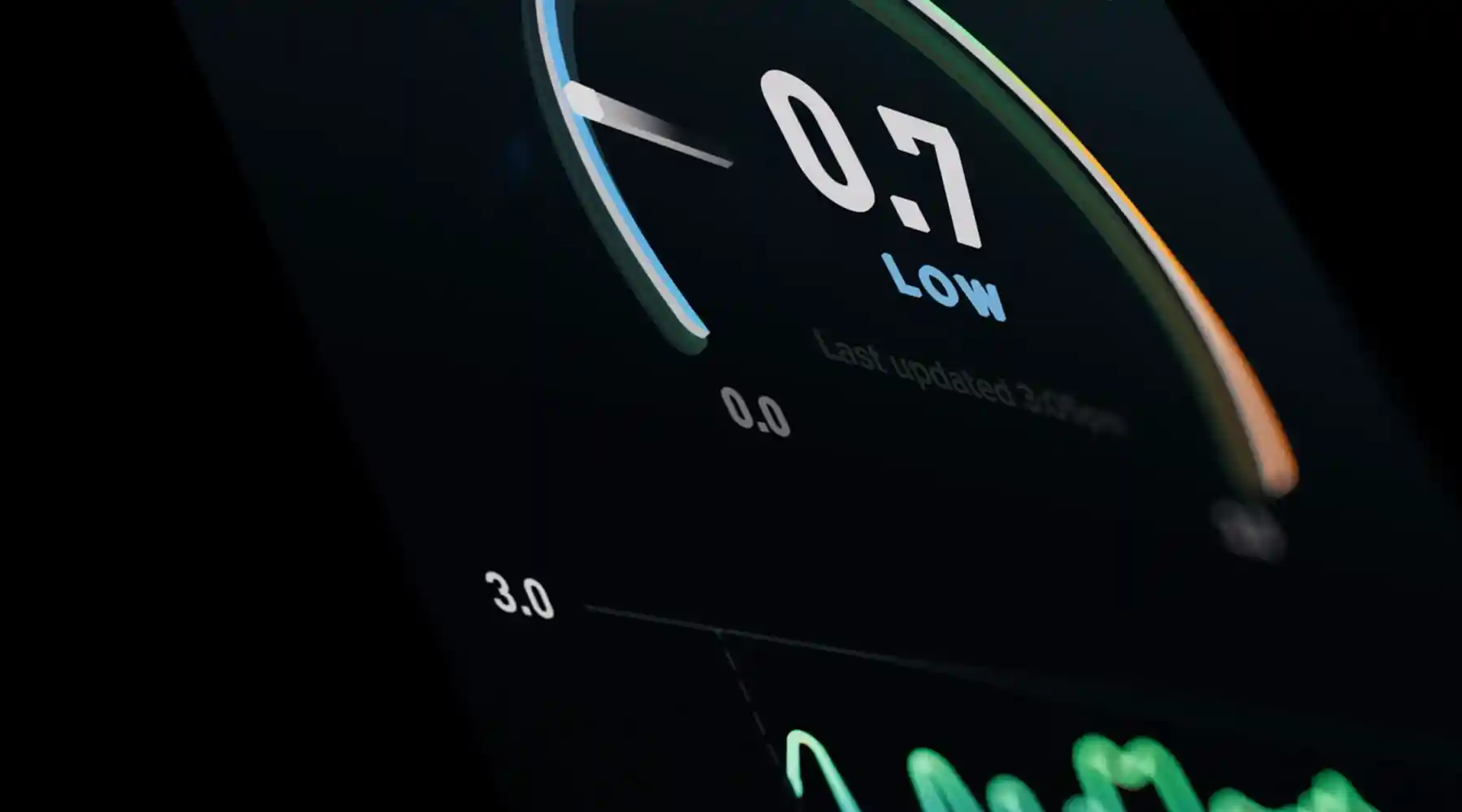
The result is a live score that updates through the day and a graph you can review later. In practice, that means you can open the WHOOP app before bed, after a hard conversation, or during a packed workday and see whether your body is calm, alert, or highly activated. You can also drag across the daily graph to find the exact minute your stress rose or fell.
Around that live reading, the feature is designed as a behavior tool. Stress data is useful because it gives context to choices you are already making, including when you eat, how you wake up, when you train, and whether a breathing session is helping.
Waydo defines the feature clearly in the episode:
"The WHOOP stress monitor is a real-time measure of your body's physiological stress. It's looking at your real-time HRV and your heart rate, and it's giving you a measure in the moment of is your body stressed or not."
What you should take away
- WHOOP Stress Monitor estimates physiological stress from live HRV and heart rate, then compares that reading with your personal baseline.
- WHOOP materials published at launch state that motion is considered so the feature can better separate exercise from other stressors.
- The feature is built for ordinary moments, including work, commuting, eating, and pre-sleep routines, not only workouts.
- The daily graph lets you review exactly when a spike happened, which makes stress patterns easier to connect to real events.
How should you read the WHOOP stress scale?
The WHOOP stress scale runs from 0 to 3, and each part of the range points to a different physiological state. A lower score generally reflects calm, the middle range often reflects useful alertness, and the upper range reflects high activation.
Waydo says the scale was intentionally kept simple enough to read at a glance, while still being granular enough to show peaks and valleys across the day. In the episode, Will Ahmed describes 0 to 1 as very low stress, 1 to 2 as a zone of alertness and focus, and 2 to 3 as a highly activated state. He also notes that during a solid night of sleep you will often want the signal to stay low and relatively flat, sometimes below 0.5.
What makes this scale especially useful is that a higher number is not automatically bad. A score above 2 may be appropriate before a presentation, in competition, or when you need to be switched on in a high-stakes situation. The question is less whether you ever reach that range and more whether you can move out of it when the moment passes.
That framing helps people avoid treating stress like a simple pass-fail metric. In the conversation, Waydo compares the higher end of the range to being caffeinated. It can help in the right context, but you do not want to stay there all day. During sleep, the goal shifts. Ahmed and Waydo both point to flatter, lower overnight stress as a sign that your body is settling into a more restorative state.
As Waydo explains, the score was built to map clearly onto those states:
"What we really found was that scale of 0 to 3 allows you to understand low, medium, and high stress and get the understanding of the peaks that are happening through your day and the valleys in your day."
What you should take away
- WHOOP uses a 0 to 3 scale so you can quickly tell whether your body is calm, moderately activated, or highly activated.
- A score from 1 to 2 can be useful for focus, speeches, demanding work, and other moments when alertness helps performance.
- A score above 2 is a sign of strong activation, which can be helpful briefly but usually is not a state you want to hold for long stretches.
- Lower, flatter overnight stress is generally a better sign than a spiky pattern during sleep.
For more on how stress and sleep interact, see Episode 131 of the WHOOP Podcast and listen to Episode 215 of the WHOOP Podcast on Spotify.
How do WHOOP breathing interventions help you change stress in real time?
WHOOP pairs stress measurement with guided breathing because the point of real-time stress data is action. In Episode 215 of the WHOOP Podcast, Waydo says the breath is one of the strongest tools people can use to shift stress on demand, partly because it is always available and does not require extra equipment.
The first guided option is Increase Relaxation. Waydo describes it as a breathing pattern with an exhale that is roughly twice as long as the inhale. In the episode, she says you can start with as few as five breaths and extend the session up to five minutes. The longer exhale is meant to bring your body toward a calmer state and lower your heart rate. That makes it a useful option before sleep, before a difficult conversation, or after you notice a stress spike.
The second option is Increase Alertness. Waydo describes it as rapid breathing, usually in through the nose and out through the mouth, for 25 to 45 repetitions, followed by a deep inhale, a deep exhale, and a breath hold for as long as you can do it safely. Ahmed notes that the protocol shifts the body toward sympathetic activation, while still leaving many people with a greater sense of mental clarity.
WHOOP built these sessions with Dr. Andrew Huberman, and the choice of breathing methods was informed by research. WHOOP materials tied the launch to a randomized controlled trial published in Cell Reports Medicine, in which daily five-minute breathing exercises were compared with mindfulness meditation over one month. The study found that cyclic sighing produced the strongest improvements in mood and reductions in respiratory rate.
In the app, the point is not to memorize a protocol. The point is to notice your state, choose the direction you want to move, and use a guided session to help get there. Ahmed describes this as gaining more autonomic control, meaning more influence over whether your body is settling down or getting ready to perform.
Waydo gives the most concrete description of the relaxation protocol in the episode:
"You do a deep breath in to about, you can control it, how many seconds you want to do it, but the ratio is about 2:1. So you inhale for 1 second and then you exhale for 2 seconds. The point being, your exhale is about twice as long as your inhale."
What you should take away
- WHOOP includes two guided breathwork options inside Stress Monitor, one for relaxation and one for alertness.
- The Increase Relaxation session uses an inhale-to-exhale ratio of about 1 to 2, which helps bring the body toward a calmer state.
- The Increase Alertness session uses rapid breathing for 25 to 45 reps followed by a breath hold, which can raise activation while preserving mental clarity.
- The breathing protocols were selected with input from Dr. Andrew Huberman and align with published breathwork research in Cell Reports Medicine.
Waydo and Ahmed spend more time on the breathing mechanics, sympathetic versus parasympathetic shifts, and how these sessions feel in practice in Episode 215 of the WHOOP Podcast on Spotify.
What kinds of everyday moments can raise or lower your WHOOP stress score?
WHOOP Stress Monitor is most revealing when it is tied to ordinary moments that usually go unmeasured. In the episode, both Ahmed and Waydo describe spikes from family logistics, meals, alarms, alcohol, bedtime habits, travel, and social pressure.
Waydo shares one of the clearest examples. While reviewing her day, she noticed a sharp peak at 8:15 a.m. It turned out to be the exact moment she dropped her 9-year-old off at school before leaving for a work trip. The event lasted only minutes, but the response was strong and visible. That kind of pattern matters because many stressors are short, emotional, and easy to miss if you only look at end-of-day summaries.
Ahmed offers several examples from his own data. He says late meals raise his pre-sleep stress, eating too fast can cause a spike, alcohol can send overnight stress much higher even after one or two drinks, and intense evening workouts or steam sessions can keep stress elevated into bedtime. He also describes a large difference between waking up to the WHOOP alarm on the band and waking up to a phone alarm, which he says produces a much sharper immediate spike.
The flip side is equally useful. Waydo says tea, reading, and blue-light-blocking glasses lower her pre-bed stress. She also describes using the Increase Alertness breathing session in the morning and seeing more time in the 1 to 2 range through the day, with fewer minutes above 2. That pattern suggests the feature is less about chasing the lowest possible number and more about learning which choices create a steadier range.
These observations fit with broader education in What is stress? and How to Manage Stress With Science, where WHOOP explains how stress can show up in mood, digestion, sleep, muscle tension, and daily behavior. Stress Monitor adds a moment-by-moment layer to that picture.
Waydo's school drop-off example captures how specific the feature can get:
"I peaked at exactly 8:15. And that was literally the moment that he got out of the car and I was saying goodbye to him to go on this work trip. That sadness of saying goodbye to my little guy, even though I'm only gone for 4 days, really peaked my stress and went to 3 for probably 2 minutes."
What you should take away
- WHOOP Stress Monitor can surface brief, emotional stressors that would be easy to forget by the end of the day.
- Bedtime habits such as late meals, alcohol, and late hard training can raise stress going into sleep and create a spikier overnight pattern.
- Calming routines such as tea, reading, breathwork, and limiting blue light can lower pre-sleep stress.
- The most useful use case is often pattern recognition, including which routines create a steadier day and which ones create avoidable spikes.
If you want more examples of the ordinary moments that showed up in testing, Ahmed and Waydo walk through them in Episode 215 of the WHOOP Podcast on Spotify.
How can WHOOP show stress when heart rate alone does not tell the full story?
WHOOP Stress Monitor can show high stress even when heart rate is relatively low because the feature is not reading heart rate in isolation. In the episode, Waydo says the score combines real-time HRV and heart rate, which allows it to capture cognitive and emotional load that may not look like exercise.
That distinction came up repeatedly during development. Waydo explains that WHOOP Labs used mental math tasks, ice baths, and other controlled stressors to see how the body responded. A blood pressure cuff was used during some sessions so the team could compare changes in HRV and heart rate with a classic stress marker. In other words, the score was shaped by experiments that looked at both mental and physical stress responses.
Ahmed gives a useful example from training. He says there are moments during weightlifting when his heart rate is relatively low, yet the stress score is in the 2.5 to 3 range. The reverse can also happen. A workout may be challenging but feel less stressful than a meeting, a speech, or a travel disruption. That is part of what makes the feature interesting for people who already track Recovery and Strain. It adds a separate lens on the day.
The same idea helps explain why stress can stay high when you are sick. Waydo says people often spend more time in the 2 to 3 zone during illness because the body is under a heavy load even when outward activity is low. A similar logic applies to overnight stress after alcohol or late training. You may be asleep, but your body is still processing.
This connection between stress and sleep is also explored in Episode 268 of the WHOOP Podcast, which looks at newer WHOOP research on how daily stress patterns relate to sleep and recovery.
Waydo describes the lab setup this way:
"We would have people do mental math, which can be very stressful for people. Your heart rate's still potentially very low. But we could see in the data through your blood pressure, we were using a blood pressure cuff to help us correlate the data, your HRV, your heart rate, and we could see in the data that your body was very stressed because of this cognitive load."
What you should take away
- WHOOP Stress Monitor uses more than heart rate alone, which helps it capture cognitive and emotional load.
- WHOOP Labs used controlled stressors such as mental math and ice exposure while comparing signals with blood pressure data during development.
- High stress can appear during weightlifting, illness, travel, or mentally demanding work even when heart rate is not especially high.
- Stress data adds a different layer to Recovery, Strain, and Sleep because it helps explain how the body responds outside training sessions.
The development work behind the score, including mental math tasks and lab testing, is covered in more detail in Episode 215 of the WHOOP Podcast on Spotify.
How could WHOOP Stress Monitor become more useful over time?
WHOOP Stress Monitor is meant to become more useful as it is connected to the rest of the app. Waydo says one of the next steps is overlaying activities directly onto the stress graph, so you can see how meditation, breathwork, meetings, or workouts map onto changes in activation.
That kind of overlay would make review easier and more specific. Instead of remembering that you did a 10-minute meditation sometime in the afternoon, you would be able to see the activity directly on the chart and compare the exact before-and-after pattern. Waydo also says trends over time are part of the plan, including comparing one day with yesterday, last week, or even a recurring quarterly event.
Ahmed pushes the idea further by describing calendar integrations and other overlays that could connect stress data to the events, people, and routines in your life. Inside the app, the bigger theme is integration. WHOOP already connects sleep, recovery, behaviors, and strain. Stress Monitor adds another layer that can sit alongside those metrics rather than apart from them.
Waydo frames that roadmap in practical terms:
"You're going to start to be able to see trends over time. So you'll start to be able to see, how does my stress today compare to yesterday compared to last week? Or like, I had a board meeting last quarter. I was a 1.2. What am I for the board meeting this quarter?"
What you should take away
- WHOOP Stress Monitor is set up as a platform that can become more useful as it connects with activities, routines, and trend views.
- Activity overlays could help people see exactly how meditation, meetings, workouts, or breathwork changed stress in real time.
- Trends over time could make it easier to compare recurring situations such as travel days, quarterly reviews, or bedtime routines.
- The long-term value is in combining stress data with sleep, recovery, and logged behaviors inside the WHOOP app.
The Bottom Line
- WHOOP Stress Monitor estimates physiological stress in real time by combining heart rate variability and heart rate against a personal baseline.
- WHOOP uses a 0 to 3 scale so people can quickly distinguish low stress, useful alertness, and high activation.
- The most actionable value of Stress Monitor comes from ordinary moments, including meals, alarms, commutes, family routines, meetings, and bedtime habits.
- WHOOP pairs stress measurement with guided breathwork so a rising score can lead directly to a calming or alertness-focused intervention.
- The Increase Relaxation session uses a longer exhale than inhale, while the Increase Alertness session uses rapid breathing followed by a breath hold.
- Stress can stay elevated during sleep, illness, alcohol use, late hard training, or cognitive load even when outward activity is low.
- WHOOP Labs shaped the feature with controlled stressors such as mental math and ice exposure, plus signal comparisons that included blood pressure data.
- The next layer of value comes from overlays and trend views that connect stress data to activities, routines, and recurring events.
Frequently asked questions about things discussed in this episode
How does WHOOP measure stress in real time?
WHOOP measures stress in real time by combining heart rate variability, heart rate, motion, and your personalized baseline to estimate physiological activation in the moment.
What does WHOOP use the 0 to 3 stress scale to show?
WHOOP uses the 0 to 3 scale to show whether your body is in a lower-stress state, a moderate alert state, or a highly activated state that may be useful briefly but usually should not last all day.
What does WHOOP do to help lower stress after it detects a spike?
WHOOP includes guided breathwork inside Stress Monitor so you can respond immediately with an Increase Relaxation session instead of only reviewing the spike later.
How does WHOOP help distinguish exercise from other kinds of stress?
WHOOP helps distinguish exercise from other kinds of stress by comparing live cardiovascular signals with your baseline and accounting for motion, which gives the score more context than heart rate alone.
What does WHOOP show about stress during sleep?
WHOOP shows that overnight stress can stay elevated and spiky when your body is still processing factors such as alcohol, late meals, illness, or late hard training.
How does WHOOP personalize Stress Monitor for each member?
WHOOP personalizes Stress Monitor by comparing your current reading with your own recent baseline, which means the same event can register very differently for different people.
What can WHOOP show after a breathwork session?
WHOOP can show how your stress changed during the session, along with breathing details such as inhale timing, exhale timing, and breath holds, so you can review which protocol worked best for you.
Stress Monitor makes stress visible in the exact moments when a late dinner, a phone alarm, a school drop-off, or a five-minute breathing session changes what your body is doing inside the WHOOP app.