Topics
- Post
- Health & Wellness
- Sleep
How family sleep habits affect child and parent sleep quality
Originally published on November 18, 2025
Family sleep habits shape how children fall asleep, how parents function, and how healthy everyone feels the next day. In Episode 350 of the WHOOP Podcast, Senior Vice President of Research, Algorithms, and Data at WHOOP Emily Capodilupo speaks with pediatrician and certified sleep specialist Dr. Angela Holliday-Bell about why child sleep and parent sleep cannot be separated.
Holliday-Bell focuses on pediatric and family sleep health, and her advice is practical: teach sleep skills early, use consistent routines, respect developmental stages, and stop treating parent sleep as optional. This article breaks that conversation into five questions, covering infant sleep training, common myths, screens and teenagers, and how sleep tracking can help people spot patterns at home.
To listen to Episode 350 of the WHOOP Podcast, Improving Sleep Performance For You and Your Family with Dr. Angela Holliday-Bell, in full, head to the WHOOP Podcast on YouTube.
Why does parent sleep change how the whole family functions?
Parent sleep changes family life because children copy adult behavior, and tired adults are less patient, less emotionally steady, and less consistent at bedtime. Holliday-Bell makes the case that treating parent sleep as optional creates more friction for the child and more stress for the adult.
Her reasoning starts with modeling. If a household treats sleep as a leftover activity after television, scrolling, chores, or work, children absorb that message even if parents keep saying bedtime matters. Holliday-Bell argues that sleep should be treated the same way families treat nutrition or movement: as a visible health habit children see every day. She also connects parent sleep to emotional regulation. A well-rested parent is more likely to stay calm through toddler resistance, bedtime delays, middle-of-the-night wakeups, and the general unpredictability of family life.
The adult health piece is equally direct. Holliday-Bell says chronically poor sleep affects focus, creativity, motivation, energy, and long-term health. She specifically mentions higher risk for obesity, cardiovascular disease, type 2 diabetes, anxiety, and depression. Those effects line up with the broader performance case explored in how sleep impacts performance. Capodilupo also adds a useful performance example from Stanford University researcher Cheri Mah's sleep extension study in collegiate basketball players, which found that adding sleep improved athletic outcomes and day-to-day functioning.
Holliday-Bell frames the benefit in parenting terms, not only health terms. Better-rested parents are more present. They can notice cues sooner, respond with less reactivity, and keep routines more stable, which gives children a clearer sense of what bedtime is supposed to look like.
Holliday-Bell puts the point plainly:
“In order to be the most present, best, patient parent that you can be, sleep is a significant part of that because our emotional regulation is significantly impacted by our sleep.”
What you should take away
- Parent sleep affects bedtime consistency, emotional regulation, and how calmly adults respond to overnight wakeups.
- Children learn from adult sleep behavior, so a household that visibly values sleep gives kids a clearer model to follow.
- Chronic sleep loss in adults affects focus, motivation, energy, and long-term health, not only next-day tiredness.
If you want to hear Holliday-Bell unpack why adult sleep changes the whole family dynamic, listen to the full episode on Youtube.
How do sleep habits in childhood shape sleep later in life?
If parent sleep sets the tone today, childhood sleep habits can set the tone for years. Holliday-Bell's central claim is simple: sleep is a learned skill, and children who build good habits early are more likely to sleep well later.
She says many adults with chronic insomnia describe themselves the same way: they have “always been a bad sleeper.” In her view, that pattern often starts with weak sleep habits that were never corrected. Sleep pressure will eventually push someone to sleep, but good sleep behavior is different from simply becoming exhausted. Good sleep behavior includes predictable timing, a stable routine, and an environment that supports winding down.
For families, that means turning sleep from a vague goal into a repeatable structure. Holliday-Bell recommends a consistent bedtime, a consistent wake time, and a wind-down routine that starts about 30 to 45 minutes before bed. She also encourages parents to explain why bedtime matters, especially as children get older and can understand the link between sleep, mood, learning, and next-day energy. That learning and memory angle is also explored in how better sleep supports memory and learning.
The bigger idea is that bedtime should feel expected, not improvised. A child who knows what happens before sleep, when sleep starts, and what happens after a normal nighttime wakeup has a far easier job than a child who gets different signals every night.
Holliday-Bell gives the cleanest possible definition of the problem:
“Sleep is a skill [...] in terms of having healthy sleep habits, it’s something that we need to learn.”
What you should take away
- Sleep quality depends on learned habits, not only on how tired a child feels.
- Consistent bedtimes, consistent wake times, and a 30 to 45 minute wind-down routine help children learn what to expect.
- Early sleep habits can carry forward into adolescence and adulthood, which makes childhood routines worth building carefully.
If you want to hear Holliday-Bell go deeper on why sleep should be taught like a family skill, listen to the full episode on Youtube.
When is a baby ready for sleep training, and what is sleep training actually teaching?
That long-term view makes the infant period especially important. Holliday-Bell says many babies are ready to start learning independent sleep habits at about 4 months and 14 pounds, as long as a pediatrician agrees growth is on track.
Before that point, expectations should stay realistic. During roughly the first 3 months, babies usually need overnight feeds and adults should follow hunger cues and sleepy cues. After that, sleep architecture starts to change. Newborn sleep has two broad stages, REM or active sleep, and non-REM or quiet sleep. As babies move past the earliest months, sleep becomes more stage-based, and many start waking between those stages. That is part of why the 4-month sleep regression feels so abrupt.
Holliday-Bell prefers to describe sleep training as teaching, not deprivation. The goal is to help a child learn how to self-soothe during normal transitions between sleep stages instead of needing the same outside input every time. Too much intervention at each stir or brief wake can create what she calls negative sleep associations, where a child comes to expect rocking, feeding, or a parent's presence in order to fall back asleep.
She also stresses that readiness is more than a calendar date. Useful signs include longer stretches between feeds, signs of self-soothing such as thumb-sucking or settling with repetitive touch, and pediatric reassurance that overnight feeding is no longer medically necessary. Once a family starts a method, she says most people should see some improvement within about a week. If nothing changes, or if parents are unsure what is normal, she recommends bringing the issue to a pediatrician early rather than waiting for months.
Holliday-Bell gives families a practical benchmark:
“When they reach that 4 months and 14 pounds, it’s a good benchmark for most babies.”
What you should take away
- The first 3 months usually require overnight feeding and flexible expectations around sleep.
- Around 4 months and 14 pounds is a common benchmark for beginning independent sleep teaching, with pediatric guidance.
- Sleep training teaches self-soothing between sleep stages, which can reduce dependence on rocking, feeding, or repeated parental intervention.
- A week of consistent effort should usually produce some improvement, and a pediatrician is a good next step if it does not.
If you want to hear Holliday-Bell unpack infant readiness, self-soothing, and sleep associations, listen to the full episode on Youtube.
Which sleep myths make bedtime harder for kids and parents?
Once families understand the mechanics, the next hurdle is misinformation. Holliday-Bell calls out three myths that repeatedly make sleep harder: sleep training harms attachment, moving infants always means they are awake, and keeping kids up later will make them sleep better.
On sleep training, her argument is both emotional and evidence-based. She points to a follow-up study on behavioral infant sleep interventions that compared graduated extinction, often called the Ferber method, with no sleep training. According to Holliday-Bell, researchers looked at cortisol as a marker of stress, attachment style at 1 year, and maternal mental health. She says the sleep-trained group had lower cortisol after the intervention, similar attachment outcomes at 1 year, and better maternal mental health. Her conclusion is that teaching independent sleep does not damage the parent-child bond.
Another myth comes from normal infant movement. Babies are often noisy, wiggly sleepers, which makes adults think they need help when they may still be fully asleep. Holliday-Bell explains that during the earliest months, infants spend half of sleep in active REM sleep, and unlike adults they are not functionally paralyzed during that stage. They grunt, kick, squirm, and vocalize. Parents who intervene too fast can accidentally wake a baby who was already settling.
The third myth is the idea that skipped naps or a later bedtime will make nighttime easier. Holliday-Bell says the opposite often happens. Overtired children can get a cortisol-driven second wind, which makes them fight sleep, wake more often, and settle less efficiently.
Her explanation of infant movement is one of the most useful reality checks in the conversation:
“Babies actually spend about 50% of their time in each of those stages.”
What you should take away
- Current evidence discussed in the episode supports the view that behavioral sleep teaching does not worsen attachment and can improve maternal mental health.
- Noisy, active infant sleep is often normal REM sleep, not a sign that a baby needs immediate intervention.
- Later bedtimes and missed naps can increase overtiredness and make nighttime sleep more fragmented.
If you want to hear Holliday-Bell go deeper on sleep training myths and overtired bedtime struggles, listen to the full episode on Youtube.
How should families handle screens, teenage sleep shifts, and sleep tracking?
As children get older, bedtime problems usually shift from soothing to scheduling. Holliday-Bell recommends handling school-age and teen sleep with boundaries around screens, realistic expectations about puberty, and pattern tracking that helps parents see what is working.
Her screen guidance is direct. Blue light from phones, tablets, computers, and televisions suppresses melatonin in everyone, and she says children are even more sensitive because their retinas are more light-sensitive and their circadian rhythms are still developing. Her practical rule is to keep screens out of the wind-down hour before bed when possible. She suggests replacing them with reading, puzzles, a warm bath, and other quiet routines. If some light is necessary, she notes that red light is less stimulating than blue-rich light. Older children and teens may also do better if phones charge outside the bedroom.
Puberty adds another layer. Holliday-Bell explains that adolescents naturally shift later, with melatonin release and sleepiness arriving a couple of hours later than before. Parents often interpret that as laziness or defiance. She urges a more accurate view: teens may need help shifting gradually, not blame for failing to fall asleep at a biologically unrealistic time. She recommends small stepwise changes and collaborative planning, especially when sports, homework, and social life all compete for nighttime hours. The broader value of sleep consistency is covered in the circadian rhythm sleep hack.
On tracking, Holliday-Bell sees a clear role for wearables and logs, especially for infants and toddlers when adults are trying to remember wake windows, naps, and overnight patterns. Her caution is to use data for patterns, not perfection. For adults, that same pattern-based approach becomes useful in WHOOP Sleep, Sleep Coach, and the WHOOP Journal, which can help people connect routine changes to next-day outcomes.
Her summary of the screen issue is hard to overstate:
“Blue light [...] suppresses melatonin for anyone. Children’s retinas are more sensitive to light in general, so they are even more sensitive to that suppression.”
What you should take away
- Blue light before bed can delay sleep timing, and children are especially sensitive to that effect.
- Teenagers naturally shift later during puberty, so gradual schedule changes work better than forcing an abrupt early bedtime.
- Tracking naps, wake windows, and bedtime patterns can reduce guesswork, as long as families use the data to find trends instead of chasing perfect nights.
If you want to hear Holliday-Bell unpack screens, puberty, and how tracking can reduce bedtime guesswork, listen to the full episode on Youtube.
The bottom line
- Parent sleep quality affects patience, emotional regulation, and the consistency children experience at bedtime.
- Sleep is a learned behavior, so stable routines in childhood can improve sleep habits well beyond the early years.
- Many babies can begin learning independent sleep skills around 4 months and 14 pounds, with pediatric guidance on growth and feeding needs.
- Behavioral sleep teaching is designed to build self-soothing between sleep stages, not to weaken parent-child attachment.
- Active, noisy infant sleep is often normal REM sleep, which means immediate intervention is not always necessary.
- Overtired children often sleep worse, because missed naps and late bedtimes can create a cortisol-driven second wind.
- Blue light from screens can delay sleep timing in children and teens, who are especially sensitive to nighttime light exposure.
- Teen sleep timing shifts later during puberty, so gradual adjustments and shared planning usually work better than rigid commands.
- Sleep tracking is most useful when it shows patterns across nights, rather than becoming a search for perfect sleep every day.
Frequently asked questions about things discussed in this episode
How does WHOOP help parents spot sleep patterns that affect the whole family?
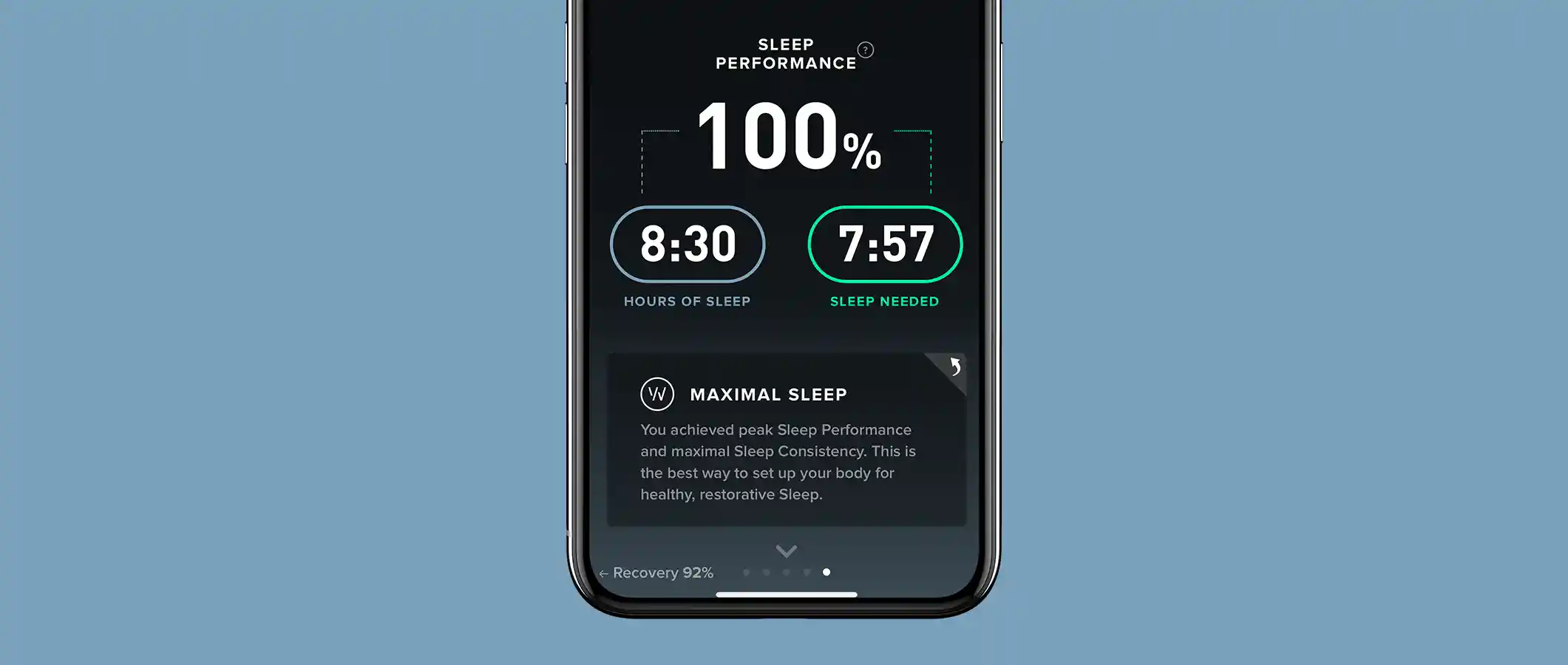
WHOOP helps parents spot repeatable patterns by showing sleep duration, sleep consistency, and next-day Recovery across multiple nights. Your own data can make it easier to see how late bedtimes, fragmented sleep, or a stronger routine change how you feel and function.
How does WHOOP measure sleep?
WHOOP measures sleep using signals collected during the night, including motion, heart rate, heart rate variability, and respiratory rate. That measurement approach is explained in more detail in the WHOOP sleep validation study.
What does WHOOP do for people trying to improve bedtime consistency?
WHOOP makes bedtime consistency easier to see by tracking when you go to sleep, when you wake up, and how regular that pattern is over time. Your sleep data can show whether a steadier routine lines up with better Recovery and better next-day energy.
How can WHOOP help a parent understand the cost of poor sleep?
WHOOP shows the cost of poor sleep by connecting shorter or more disrupted nights to changes in Recovery, resting heart rate, heart rate variability, and how you feel the next day. Your data can turn a vague sense of exhaustion into a visible pattern you can act on.
What does WHOOP do if a parent is trying to build better sleep habits personally?
WHOOP helps parents build better habits by making sleep behavior visible across nights instead of relying on memory. Your Sleep, Sleep Coach guidance, and WHOOP Journal entries can help identify which routines are helping and which ones are keeping bedtime inconsistent.
How does WHOOP make sleep tracking useful without creating perfectionism?
WHOOP is most useful when the data is used to find trends, not to chase a perfect score every night. Your best signal often comes from patterns across a week or month, which fits Holliday-Bell’s advice to look at sleep holistically.
If your household is trying to move from bedtime chaos to repeatable routines, WHOOP can make the parent side of that equation easier to see night after night.
Related Articles
Dr. Jemma King Talks Managing Sleep & Stress to Optimize Performance at Work

Topics
- Health & Wellness
- Organizations