Topics
- Post
- Golf
- Member Stories
How fitness, sleep, and mindset support healthy aging in golf
Originally published on June 8, 2021
Healthy aging in sport comes down to daily movement, disciplined eating, consistent sleep, and a mindset that can handle pressure. Those are the big themes golf legend Gary Player returns to again and again in Episode 126 of the WHOOP Podcast.
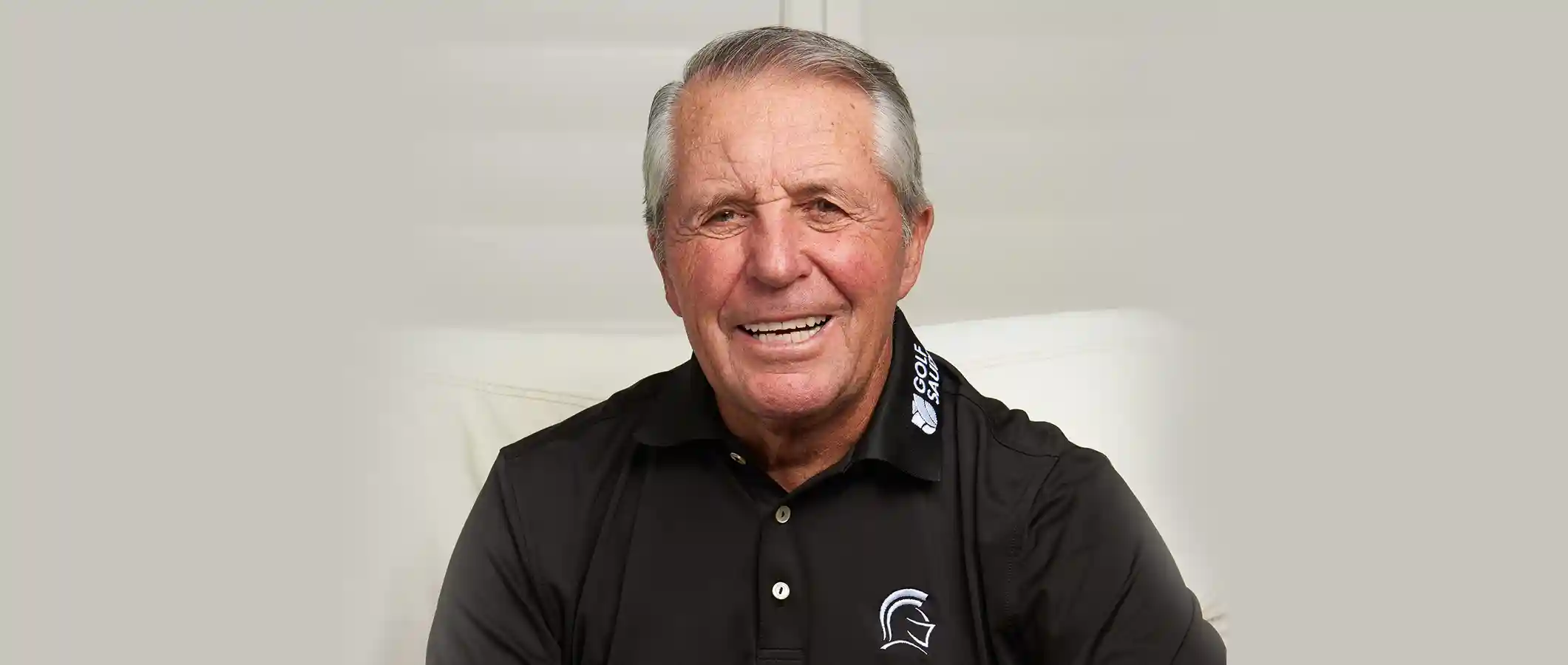
Player, a nine-time major champion, joined Will Ahmed to explain how he brought weight training into golf long before it was accepted, why he now thinks nutrition matters even more than exercise, how he protects sleep while traveling, and how visualization helped him win the 1965 U.S. Open. This article breaks down five ideas from the conversation that still hold up for golfers, athletes, and anyone trying to stay strong later in life.
To listen to episode 126 in full, head to the WHOOP Podcast on Spotify.
Why did Gary Player start lifting weights for golf so early?
Player started lifting weights because he was small, wanted to become a professional athlete, and decided early that strength would give him a chance to compete. That decision mattered because he made it decades before golf widely accepted weight training as useful.
He traced the beginning back to 1953, when his older brother left South Africa to fight in World War II with the Allied forces and gave him a set of secondhand weights. Player said people around golf mocked the idea, including friends such as Arnold Palmer and Jack Nicklaus, who at the time believed lifting could hurt a golf swing. Instead of backing off, Player kept training and worked out alongside Frank Stranahan, one of the few golfers of that era who also believed strength belonged in the sport.
That part of the conversation helps explain why golf now looks different. Modern pros train for force production, durability, and travel stress, and WHOOP has covered that shift in PGA Tour Partnership: Why WHOOP is Golf’s Wearable of Choice. Player was talking about full-body preparation long before it became standard.
As Player told Ahmed, the change started with a single gift and a single year:
“He got me a set of secondhand weights and I started using them in 1953. And then when I started using weights, I was ridiculed.”
What you should take away
- Golf fitness became mainstream long after Player had already made strength training part of his routine.
- Early physical preparation gave Player a way to compete even before he had size or status on his side.
- Being ahead of a sport’s culture can feel isolating, but it can also become a long-term edge.
If you want to hear Player unpack how lifting weights changed golf culture, listen to the full episode on Spotify.
What did Gary Player think matters more, exercise or diet?
If weights were the starting point, Player believed food determines whether training pays off. His clearest nutrition point was simple: he used to think exercise mattered more, and later reversed the ratio.
Player described a pattern built around moderation and restraint. He said he avoids bread, bacon, milk, high-fat foods, and large amounts of meat, and tries to eat salads, vegetables, fruit, and drink plenty of water. He also spoke bluntly about obesity as a public health problem and argued that schools should teach children how to eat, how to exercise, and how to use the mind.
This section of the conversation is most useful when read as a behavior lesson, not a rigid meal plan. Player was not offering a universal menu. He was explaining that daily food choices either support training or work against it. For WHOOP members, that same idea often shows up in the way late meals, alcohol, or heavy travel eating can change Sleep and next-day Recovery.
Player summed up his shift in one line:
“I always thought that exercise was 60 and eating was 40. I now think that eating is 60 and exercise is 40.”
What you should take away
- Player treated nutrition as a daily performance decision, not a side topic next to training.
- His food philosophy centered on moderation, whole foods, and avoiding the habits he felt made training harder to support.
- Teaching nutrition early was one of his clearest public health priorities.
For Player's full take on food choices, obesity, and discipline, listen to the full episode on Spotify.
How did Gary Player approach sleep, breathing, and travel recovery?
Once food is in place, Player turned to the routines that make hard training repeatable. His answer was consistent sleep, daily movement, better breathing, and getting on local time fast after travel.
Player said he usually sleeps nine hours a night and can comfortably sleep 10. He linked that directly to how hard he still trains, arguing that exercise helps him get tired enough to sleep deeply. He also stressed walking as underrated exercise and said many people never give walking enough credit, especially as they age.
When the discussion shifted to travel, Player described a routine built around action instead of passivity. After long flights, he said he would go to the gym immediately, work his body, and try to get more oxygen into his system before sleeping. He also described alternating cold and hot showers, drinking plenty of water, and avoiding heavy foods when crossing time zones. Those habits line up with a bigger idea WHOOP has explored in The Hidden Edge in Golf: WHOOP Research Shows Recovery and Sleep Drive Elite Performance and Getting Back to Golf: A Great Form of Exercise Right Now: golfers perform better when recovery and movement stay consistent.
Player gave the sleep piece a concrete number:
“I sleep 9 hours a night. I can very comfortably sleep 10 hours. And I think one of the reasons I’m so fit at 85 [...] is that when I exercise I’m doing the equivalent of most 40-year-olds in the gym.”
What you should take away
- Player treated long sleep as part of training, not as downtime that sits outside performance.
- Walking, breath control, and post-flight movement were central parts of his recovery routine.
- Travel recovery, in his view, starts as soon as you land, not the next morning.
If you want to hear Player go deeper on sleep, walking, and travel routines, listen to the full episode on Spotify.
How did Gary Player train his mind for pressure and adversity?
Those physical habits led into the part of the conversation Player treated as decisive: the mind. He believed pressure can be prepared for, and he used visualization, repetition, and self-talk to do it.
Player’s example was the 1965 U.S. Open at Bellerive Golf Club. He said he sat in front of the championship scoreboard every morning for five minutes in a Tai Chi position and pictured his own name on it as the winner. He kept the rest of the week equally controlled, going to the gym daily, eating room service instead of going out, and repeating instructions to himself in the mirror at night.
Just as important, Player did not try to remove adversity from golf. He expected bad holes, missed putts, and rough patches, and he wanted a response ready before they happened. His phrase for recovering from mistakes was “the next one.” That mentality shows up in later WHOOP golf conversations too, including Rory McIlroy on training, sleep, and performance and Scott Stallings on PGA Tour fitness and recovery, where preparation and recovery shape confidence before pressure moments arrive.
Player described the visualization routine in exact terms:
“Every morning I used to get up and go to the scoreboard [...] and I sat there for 5 minutes every morning. And I saw Gary Player on the scoreboard, 1965. I saw Gary Player, Gary Player. I did that. I brainwashed myself and I really sincerely believed I was going to do it.”
What you should take away
- Player used visualization as a daily rehearsal, with a place, a posture, and a time commitment.
- He prepared for setbacks in advance instead of hoping a round would stay comfortable.
- “The next one” was his reset cue after mistakes.
If you want to hear Player unpack visualization and competitive pressure, listen to the full episode on Spotify.
What habits did Gary Player believe support a long and happy life?
After mindset under pressure, Player broadened the lens to what he thinks supports a long life. His answer combined physical habits with emotional ones: eat less, exercise often, laugh, and keep love in your heart.
He also returned to gratitude as a daily practice. Player said he still prays at least five times a day and makes a point of saying thank you for ordinary things, including breakfast. For him, gratitude was not soft language around performance. It was part of how he kept perspective, protected happiness, and stayed hungry for more goals. He said he has broken his age in golf more than 3,000 times in a row and now wants to beat it by 18 shots, one stroke per hole.
That mix of gratitude and target-setting is what keeps this section grounded. Player was not talking about slowing down. He was talking about staying engaged, staying disciplined, and refusing to let age decide that effort is over.
His description of gratitude was specific and repeated:
“Even today, at the age of 85, I never miss one single day where I don’t say a prayer at least 5 times a day.”
What you should take away
- Player’s four-part framework for longevity was to eat less, exercise, laugh, and keep love in your heart.
- Gratitude was one of his daily habits, and he linked it closely to happiness and perspective.
- Goal-setting remained central to his routine well into his 80s.
The bottom line
- Gary Player started lifting weights in 1953, years before golf broadly accepted strength training as part of performance.
- Player believed nutrition eventually became even more important than exercise for staying lean, energetic, and ready to train.
- Long sleep was a core performance habit for Player, who said he usually sleeps nine hours a night and can comfortably sleep 10.
- Post-flight recovery, in Player’s routine, started with immediate movement, oxygen, water, and avoiding heavy food.
- Visualization was a concrete practice for Player, who spent five minutes each morning picturing his name on the 1965 U.S. Open scoreboard.
- Player treated adversity as part of competition and used “the next one” as a reset after mistakes.
- Gratitude, laughter, and goal-setting were as central to Player’s philosophy as gym work and golf practice.
Frequently asked questions about things discussed in this episode
How does WHOOP help you build a more consistent sleep routine?
- WHOOP shows how much sleep you got, how much sleep you need, and how your habits affect next-day Recovery. That makes it easier to spot whether travel, late meals, alcohol, or training load are helping or hurting consistency.
What does WHOOP do for people who travel often?
- WHOOP helps frequent travelers see how disrupted sleep and routine changes show up in Recovery, resting heart rate, and sleep need. That gives you a clearer way to judge whether you need more rest, lighter training, or a faster reset after landing.
How does WHOOP measure recovery after hard workouts?
- WHOOP uses signals such as heart rate variability, resting heart rate, sleep, and other physiological data to estimate daily Recovery. That daily view can help you decide when to push, when to maintain, and when to back off.
What can WHOOP show during golf, walking, and low-intensity activity?
- WHOOP captures the strain from rounds of golf, walking, and other long-duration activity that people often underestimate. That is useful when a day feels easy subjectively but still adds up physiologically.
How does WHOOP help connect nutrition and recovery?
- WHOOP helps you connect food-related habits to Recovery when you log behaviors and compare them against sleep and readiness trends over time. That can make broad advice about moderation much easier to test against your own routine.
What does WHOOP show about whether you are ready for another hard training day?
- WHOOP gives you a daily readiness view through Recovery, plus context from recent Sleep and Strain. That can be helpful when motivation is high but your physiology is still catching up.
How can WHOOP support long-term consistency instead of one good day?
- WHOOP is built to show trends across days, weeks, and months, which helps you judge whether your habits are repeatable. That matters for the kind of steady training, sleep, and discipline Player described across decades.
For golfers and anyone chasing healthy aging, WHOOP can show whether your daily sleep, strain, and recovery patterns actually match the consistency Player spent a lifetime preaching.