Topics
- Post
- Organizations
How circadian disruption affects HRV, sleep, and resilience
Originally published on February 24, 2021
Circadian disruption can lower sleep quality, shift heart rate variability, and make resilience harder to judge by feel alone. In this article, you will learn how the United States Army is studying those effects in Alaska, why HRV matters in high-stress jobs, and what WHOOP data can reveal when darkness, travel, and irregular schedules pile up.
Episode 112 of the WHOOP Podcast features Global Head of Human Performance, Principal Scientist at WHOOP Kristen Holmes, WHOOP Director of Military Teams Robert Moeller, and Army Chief Warrant Officer Phil Ranck discussing a six-month Army Alaska study involving 1,000 soldiers. Their conversation connects circadian biology, operational readiness, and day-to-day behavior change in a way that is useful far beyond the military.
Note: This article covers WHOOP 3.0. For the latest hardware, see WHOOP.
To listen to Episode 112 of the WHOOP Podcast in full, head to the WHOOP Podcast on Spotify.
What is the United States Army Alaska study trying to measure?
The study is trying to measure how circadian alignment shapes resilience in a harsh operational environment. More specifically, the team is examining how light exposure, sleep quality, heart rate variability, and self-reported resilience interact when soldiers live and train in Alaska.
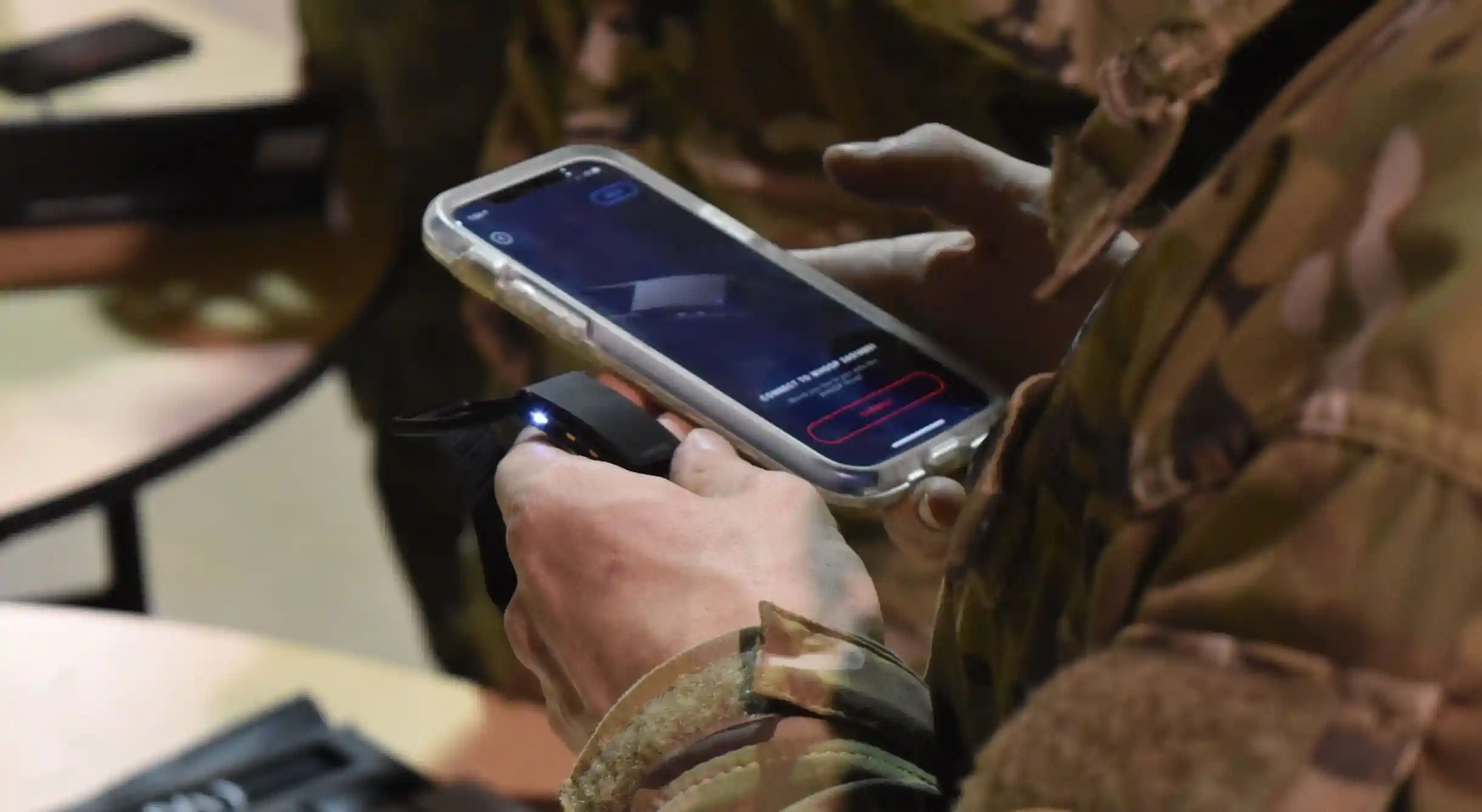
Holmes explains that the project combines continuous physiological monitoring with psychometric questionnaires, which makes it different from a standard lab study. Every participant wears a WHOOP band throughout daily life, training, and recovery, which gives researchers a 24/7 view instead of a short snapshot. The goal is not only to describe stress, but to separate adaptive stress from maladaptive stress and identify what behaviors support better outcomes.
The project also stands out for scale. According to Holmes and Moeller, it includes 1,000 United States Army personnel and compares three groups, one group using WHOOP alone and two groups receiving interventions related to circadian alignment and sleep hygiene. That design lets researchers estimate what people learn from WHOOP feedback by itself and what changes when a targeted intervention is added. WHOOP announced the effort in a 2021 United States Army research partnership release, and a peer-reviewed publication for the study is still. The work was conducted with The University of Queensland.
In the conversation, Holmes framed the study design this way:
“Everyone is wearing a WHOOP across these 1,000 folks. Two of the three groups will be getting an intervention related to circadian alignment, and then the third group will just continue wearing WHOOP as is.”
What you should take away
- The Alaska study is testing how circadian alignment affects HRV, sleep quality, and self-reported resilience.
- The study uses both physiological data and psychometric questionnaires, which gives a fuller picture of stress and adaptation.
- The design includes 1,000 soldiers across three groups, which makes it large enough to compare WHOOP feedback alone against added interventions.
- The study is field-based, which means it reflects real operational life rather than a short laboratory task.
If you want to hear Holmes unpack how the study separates WHOOP feedback from circadian interventions, listen to the full episode on Spotify.
Why does living in Alaska make circadian alignment harder?
Alaska makes circadian alignment harder because the challenge is not just cold. The bigger issue is prolonged darkness, reduced direct sunlight, and the psychological strain that comes with months of low-light living.
Ranck describes Army life in Alaska as an Arctic hardship tour. Anchorage and Fairbanks both face long winter stretches with very limited daylight, but Fairbanks gets even less. In practical terms, soldiers can spend months working in conditions where natural light is weak, brief, or absent at the times the body expects it. That changes daily rhythms, sleep timing, energy, and mood.
Ranck also points to another operational reality. Many people arrive in Alaska with no real understanding of how little light they will get, how often vitamin D is monitored, or how easily fatigue can be misread as a training problem instead of a circadian one. That gap matters because the first explanation in military culture is often, “I am tired because training was hard.” The conversation suggests that darkness and misalignment can be an overlapping cause that people miss.
WHOOP has documented similar operational strain in a separate cold-weather isolation training case study, which showed how harsh conditions can lower sleep quality and recovery after a mission.
Ranck put the light challenge in concrete terms:
“At its darkest moment here, during the winter solstice, in Anchorage, we will have about four hours of what we call daylight [...] and Fairbanks has much less than that.”
What you should take away
- Arctic operations challenge circadian alignment because low light lasts for months, not days.
- Anchorage can see about four hours of winter daylight, and Fairbanks can get even less.
- In Alaska, fatigue is easy to misread as a training problem when low light and circadian disruption are also part of the load.
- Cold-weather performance problems often begin with sleep and recovery problems that are harder to spot by feel alone.
If you want to hear Ranck go deeper on how darkness changes daily life for soldiers in Alaska, listen to the full episode on Spotify.
How does circadian disruption change HRV, sleep, and resilience?
Circadian disruption changes HRV, sleep, and resilience by interfering with the body’s internal timing system. When light exposure, sleep timing, meals, exercise, and work schedules stop lining up, the body has a harder time regulating recovery, mood, appetite, digestion, and temperature.
Holmes describes the circadian clock as a timekeeping system in the brain that resets every 24 hours and expects regular light cues. Without those cues, people do not just feel off. The body also loses some of the predictability that supports consistent sleep-wake timing and stable recovery patterns. In the context of Alaska, that means a normal winter routine can still be biologically confusing if light exposure is weak or mistimed.
The discussion gets especially useful when Holmes moves from mechanism to behavior. She points to morning light exposure, seeing sunset, limiting late artificial light, and keeping exercise timing, meal timing, and sleep timing as regular as possible. She also notes that even travel across time zones can unsettle the system, and she estimates that a person may need a day to 48 hours to adjust after leaving a time zone. For soldiers and shift workers, that means the body is often catching up while the job is still demanding output.
Holmes summarized the mechanism clearly:
“The circadian clock is programmed to kind of reset or entrain every 24 hours. And it’s guided by natural light. So when you don’t get this natural light, hormone production, mood, appetite, digestion, like body temperature, like all sorts of bodily functions just work differently or are not optimized.”
What you should take away
- Circadian disruption is a whole-body problem, not just a sleep problem.
- Natural light helps reset the body’s 24-hour clock, so missing it can affect mood, appetite, digestion, temperature, and recovery.
- Morning light, sunset exposure, and regular timing for sleep, meals, and training are practical ways to reduce circadian strain.
- Travel and shift changes can keep the body out of sync even before training or mission stress is added.
If you want to hear Holmes unpack how light timing and daily routines affect circadian alignment, listen to the full episode on Spotify.
Why is HRV a useful signal of resilience in high-stress jobs?
HRV is useful in high-stress jobs because it shows how well the autonomic nervous system is adapting to demand. A higher or lower value on its own is less important than understanding how a person’s HRV moves relative to that person’s baseline over time.
Holmes defines HRV as the variability in beat-to-beat timing at rest, and she links it directly to resilience. In the Alaska study, HRV sits alongside sleep quality and self-reported resilience because it offers an objective signal of how the body is handling external stress. In WHOOP, HRV is also one of the main inputs to Recovery, which is why the metric matters for day-to-day readiness.
That point becomes clearer when Holmes and Moeller discuss baseline disruption after training. For some tactical personnel, a demanding training block can push physiology two to five standard deviations away from baseline. That does not just show that training was hard. It also helps estimate how long it may take to return to normal functioning before a deployment or another high-stakes assignment.
For readers who want a deeper breakdown of how WHOOP measures HRV and why sleep-based measurement reduces daytime noise, the best background is this HRV explainer from Episode 29.
Holmes gave the clearest summary in one line:
“A heart rate that is variable and responsive to demands bestows a survival advantage.”
What you should take away
- HRV is useful because it reflects how well the body is adapting to stress, not because there is one universal good number.
- In WHOOP, HRV is one of the primary inputs to Recovery.
- Baseline matters because training or operational stress can move physiology far away from normal for days.
- HRV becomes more useful when it is read alongside sleep quality and recent stress, rather than as a standalone score.
If you want to hear Holmes go deeper on why HRV sits at the center of Recovery, listen to the full episode on Spotify.
How can training data change mission planning and risk decisions?
Training data can change mission planning by showing who is physiologically ready, who is still under-recovered, and where risk is being hidden by willpower. That matters most in jobs where a tired person can still look motivated, disciplined, and capable right up until performance drops.
Moeller makes the case that training provides a reference point for missions. A soldier can learn how altitude, diving, travel, or sleep restriction affects physiology during training, then use that information to prepare for real operations. Holmes adds that the same data can help estimate how much time someone needs between a training block and deployment to get back to baseline.
Ranck brings the command perspective into focus. In his view, leaders often make decisions with incomplete information because the culture rewards powering through exhaustion. Without objective data, a commander may pick the soldier who looks toughest rather than the soldier whose physiology says that person is actually ready. In Alaska, that can affect choices about who drives a convoy overnight, who jumps first, or who handles critical logistics.
Holmes compared that logic to team sports. If an athlete is clearly under-recovered, good staff do not treat reduced minutes as punishment. They treat it as smart management. Ranck argues the same principle applies when lives are at risk.
He said it plainly:
“Commanders really, if you look at it, are using dirty data to make poor decisions, not because they want to, but because they don’t have the right information at hand.”
What you should take away
- Objective physiological data can improve assignment decisions when motivation alone hides fatigue.
- Training data helps teams understand how a person responds before that person enters a real mission.
- Returning to baseline after training or travel can take time, which makes recovery windows part of readiness planning.
- Using data to reduce exposure is a management decision, not a punishment.
What behavior changes did the Army team see once people started wearing WHOOP?
The first value was behavior change. Once soldiers and leaders could see sleep, Recovery, and HRV patterns, the conversation moved from guesswork to specific choices about alcohol, sleep timing, training schedules, and when to ask for help.
Holmes says this pattern shows up across tactical populations on WHOOP. In the periods between missions or deployments, people often start stabilizing sleep-wake timing, increasing deep sleep, and cutting alcohol sharply once they can see the downstream effect on recovery. She tells Moeller that some tactical athletes have reduced alcohol consumption by almost 90 percent after seeing how directly it lowers readiness.
Ranck describes the same shift inside the Army unit. Interest spread quickly, leaders bought in, and older assumptions started to change. One example is physical training at 6:30 in the morning, a long-standing military routine. Ranck says senior leaders were already open to moving physical training later in the day if the data showed that soldiers would perform better and recover better with a different wake time.
This kind of learning is useful outside the military too. In a separate Coast Guard fatigue and recovery study, aviators also found that physiological data changed how they understood fatigue and sleep debt.
Holmes tied the behavior piece to an actionable threshold:
“If things aren’t going well, you’ve got three or four days in a row where you’re just not trending in a positive direction, something’s going on.”
What you should take away
- The fastest benefit of WHOOP in high-stress jobs is often behavior change, not just research output.
- Visible recovery data can lead people to cut alcohol, regularize sleep timing, and rethink when hard training should happen.
- Leaders can use physiological trends to revisit traditions that look tough but lower readiness.
- Several consecutive days of poor recovery can be a cue to change behavior or ask for support.
The bottom line
- The United States Army Alaska study is examining how circadian alignment affects HRV, sleep quality, and self-reported resilience in 1,000 soldiers.
- Alaska creates circadian strain because long winter periods can reduce direct light exposure to only a few hours per day.
- Circadian disruption affects more than sleep, because it can alter mood, appetite, digestion, temperature regulation, and recovery patterns.
- HRV is useful in high-stress environments because it reflects how well the body is adapting to external stress relative to personal baseline.
- WHOOP Recovery turns HRV and related signals into a daily readiness view that can support both individual choices and team decisions.
- Training data becomes operationally useful when it shows how long a person needs to return to baseline before the next major demand.
- Command decisions improve when leaders can identify under-recovery with objective data instead of relying on willpower and appearance.
- Behavior changes such as steadier sleep timing and lower alcohol intake can show up quickly once people can see how their habits affect recovery.
Frequently asked questions about things discussed in this episode
How does WHOOP measure HRV for Recovery?
WHOOP measures HRV during sleep to capture a cleaner signal of how your body is adapting to stress, and HRV is one of the primary inputs to Recovery.
What does WHOOP do for people dealing with circadian disruption?
WHOOP shows how irregular light exposure, sleep timing, travel, and shift changes affect sleep, HRV, and Recovery over time, which helps you spot patterns that are easy to miss by feel alone.
How does WHOOP help after a hard training block or travel schedule?
WHOOP helps you see whether your physiology is still below baseline after training or travel, which can guide decisions about recovery time before the next high-demand day.
What does WHOOP Recovery tell you in a high-stress job?
WHOOP Recovery shows how well your body is adapting to recent mental, physical, and emotional stress, which can help identify days when readiness is lower than motivation suggests.
How does WHOOP help people understand sleep quality in low-light environments?
WHOOP helps by showing how sleep duration, sleep quality, and HRV move together when darkness, irregular schedules, or late light exposure disrupt normal routines.
What does WHOOP do for team-based resilience studies?
WHOOP provides continuous physiological data across large groups, which allows researchers and leaders to compare objective recovery patterns with surveys, schedules, and environmental stressors.
In places where darkness, cold, and irregular schedules can hide under-recovery, WHOOP gives soldiers and shift workers an objective view of whether their physiology is keeping up.