Topics
- Post
- Longevity
- Healthspan
- Health & Wellness
Optimization in healthcare, with Vivek Natarajan
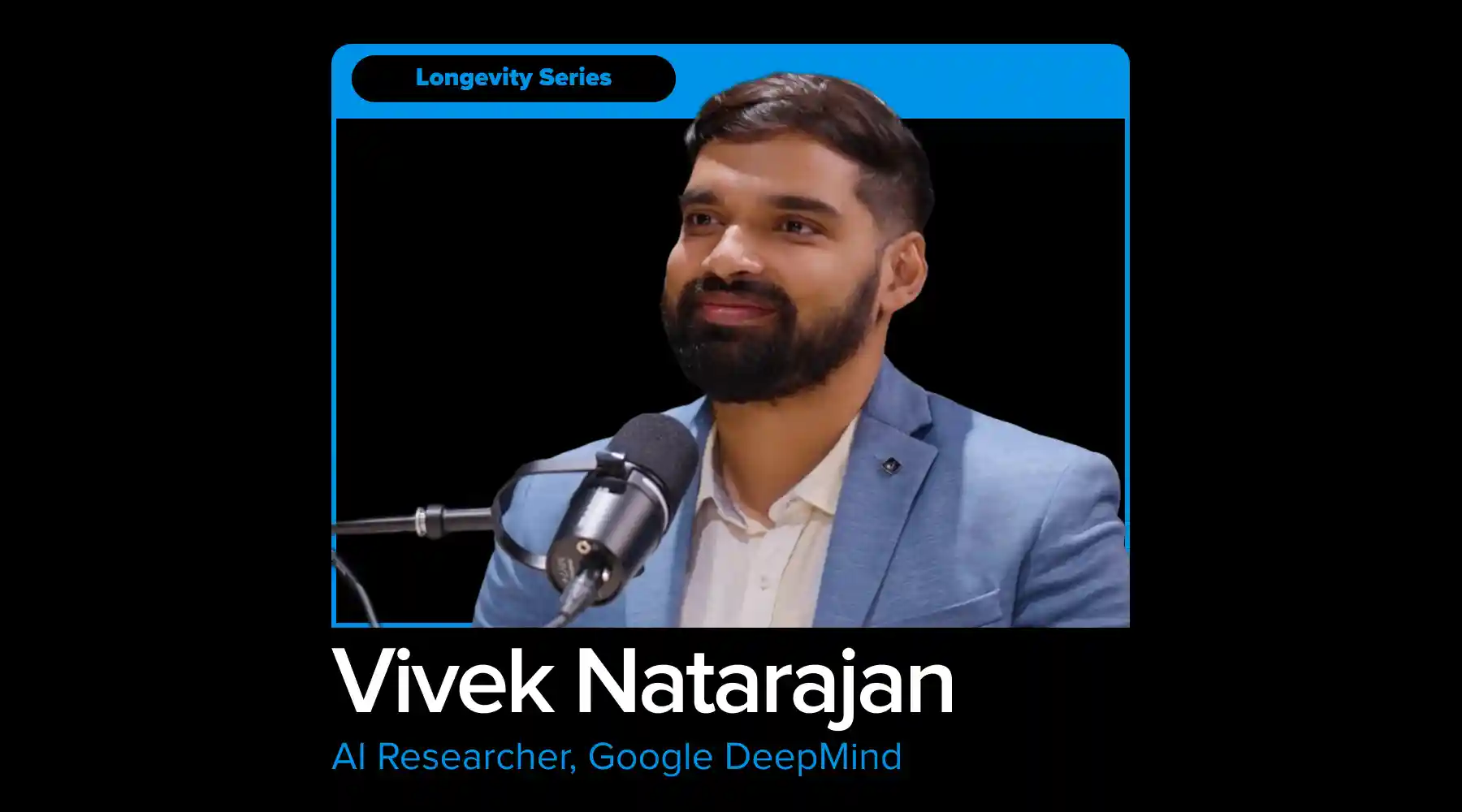
In episode 374 of the WHOOP Podcast, WHOOP Senior Vice President of Research, Algorithms, and Data Emily Capodilupo speaks with Vivek Natarajan of Google DeepMind, whose work sits at the intersection of large language models and biomedicine.
Their conversation covers how AI can improve clinical reasoning, expand access, protect trust, and make longitudinal data from tools like WHOOP useful in clinical practice.
You can check out this episode in full over on Youtube.
What does optimization mean in healthcare?
In medicine, optimization means improving decisions under real-world constraints. It is about getting the right information to the right person at the right time, with enough flexibility for imperfect data and changing context.
In Natarajan's framing, AI helps in two connected ways. It can accelerate biomedical discovery, and it can deliver medical guidance more efficiently. That makes optimization a care-delivery problem as much as a technical one. If an AI system can collect history, summarize patterns, and route attention to the cases that need a clinician fast, the whole pathway improves.
A few terms are worth defining. Clinical reasoning is the process of connecting symptoms, history, and evidence into a likely diagnosis or plan. Triage is prioritizing who needs help first. Decision support is a tool that helps a clinician make a better call, faster.
What you should take away
- Optimization in healthcare means better decisions, better routing, and better use of limited human attention. When you hear the word, think of outcome plus constraint
How can AI optimize access to care?
Capodilupo and Natarajan focus on a cost people often miss: time. Getting care can mean travel, childcare, lost wages, and weeks of waiting, even in cities with major hospital systems.
That is why Natarajan sees AI as a force multiplier for routine guidance and intake. If an AI system can answer lower-acuity questions, collect history, and surface the cases that need a clinician quickly, the care team gets more leverage without compressing quality.
Natarajan put the scaling opportunity plainly:
"If a doctor is taking care of a hundred patients, maybe with the help of AI, they might be able to [...] take care of [...] 10,000 patients."
That number is aspirational, but the direction matters. Optimization here means reducing friction for the patient and reserving human time for the cases where judgment, accountability, and nuance matter most.
What you should take away
- The strongest near-term use of healthcare AI is capacity expansion
- Faster triage, better intake, and routine guidance can reduce the real cost of care and shorten the path to human attention when you need it
Which parts of care benefit most from optimization first?
Natarajan points to research from Google DeepMind, including Nature studies evaluating medical AI in consultation and clinical reasoning settings. The important nuance is that performance depends on the task and the environment. Narrow, structured workflows are easier to optimize first. Documentation, intake, summarization, differential diagnosis support, and follow-up planning all fit that pattern.
The more interesting finding was what happened when clinicians used AI as a partner. As Natarajan described it:
"Do these AI systems actually make good doctors even better? [...] it was a clear yes."
That is the model to watch. AI can hold more detail in memory, ask more consistent questions, and draft cleaner summaries. The clinician brings accountability, contextual judgment, and the ability to interpret subtle signals that fall outside the template. Optimization in this setting is collaborative. You get a tighter loop between data, reasoning, and action.
What you should take away
- Care quality improves fastest when AI handles structured cognitive work and gives clinicians cleaner context. That lets the human expert spend more time on explanation, judgment, and relationship
How do we make sure that AI is secure enough for medicine?
Once performance improves, the next constraint is trust. Medicine does not reward speed for its own sake. A system that works well most of the time still needs clear boundaries, escalation paths, monitoring, and evaluation on hard cases.
Natarajan captured that standard in one line:
"Ultimately everything in healthcare and medicine moves at the speed of trust."
That matters most in the long tail, rare diseases, unusual presentations, and edge cases where there is less training data and less room for overconfidence. This is where evaluation gets harder. Natarajan points to simulation as one promising path, from virtual cell models up through synthetic patient scenarios and, eventually, digital twins that let researchers test systems before they reach real patients.
Optimization here means disciplined deployment. You define what the system is good at, where a clinician must step in, and how the tool is monitored over time. Done well, that speeds adoption. Done carelessly, it slows the field because trust is hard to rebuild.
What you should take away
- Safe optimization in healthcare depends on scope, oversight, and rigorous evaluation, especially for rare and ambiguous cases
- Trust is a performance variable
How could optimization make wearable data clinically useful?
You can collect rich health data every day, yet much of it still disappears when you enter a clinic. Natarajan argues that AI can close that gap by asking better questions, analyzing trends, and turning longitudinal data into a format a clinician can use quickly.
This is where continuous measurement starts to matter. WHOOP already gives you daily context through sleep, fitness, and health insights. For deeper physiology, WHOOP Advanced Labs adds clinician-reviewed biomarkers that can be interpreted alongside that daily WHOOP data.The missing step in many care settings is summarization. A physician rarely has time to inspect months of sleep timing, resting heart rate trends, HRV patterns, activity load, and blood markers one by one.
Optimization solves that by compressing signals into context. Instead of handing over raw charts, AI can surface that your sleep debt has accumulated for three weeks, your stress load has risen, your resting heart rate has drifted upward, and your training pattern changed at the same time. That is the kind of summary that can improve coaching and clinical conversations.
What you should take away
- Your WHOOP data becomes more useful in care when AI turns months of continuous signals into concise, clinically relevant context you and your doctor can act on. The value is in the interpretation, not the raw numbers
Optimization, in Natarajan's telling, is a practical idea. It means using AI to improve the quality, speed, and reach of healthcare while keeping safety and human judgment in the loop.
The bottom line
- Optimization in healthcare AI means improving outcomes under real constraints, including clinician time, patient travel, waiting time, and safety
- Vivek Natarajan described the highest-leverage near-term model as AI that expands clinician capacity through triage, intake, and decision support
- Google DeepMind research suggests AI can improve clinical reasoning in structured settings and help skilled clinicians perform better together with the tool
- Healthcare AI adoption moves at the speed of trust, which makes scope, oversight, and disciplined deployment part of optimization itself
- The hardest evaluation problem in medical AI is the long tail of rare diseases and edge cases, where simulation and synthetic testing may help close safety gaps
- Wearable data becomes more clinically useful when AI summarizes longitudinal patterns in sleep, stress, heart health, training load, and biomarkers into concise context
Frequently asked questions about things discussed in this episode
How does WHOOP measure the wearable signals that could matter in a clinical conversation?
- WHOOP captures continuous physiological and behavioral data across sleep, recovery, strain, stress, and heart health, which makes trends more useful than a single snapshot. Your app then organizes those signals into daily and long-term views that can support better conversations with a clinician or coach.
What does WHOOP do for long-term optimization of sleep, stress, and recovery?
- WHOOP turns daily measurements into trend data, so you can see whether a change is a one-off event or part of a larger pattern. That longitudinal view is the kind of context AI could summarize for clinical decision support.
How does WHOOP help turn wearable data into context a clinician can use?
- WHOOP gives you structured data on behaviors and physiology that can be reviewed over time instead of relying on memory alone. That makes it easier for an AI system, or a human clinician, to connect recent symptoms with sleep, stress, activity, and recovery patterns.
What does WHOOP do with biomarkers alongside wearable data?
- WHOOP Advanced Labs combines clinician-reviewed biomarker testing with 24/7 WHOOP data, which helps connect lab results to daily behavior and physiology. That creates a richer baseline for more personalized health guidance.
How does WHOOP support heart health optimization?
- WHOOP includes heart health features that help you monitor important signals over time instead of waiting for occasional check-ins. In a future clinical workflow, that kind of longitudinal tracking could help AI and clinicians spot meaningful changes faster.
Related Articles
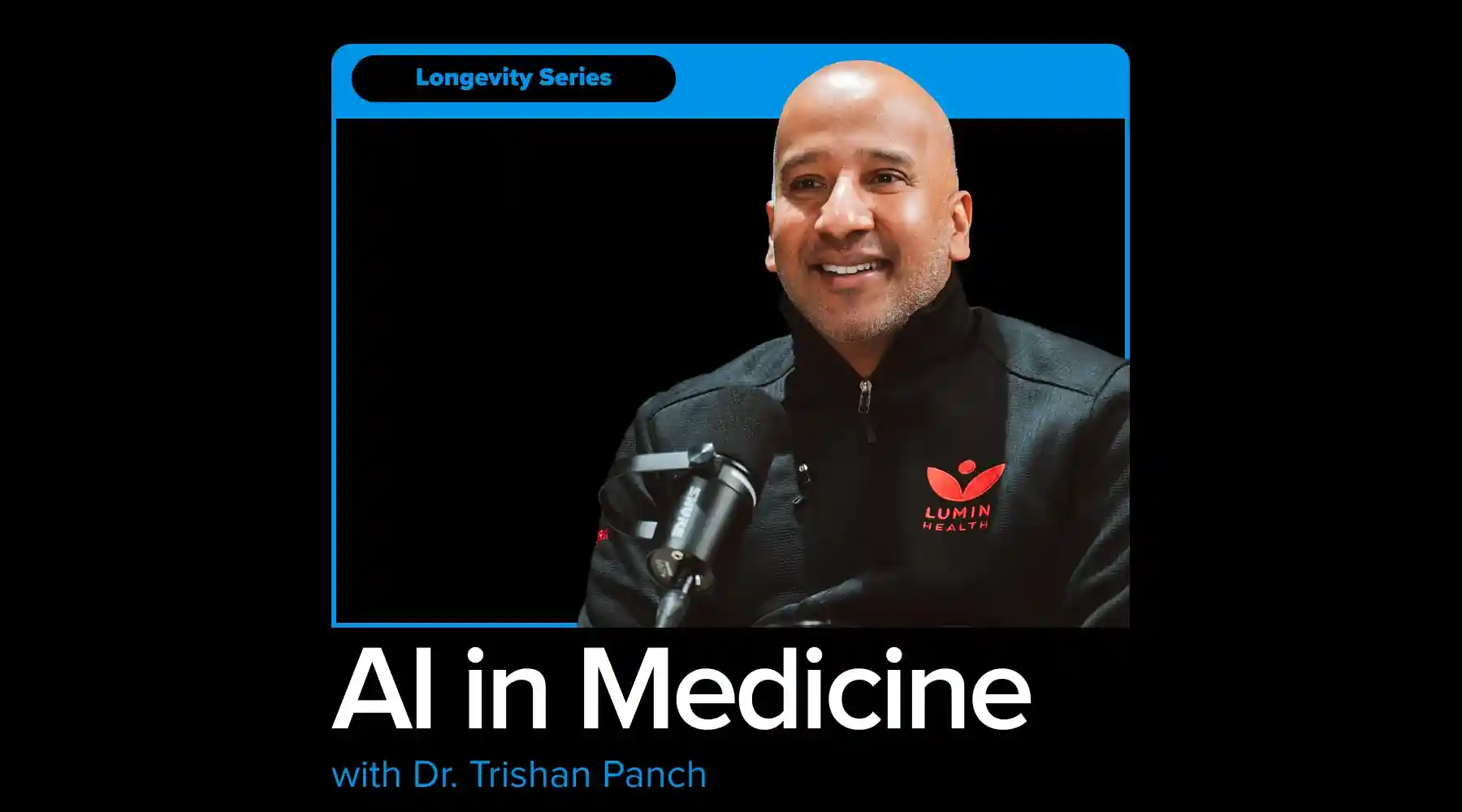
Clinical AI in Healthcare: Dr. Trishan Panch on What Wearables and AI Can Actually Do for Your Health
Topics
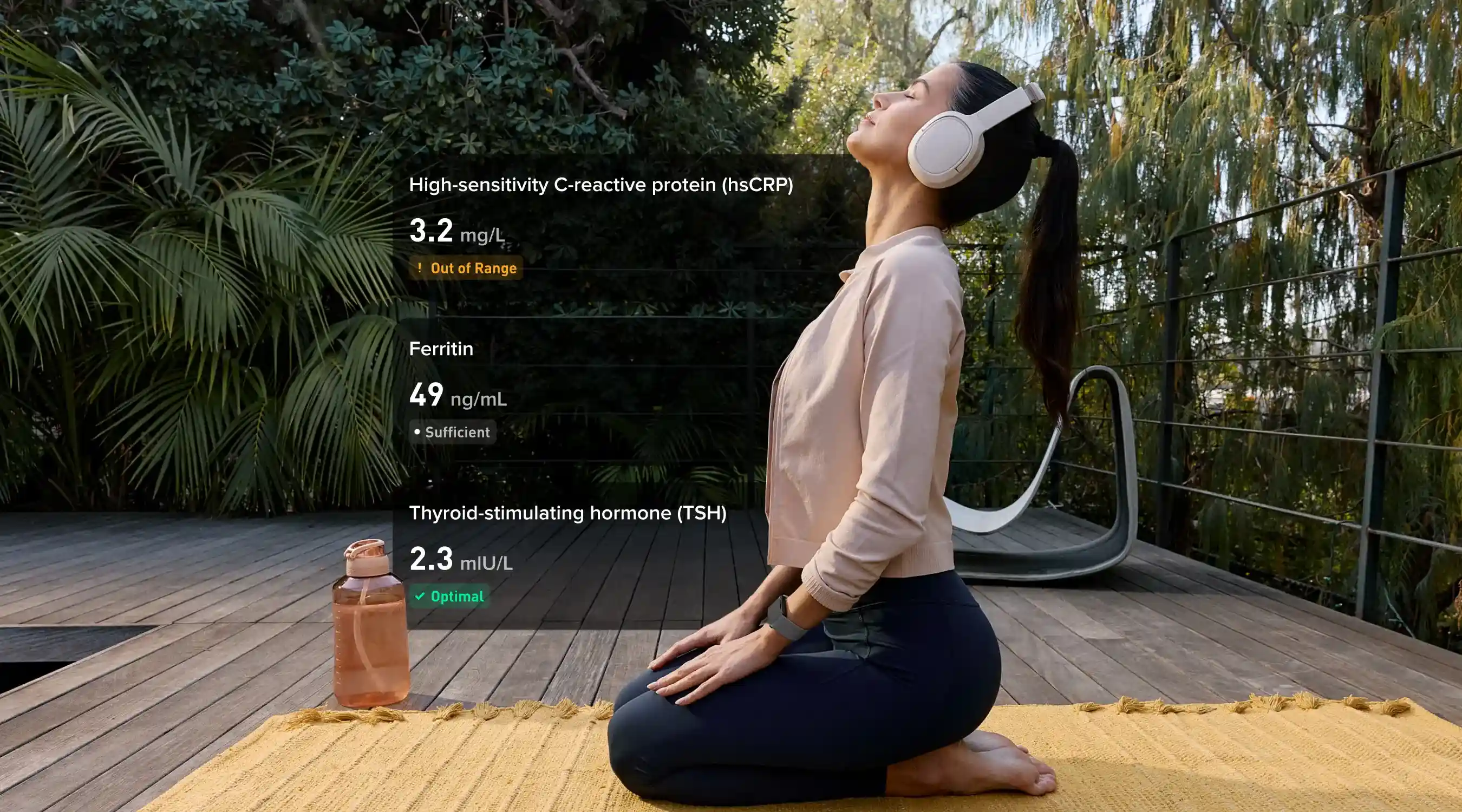
Health Biomarkers: 10 Key Metrics with WHOOP Advanced Labs
Topics
- Biomarkers
- Metabolic Health
- Heart Health