Topics
- Article
- Sleep
- Circadian Health
Sleep and Exercise: Earlier Bedtimes, More Movement
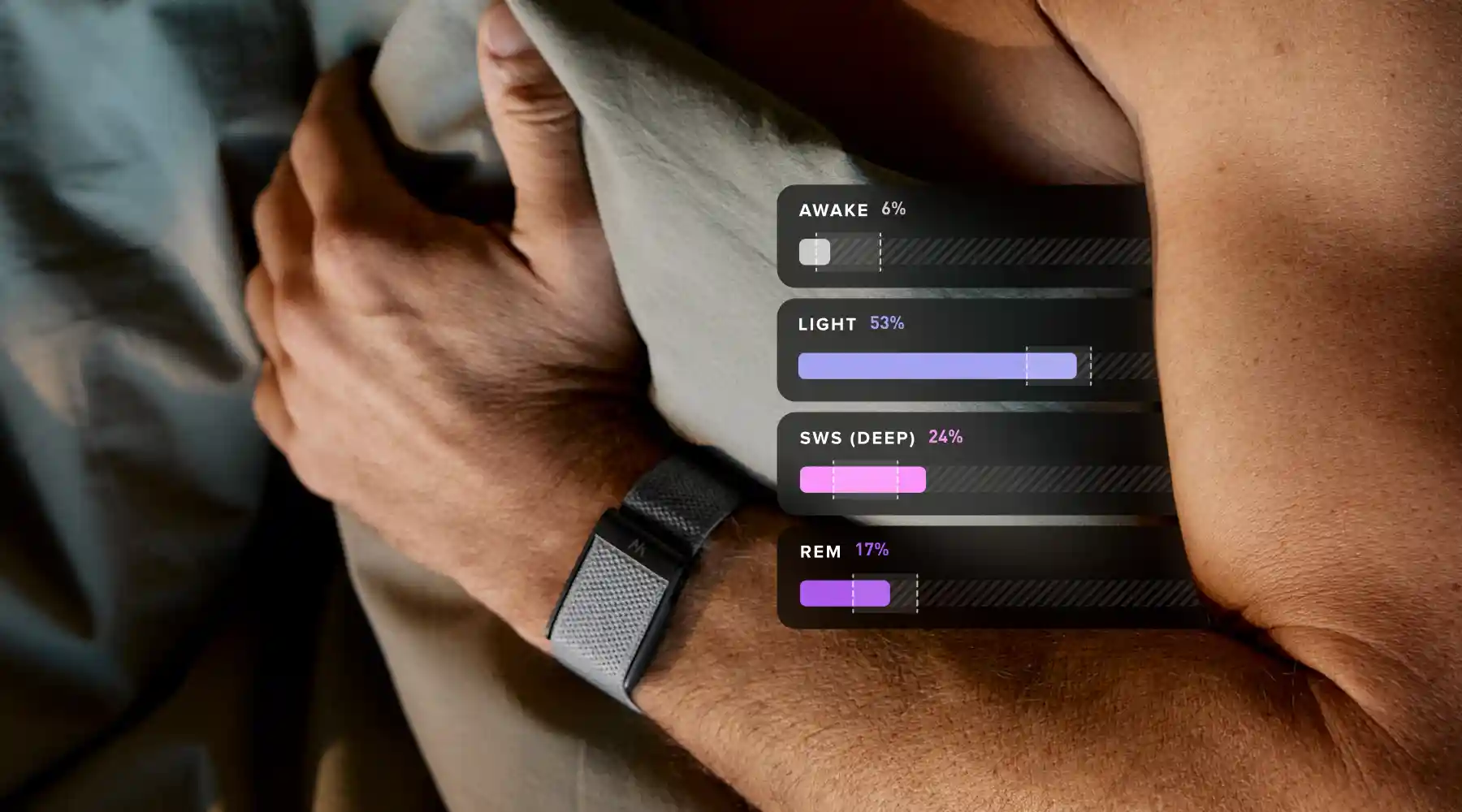
When most of us think about sleep, we think about recovery—how well our bodies bounce back from the day before. But new WHOOP research reframes that thinking: sleep isn't just a way to recover from today, it's how you prepare for tomorrow.
In a study published in Proceedings of the National Academy of Sciences (PNAS) — one of the top-cited scientific journals in the world — WHOOP researchers, in collaboration with Monash University researchers, analyzed nearly 6 million nights of WHOOP data across ~20,000 members. The findings reveal that sleep consistency and duration are powerful predictors of how active you'll be the next day.
The bidirectional relationship between sleep and exercise
Physical activity and rest do not exist in isolation. They operate in a continuous loop where each behavior directly influences the other. When you engage in moderate or vigorous exercise, you deplete energy stores and create physical strain. Your body responds to this strain by increasing your drive for deep, restorative sleep. In turn, high-quality sleep repairs muscle tissue, regulates hormones, and restores the energy you need to train effectively the next day. Understanding this cycle allows you to stop viewing sleep as a passive outcome and start using it as an active tool to improve your fitness.
How the timing of your workout impacts your sleep
When you choose to exercise plays a significant role in how quickly you fall asleep and the quality of rest you get. Morning and afternoon workouts generally support a natural circadian rhythm, helping you wind down more easily at night. Evening workouts, especially high-intensity sessions, elevate your core body temperature and heart rate. This physiological arousal can make it difficult for your body to transition into the relaxed state required for sleep. If you prefer training later in the day, consider shifting to lower-intensity activities like yoga or light mobility work to avoid disrupting your overnight recovery.
Earlier bedtimes, more movement
The study found that even small changes in when and how long you sleep can influence how much you move the next day, especially when it comes to moderate-to-vigorous physical activity (MVPA) like brisk walking, running, cycling, or high-intensity workouts that significantly elevate your heart rate and breathing.
Here's what the data shows:
- Going to bed earlier than usual is associated with up to 30 more minutes of MVPA the next day.
- Going to bed later than usual consistently means less movement the next day, even when total sleep duration stays the same.
- Sleeping shorter than usual and falling asleep earlier than usual are associated with increased next-day movement.
- Sleeping longer than usual, especially 3-4 hours over baseline, correlates with up to 30% less MVPA the next day, even if it feels like you are catching up on rest.
A shift in mindset: sleep as an activator of behavior
This research highlights a powerful behavior loop: how you sleep sets the stage for how you live. It also helps clarify a misconception: sleep isn't just a passive metric to monitor. It's a dial you can turn to change what tomorrow looks like.
For WHOOP members, this means more than just understanding your metrics. It's about using WHOOP to influence behavior in real time:
- Use the Sleep Planner to align bedtime with your goals.
- Reflect with Journal entries using Behavior Insights to identify patterns in sleep timing and activity.
- Review your Sleep Performance Score to see how your nights set up your days.
Most health and fitness guidance separates sleep and movement. This study proves they're deeply connected: how and when you sleep tonight will shape your energy, motivation, and ability to move tomorrow.
Whether you're an athlete chasing personal records, a parent squeezing in a workout, or simply looking to move more each day, this insight is actionable. Go to bed a little earlier, stay consistent, and watch what happens.
A ripple effect for long-term health
Sleep doesn't just power your activity tomorrow — it helps shape the trajectory of your long-term health. With Healthspan on WHOOP, you'll see how habits like consistent sleep and regular movement are core drivers of longevity. In fact, research shows that how well you sleep tonight influences not only how active you'll be tomorrow, but how likely you are to stay on a positive path of daily behaviors — like working out, eating better, or managing stress. What's more, movement itself feeds back into better sleep, reinforcing a cycle of positive momentum. With metrics like WHOOP Age and Pace of Aging, WHOOP shows how these micro-decisions contribute to a stronger, longer life. Go to bed a little earlier, and you're not just giving yourself more energy tomorrow — you're investing in your future self.
WHOOP helps you sleep smarter and move more
WHOOP doesn't just show you how you slept, it helps you understand how that sleep drives behavior and performance. With features like Sleep Planner and Behavior Insights, WHOOP helps turn real-world science into better decisions, one night and one day at a time.
Frequently asked questions about sleep and exercise
What is the 3-3-3 rule for sleep?
The 3-3-3 rule is a general guideline to help establish a consistent evening routine. It suggests stopping heavy meals three hours before bed, stopping work or intense exercise two hours before bed, and stopping screen time one hour before bed. This framework helps lower your heart rate and signals to your body that it is time to rest.
Does working out late at night ruin your sleep?
Late-night workouts do not automatically ruin your sleep, but high-intensity exercise close to bedtime can delay sleep onset. Vigorous activity raises your core temperature and stimulates your nervous system. If you must exercise at night, allow yourself enough time to cool down and practice relaxation techniques before getting into bed.
How does WHOOP measure my sleep and activity?
WHOOP continuously monitors your heart rate, movement, and other physiological markers 24/7. It automatically detects when you fall asleep, wake up, or engage in sustained physical activity. By analyzing these metrics, WHOOP provides a detailed breakdown of your sleep stages and daily strain, helping you understand exactly how your daily habits impact your recovery.