Topics
- Article
- Metabolic Health
- Habit Guidance
- Coaching
- Health & Wellness
- Behavior Impact
How To Optimize Hydration
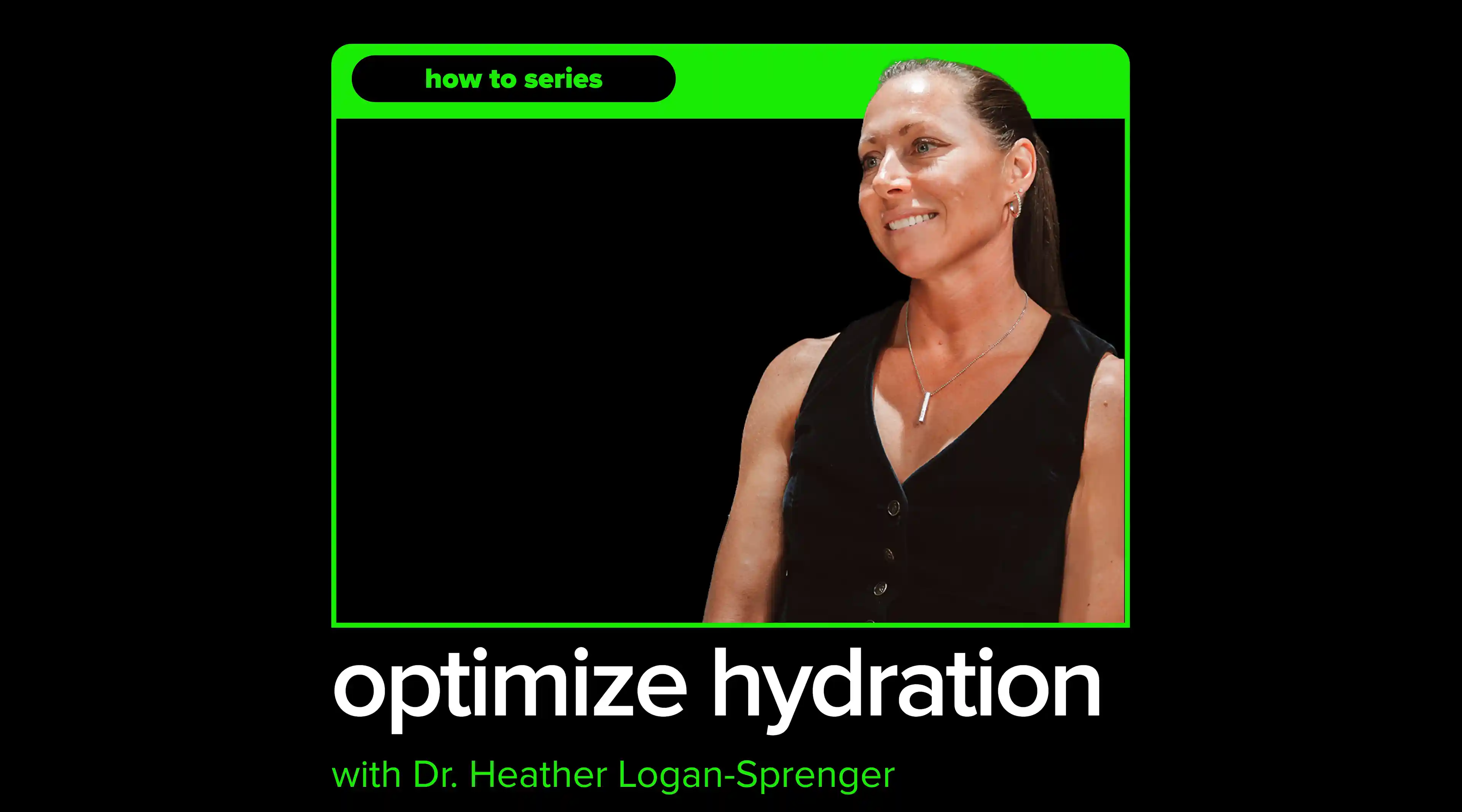
Hydration is one of the simplest and most overlooked keys to human performance. Its effects ripple far beyond just feeling thirsty. To break down the science (and everyday strategies) behind hydration, we sat down with Dr. Heather Logan-Sprenger, a renowned exercise physiologist, dual-sport national team athlete, and a leading voice on how hydration impacts health and performance.
In conversation with WHOOP Global Head of Human Performance, Principal Scientist Dr. Kristen Holmes, Dr. Logan-Sprenger reveals why most people are under-hydrated, how it sabotages metabolism and brain function, and what you can actually do about it.
Why hydration matters more than you think
Dr. Logan-Sprenger explains that water isn’t just about quenching thirst. It underpins every aspect of performance and recovery.
- Cellular health: All cells depend on water for homeostasis and adaptation.
- Metabolism: Dehydration pushes your body to rely more on carbohydrates and less on fat, leading to faster fatigue and increased cravings for quick energy.
- Cognitive function: Dehydration doesn’t just affect your muscles. It slows your brain, impairing focus, reaction time, and decision-making.
- Thermal regulation: Water helps regulate your core temperature. Without it, your body’s “internal air conditioning” is compromised.
- Cardiovascular health: Dehydration thickens your blood, making your heart work harder and increasing cardiovascular stress, especially over time.
The myths and realities of staying hydrated
Hydration advice is everywhere, but without the right context, common myths can undermine your performance, even when you think you’re doing everything right.
- Myth 1: Coffee doesn’t count toward hydration.
Reality: If you’re a habitual caffeine user, coffee and tea count towards your hydration just as much as water. For non-habitual drinkers, high doses of caffeine can be mildly diuretic.
- Myth 2: Electrolytes are only for ultra-endurance.
Reality: For most workouts under an hour, plain water is enough if you’re eating a balanced diet. But as exercise intensity, duration, or sweat rate goes up, or when training in the heat, adding electrolytes (especially sodium) becomes critical.
- Myth 3: If you’re not thirsty, you’re hydrated.
Reality: Most people are already mildly dehydrated before they even start training. Dr. Logan-Sprenger emphasizes: “You need to think to drink. Don't go by thirst because if you go by thirst, you're getting the alarm signaling from your brain saying you need to drink because we're already starting to get low in blood volume.”
Women’s hydration needs
Hydration is even more complex for women, especially throughout the menstrual cycle. In the luteal phase, plasma volume can drop as water shifts into tissues (the “bloating” many feel), and core temperature rises.
“The needs from a hydration standpoint increase. Women should be drinking more water during the luteal phase to support the plasma, because that's where our sweat comes from,” says Dr. Logan-Sprenger.
Actionable strategies: how to hydrate like a pro
Dr. Logan-Sprenger recommends these hydration strategies:
1. Start your day hydrated Begin each day with water. Your morning urine color is a quick check: aim for pale yellow (less than 3 on a 7-point color scale).
2. Build a daily plan The recommended daily water intake for women is around 2.5 liters and around 3.2 liters for men. You should increase your water intake for heat, high intensity workouts, or on days where you’re sweating frequently.
3. Test your sweat rate It's helpful to know your sweat rate. To test yours:
- Weigh yourself before and after a one-hour workout (nude, after voiding, toweling off sweat)
- Track exactly how much fluid you drank
- Sweat rate = (pre-exercise weight - post-exercise weight) + fluid intake
- Replace 150% of your sweat losses within 1–2 hours post-exercise
4. Before, during, and after your workout Pre: Sip 500–600ml water 20–45 min before exercise (not chugged, to avoid flushing it out). During: Sip regularly, especially in hot/humid conditions Post: Rehydrate with water, and if you sweat a lot or train for over an hour, add electrolytes.
5. Eat your electrolytes For most people, sodium and chloride lost in sweat are replaced by a typical diet. Endurance athletes or heavy sweaters may need to add a pinch of salt to water or use a purpose-made electrolyte drink.
6. Train your hydration Hydration habits can be trained, just like any other aspect of performance. Set reminders to drink, and gradually increase intake to train your gut for higher fluid absorption.
7. Avoid overhydration
Drinking excessive plain water without electrolytes — particularly in endurance events — can cause hyponatremia. Symptoms may include confusion and dizziness, and in severe cases, it can become dangerous or life-threatening.
Small daily habits make a difference
Hydration isn’t won with one big effort — it’s built through small, repeatable choices. These behaviors help ensure you’re meeting your body’s hydration needs.
- Carry a water bottle everywhere.
- Don’t rely solely on thirst.
- Know how much water you should drink each day.
- Adjust for heat, intensity, and, for women, cycle phase.
- Remember: Just a 2% drop in body weight from dehydration can impact your brain, recovery, and performance.
The bottom line
Hydration is a foundational driver of performance, affecting metabolism, brain function, cardiovascular strain, and recovery long before thirst appears. Optimizing hydration isn’t about drinking more — it’s about drinking more intentionally based on your body, training demands, environment, and physiology.
- Most people are chronically under-hydrated, even if they don’t feel thirsty
- Dehydration accelerates fatigue while negatively impacting brain function and decision-making
- Common hydration myths lead many people to under-fuel fluids and electrolytes
- Women’s hydration needs fluctuate across the menstrual cycle
- Sweat rate and training demands should guide fluid and electrolyte intake to avoid both dehydration and overhydration
- Small, repeatable hydration behaviors protect brain function, recovery, and performance
To hear the full conversation and learn more about how to hydrate efficiently, tune in to Dr. Heather Logan-Sprenger on the WHOOP podcast.
Related Articles
Podcast 181: Sports Scientist Andy Blow on Sweat, Salt & Hydration

Topics
- Health & Wellness
- Training & Exercise