Topics
- Post
- CrossFit
- Women’s Performance
How to compete through motherhood and injury with Annie Thorisdottir
Originally published on August 3, 2022
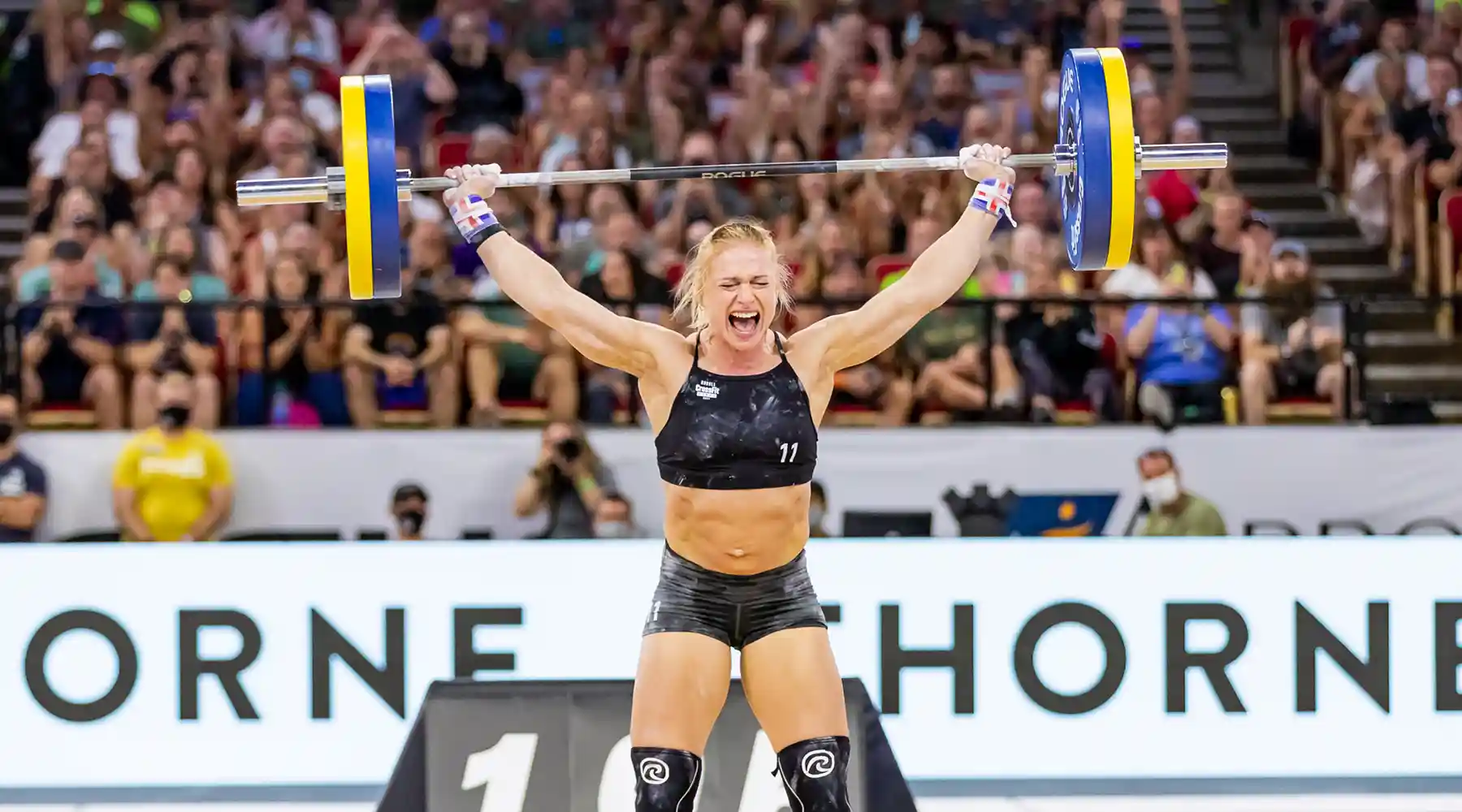
Returning to elite competition after pregnancy takes patience, honest recovery work, and a willingness to rebuild piece by piece. In Episode 183 of the WHOOP Podcast, Annie Thorisdottir explains how a traumatic birth, slow abdominal recovery, and the emotional pull of new motherhood changed the way she trains and competes. Thorisdottir is a two-time CrossFit Games champion, the first woman to win back-to-back titles, and a podium finisher who returned to the Games a year after giving birth. Her conversation offers a clear look at longevity in high performance, from pacing and injury management to the mindset shifts that helped her stay in the sport for more than a decade.
To listen to Episode 183 of the WHOOP Podcast in full, head to the WHOOP Podcast on YouTube.
How did Annie Thorisdottir build a CrossFit career that lasted more than a decade?
Longevity started with genuine enjoyment of training and an early competitive spark. Thorisdottir did not enter CrossFit through a long master plan. She tried a local competition after a final exam, won a Games spot in 2009, and found a sport that gave her more room to push than gymnastics, pole vault, or one-off fitness contests.
She says that first CrossFit Games appearance changed her because it exposed both her ceiling and her gaps. She reached the final event in second place, got her first muscle-up, and still had to record a DNF when the movement limit caught her. That mix of promise and unfinished business became fuel. From 2010 onward, she built around consistent coaching from Jami Tikkanen, family support, and a daily routine she actually liked. That same commitment shows up across elite functional fitness and in the broader Icelandic pipeline, including Katrin Davidsdottir’s first WHOOP appearance.
Thorisdottir summed up her staying power with numbers that speak for themselves:
“I’ve been competing in CrossFit for over a decade. I’ve been at the CrossFit Games 10 times competing. I’ve podiumed 6 times.”
What you should take away
- Long careers usually start with enjoyment of the daily work, not only the result.
- A visible weakness can become the event that sharpens long-term motivation.
- Coaching consistency and family support can make elite training sustainable over many seasons.
If you want to hear Thorisdottir unpack her early CrossFit years and why the 2009 Games hooked her, listen to the full episode on Spotify.
How did motherhood change Annie Thorisdottir’s motivation to compete?
That long runway made the next shift possible. Motherhood changed Thorisdottir’s schedule, her emotional landscape, and the reason she competed. Training stopped being open-ended and became tightly tied to Freyja’s sleep windows. She also arrived at the 2021 Games with a different kind of pressure because she had already proved herself in the sport.
Instead of chasing the same identity she had earlier in her career, Thorisdottir says she competed for herself, her daughter, and other mothers who needed to see that high-level sport can continue after birth. That reframing gave her more calm on the floor. The emotion never disappeared, though, and she described missing her daughter intensely during competition week even as she delivered one of the strongest comeback performances in the field.
Thorisdottir put that tension plainly:
“Every single morning I also woke up and just started crying for a few minutes while I missed my baby.”
What you should take away
- Motherhood can change both the schedule of training and the reason an athlete keeps competing.
- A return to competition can feel steadier when the goal is broader than placement alone.
- Emotional stress and strong performance can exist at the same time.
If you want to hear Thorisdottir go deeper on returning to the Games as a new mother, watch the full episode on YouTube.
What does a serious return from pregnancy and injury actually require?
Once motivation was clear, the practical work was rehab. Thorisdottir says her pregnancy felt great, but the birth was traumatic and recovery was slow. She still deals with diastasis recti, or abdominal separation, and said the hardest part was that the problem felt unfamiliar.
Her turning point came when she stopped treating postpartum recovery as something mysterious and started treating it like an injury. In her words, the abdominals were muscles that needed time and strength work. She set short-term goals around the CrossFit season, rebuilt control over her body, and kept sleep, fueling, and body work high on the list because early motherhood left very little extra time. For WHOOP members, that same logic can carry into Recovery and Sleep trends: use the data to judge what your body can support today, then build from there.
Thorisdottir was direct about the timeline and the limits:
“I’m definitely not fully recovered yet and I still have diastasis, like my abdominal separation, and that’s probably never going to heal up fully.”
What you should take away
- Postpartum return-to-play can be a long rebuild even when pregnancy itself feels strong.
- Framing recovery as rehab can make an unfamiliar setback easier to work through.
- Sleep, fueling, and body maintenance become more important when training time is limited.
If you want to hear Thorisdottir unpack how she rebuilt after birth and set short-term goals, listen to the full episode on Spotify.
How does Annie Thorisdottir think about pacing and mid-event adjustments?
After rebuilding physical capacity, the next job was competition execution. Thorisdottir’s pacing philosophy is simple: experience gives you an opening plan, and real-time feedback tells you when to change it. That becomes even more important in team competition, where one bad interval choice can drag four people off the best pace.
At semifinals, she said Team CrossFit Reykjavík realized mid-event that their row strategy was too conservative and shifted to shorter, faster intervals. She pointed to a quarterfinal burpee workout as another lesson. The team repeated it two weeks later and cut roughly 1.5 to 2 minutes without feeling a huge jump in difficulty. Those reps taught her where the true line sits between smart pacing and unused speed. The same decision-making pressure is part of competition week at the CrossFit Games.
Thorisdottir used that repeat test as proof that pacing has to be trained too:
“We did it again 2 weeks later and we beat our time by like 1.5 or 2 minutes. Huge difference.”
What you should take away
- Pacing is a skill that improves when athletes repeat workouts and compare execution.
- Mid-event changes can matter more than the original strategy when feedback is clear.
- Team competition raises the cost of conservative pacing and poor interval choices.
If you want to hear Thorisdottir go deeper on pacing calls and team strategy, watch the full episode on YouTube.
What has kept Annie Thorisdottir competing, and what is she building outside the sport?
As pacing and strategy evolved, Thorisdottir also let herself try a new format. Moving from individual competition to a team did not mean closing the door on the future. She says the return after giving birth proved she can shift formats and still come back again if she wants. That made the team move feel like growth instead of retreat.
The same long view shapes the projects she is building with Katrin Davidsdottir away from the floor. Thorisdottir and Davidsdottir want to keep girls in sport, share honest stories about setbacks, and create tools that fit active lives. Their work connects naturally with Davidsdottir’s 2024 WHOOP Podcast appearance and the theme of Haley Adams on being a role model. Thorisdottir also tied that mission to a children’s book built around failure, support, and trying again.
Looking ahead, Thorisdottir described her career planning in practical terms:
“If I can have a baby and go individual again, I can for sure go team and go individual again.”
What you should take away
- One format change does not have to define the rest of an athlete’s career.
- Long careers often depend on staying open to new roles and new goals.
- Athletes can use their platform to keep more girls engaged in sport and strength training.
The bottom line
- Annie Thorisdottir’s longevity comes from enjoying training itself, keeping trusted people around her, and treating weaknesses as work to do.
- Motherhood changed Thorisdottir’s motivation from title-chasing alone to competing for herself, her daughter, and other mothers watching her return.
- Thorisdottir treated postpartum recovery like injury rehab, which helped her rebuild strength and control after a traumatic birth.
- Sleep, fueling, and daily body work became even more important once training had to fit around her daughter’s routine.
- Pacing improved when Thorisdottir and her team repeated workouts, compared times, and adjusted intervals instead of assuming the first strategy was correct.
- Thorisdottir still plans one season at a time, which has allowed her to move between individual and team competition without forcing a final decision.
Frequently asked questions about things discussed in this episode
How does WHOOP help athletes manage heavy training blocks?
WHOOP helps athletes manage heavy training blocks by showing sleep, recovery, and strain trends in one place. Thorisdottir’s approach in this episode centered on matching effort to what her body could support and keeping recovery basics consistent.
What does WHOOP show when recovery is slipping after hard sessions?
WHOOP shows recovery strain through changes in metrics like Sleep performance, heart rate variability, and resting heart rate trends. Those signals are useful when training starts to feel harder than expected or when pacing decisions begin to drift.
How does WHOOP fit into a return-to-training plan after pregnancy?
WHOOP can help make return-to-training decisions more objective by surfacing day-to-day recovery patterns. Thorisdottir’s story shows why that matters, although postpartum care and clearance should still come from a clinician and coach.
What does WHOOP do for athletes trying to pace better in competition?
WHOOP helps athletes review how hard a workout actually was and how well they recovered for the next one. That feedback can support the kind of repeat testing Thorisdottir described when her team found faster pacing strategies.
How does WHOOP help athletes balance training with parenthood?
WHOOP helps athletes see whether limited time is still producing enough sleep and recovery to support performance. That is useful when training windows get tighter and daily stress rises, which was a major theme in Thorisdottir’s return after becoming a mother.
What does WHOOP offer athletes who are thinking long term about their sport?
WHOOP offers long-term trend data that can make season-to-season decisions clearer. For athletes like Thorisdottir, that kind of view supports smarter choices about training volume, recovery habits, and when to push for another year.
For athletes balancing elite goals with parenthood and recovery, WHOOP can make the day-to-day trend lines easier to see before guesswork turns into overreach.