Topics
- Article
- Stress
Benefits of Mindfulness and How to Start Practicing
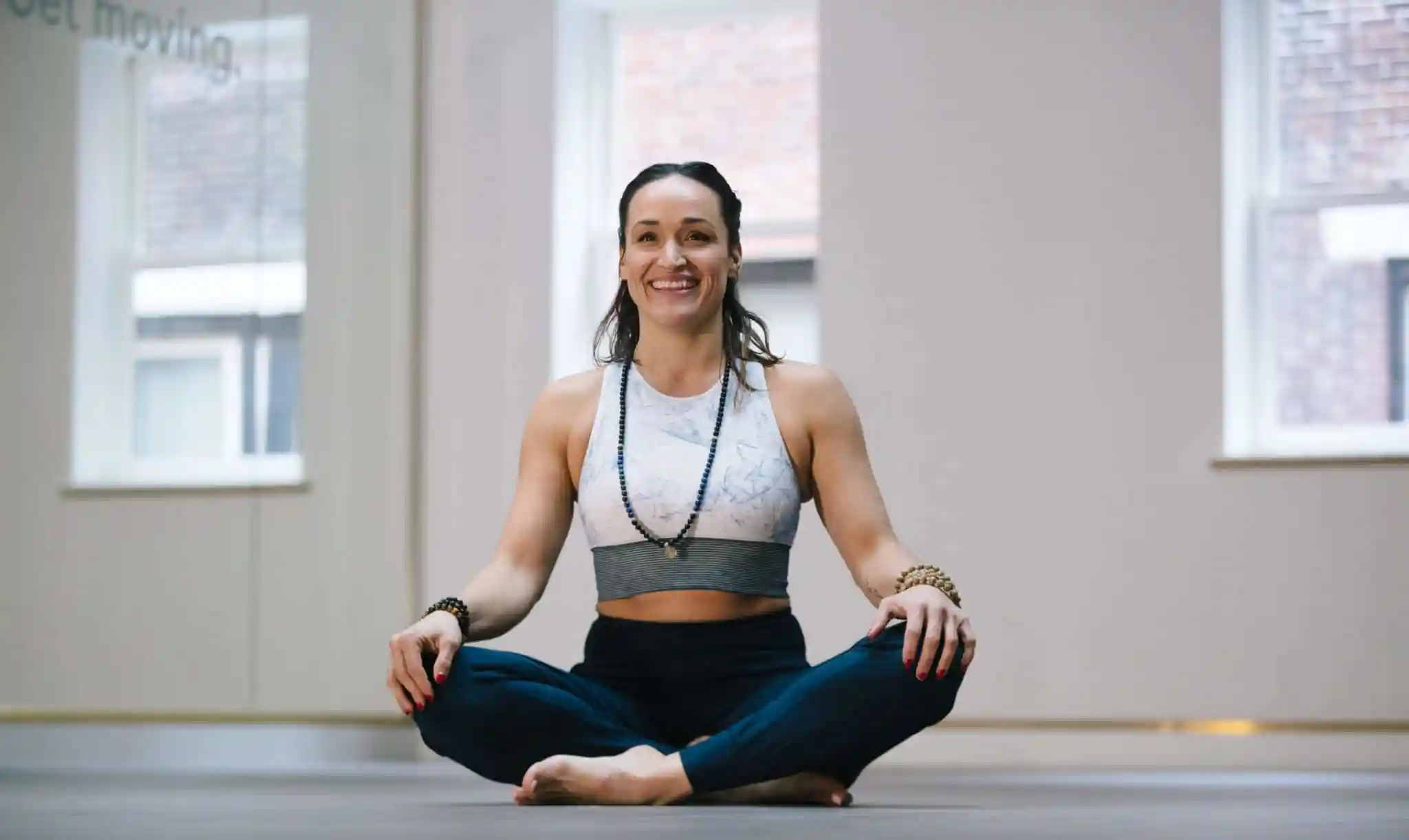
A Quick Intro to Mindfulness for Beginners.
Mindfulness is more than a wellness trend—it's a scientifically validated practice that helps you manage stress, improve focus, and support long-term health. Whether you're looking to calm your nervous system after a demanding day or build habits that improve your recovery metrics, mindfulness offers a practical, accessible starting point. This guide will walk you through what mindfulness is, why it matters for your physiology, and how to build a sustainable practice that fits into your daily routine.
What is mindfulness?
Mindfulness is the practice of bringing your attention to the present moment without judgment. It involves observing your thoughts, feelings, and physical sensations as they happen, rather than getting caught up in the past or worrying about the future. By training your brain to focus on the here and now, you can actively influence your physiological state.
Dr. John Yates describes mindfulness as "the optimal interaction between attention and peripheral awareness." To fully comprehend mindfulness, it's important to understand the unique functions of attention and peripheral awareness. "Attention translates our raw experience of the world into terms we can more easily understand, which we then organize into a picture of reality," Yates says.
Attention helps us decipher different objects or concepts—for example, a bush from a lion. On the other hand, "peripheral awareness is more concerned with the relationships of objects to each other, and to the whole." I like to think of mindfulness as a spotlight that brings focused attention and understanding to the present moment.
Since our brains developed primarily as organs for survival, we are skilled at recalling trauma and disappointment. Our minds are like magnets for bad experiences, and teflon for good ones. Anything bad that happens in our lives sticks, while the good tends to fade away.
Think about it like this: You meet with your coworker for a review and hear about 10 things that you're doing great, but only one area of insufficiency. What is going to keep you up at night? Not the 10 positive things.
Although this mentality is useful when we are experiencing an actual threat, it can cause a lot of unnecessary suffering in day-to-day life.
Mindfulness and the autonomic nervous system (ANS)
The ANS regulates our visceral system (the guts) and all basic functions of the body—it is the center of survival responses. It is composed of the sympathetic and parasympathetic branches and operates automatically, without our control. But, this does not mean that we can't have influence over its function.
Given that our brains developed with the goal of survival rather than happiness, it is crucial for us to implement a daily practice of mindfulness. When we are able to calm the mind, we are able to see life from a place of clarity. We can then observe ourselves going through life and respond with intention, rather than react from fear.
When we stress about the future or ruminate about the past, our bodies do not know the difference—we release the same stress hormones as if we were literally being chased by a lion on the tundra. Since our sympathetic (fight or flight) nervous system can be ignited simply by thought alone, it is imperative that we learn to let things go that we cannot control. On a scientific level, we see the effects of chronic stress manifest as lower heart rate variability (HRV), higher amounts of cortisol levels, and frantic high beta brain waves.
The everyday benefits of mindfulness
Practicing mindfulness daily offers measurable improvements to your physical and mental health. When you actively manage your stress response, you reduce the production of stress hormones like cortisol. This shift allows your body to prioritize recovery, leading to deeper sleep, improved focus, and a more balanced mood.
Over time, consistent mindfulness practice can increase your HRV and lower your resting heart rate. This signals that your body is better equipped to handle daily strain and recover efficiently.
Clinical research and neurobiologists have observed that many mindfulness techniques are useful with respect to emotional difficulties, chronic pain, and behavioral disorders. Mindfulness allows us to manage everyday physiological stress by reminding us to be aware and pay attention to the moment. Think about how often we wish for more time to spend with family, or for less time stuck in traffic.
Yet when faced with our current situation, it is so much easier to focus on all of the negatives. However, the ability to notice when we are ruminating on something that we cannot change and then let it go is something that can truly benefit our autonomic nervous system (ANS) and overall well being.
How to practice mindfulness daily
Set a realistic amount of time
A lot of my clients struggle with maintaining a consistent practice because they create an unrealistic expectation for how much time they can commit to. Maybe it's just one minute each day to start. Try that for 30 days and then move on to two minutes.
That's not to say that you cannot practice for longer, it's just a way for you to succeed in forming the habit. I also suggest choosing a specific time to practice every day. Almost like brushing your teeth, you will begin to automatically crave this dedicated time.
Eventually you'll be able to use other techniques throughout your day to cultivate the skill of mindfulness.
Commit to the practice
In the beginning, your time seated can often turn into daydreaming, problem solving, planning, or entertaining a variety of other mental distractions rather than remaining consistently engaged with the mindfulness technique. It is important to let go of all to-do lists and problems so that you can fully immerse yourself into the moment. Challenges and distractions are inevitable, but in committing to the practice you will begin to see them as opportunities for growth rather than obstacles to your success.
Let go of expectations
Although setting goals and dedicating time is crucial in developing your practice, it is important to avoid expectations of where you think you should be. There is really no such thing as a bad meditation. Simply getting yourself to practice is, in and of itself, an accomplishment.
Find a comfortable, upright posture
Find a seat that is both comfortable and supported. This will help to avoid drowsiness.
Tune into the sounds in your surrounding environment
Practice by closing your eyes and noticing the sounds that surround you. Try to not get wrapped up by one individual sound, just move from sound to sound without labeling or conceptualizing. Work on simply becoming entirely aware of sound as a sensation.
Realize that sounds come and go on their own and no effort is required to hear them. They just simply arise, like waves, washing over your ear drums. Notice if you hop on the bandwagon of one particular sound.
It may capture you, and before you know it it takes you on a ride with its story. Immediately upon understanding that you've become lost in a particular sound, come back to this moment and then gently move on to the next sound. Eventually all of these sounds begin to create a symphony of mindfulness, tuning us deeply and intimately into this moment, by way of our ears.
Measure the benefits of mindfulness with WHOOP
One of the reasons why I really love WHOOP is because it incentivizes mindful choices. You can, for example, meditate before bed and then see a tangible difference in your HRV (and WHOOP recovery) the next day. The benefits of small positive changes are reinforced by WHOOP data and feedback, which in turn further promote mindful activities and more positive choices.
You can also log meditations as an activity and track other behaviors (like mindful breathing) in the WHOOP Journal in order to better understand how they impact your body.
The Stress Monitor feature provides real-time feedback on how your body is responding to stress throughout the day. By pairing mindfulness practices with this continuous monitoring, you can see exactly when your nervous system shifts from a stressed state to a calm one. This creates a feedback loop that reinforces the habit—you practice mindfulness, you see your stress levels drop, and you're motivated to keep going.
Frequently asked questions about mindfulness
What are 5 ways I can practice mindfulness?
You can practice mindfulness through focused breathing, body scan meditations, mindful walking, journaling your thoughts, or simply paying close attention to your senses while eating a meal.
What is the 3 3 3 rule in mindfulness?
The 3 3 3 rule is a grounding technique to help center your mind. You identify three things you can see, three things you can hear, and move three parts of your body. This simple exercise pulls your attention away from anxious thoughts and back into your physical environment.
What are the 7 C's of mindfulness?
The 7 C's represent core attitudes to cultivate during mindfulness practice: compassion, curiosity, courage, calm, connection, clarity, and confidence. Focusing on these traits helps you approach your thoughts without judgment.