Topics
- Article
- Health & Wellness
- Training & Exercise
- Recovery
- Strain
- Sleep
WHOOP Year in Review 2025: Inside a Record-Breaking Year of Sleep, Strength, and Longevity

Year in Review brings together data and insights from members around the world to reveal the bigger picture of health and longevity. This year, health became the ultimate investment — and WHOOP data shows how the community moved more, recovered smarter, and lived better.
The world of WHOOP
Before diving into the details, here’s what we accomplished together.
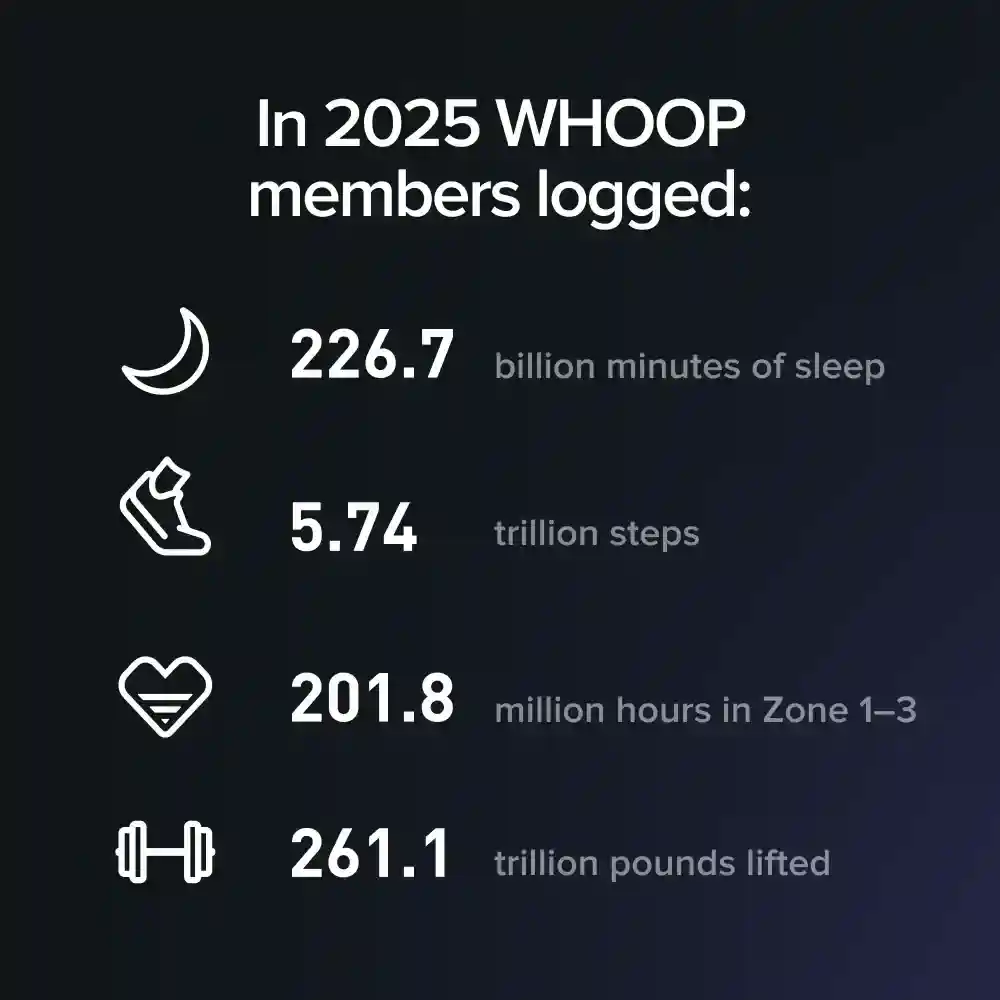
Each number represents small, consistent choices that moved the needle — not just for individuals, but for the future of health and human performance.
How the world slept
Sleep trends this year revealed how age, environment, and culture shape the way we rest. Younger members chased more hours, while older generations led in consistency.
Average sleep duration by generation:
- Gen Z (Age 18-27): 423.8 minutes per night (≈ 7h 4m) — the most sleep overall
- Millennials (Age 28-43): 416.0 minutes (≈ 6h 56m)
- Gen X (Age: 44-59): 409.5 minutes (≈ 6h 49m)
- Boomers (Age 60-78): 408.2 minutes (≈ 6h 48m) — the most consistent sleepers at 71.4%
Top country for sleep:
Finland — 435.0 minutes per night
When we went to bed:
- Boomers: 10:55 PM (earliest)
- Gen X: 11:13 PM
- Millennials: 11:47 PM
- Gen Z: 12:34 AM (latest)
By gender: Women averaged an earlier bedtime at 11:31 PM.
The amount of sleep you need at night depends on your age, how much you exercise, and your overall health. Regularly getting between 7-9 hours of sleep per night is associated with several health benefits, including supporting your immune system, reducing the risk of conditions including heart disease and diabetes, improving mood, decision-making, and mental clarity.
The year of strength training
WHOOP data shows steady growth in strength-focused activity this year. From functional fitness to traditional weightlifting, members continued prioritizing muscular training as a foundation for long-term health.
Strength-based activities made up 28.52% of all WHOOP-logged workouts in 2025, up from 27.77% in 2024 — a +2.68% relative increase.
Research shows that 30-60 minutes of strength training per week can reduce mortality risk by 10–30%. WHOOP data echoes this — linking strength activity directly to a lower WHOOP Age, and demonstrating that consistent strength exercise supports long term health.
The workouts that defined 2025
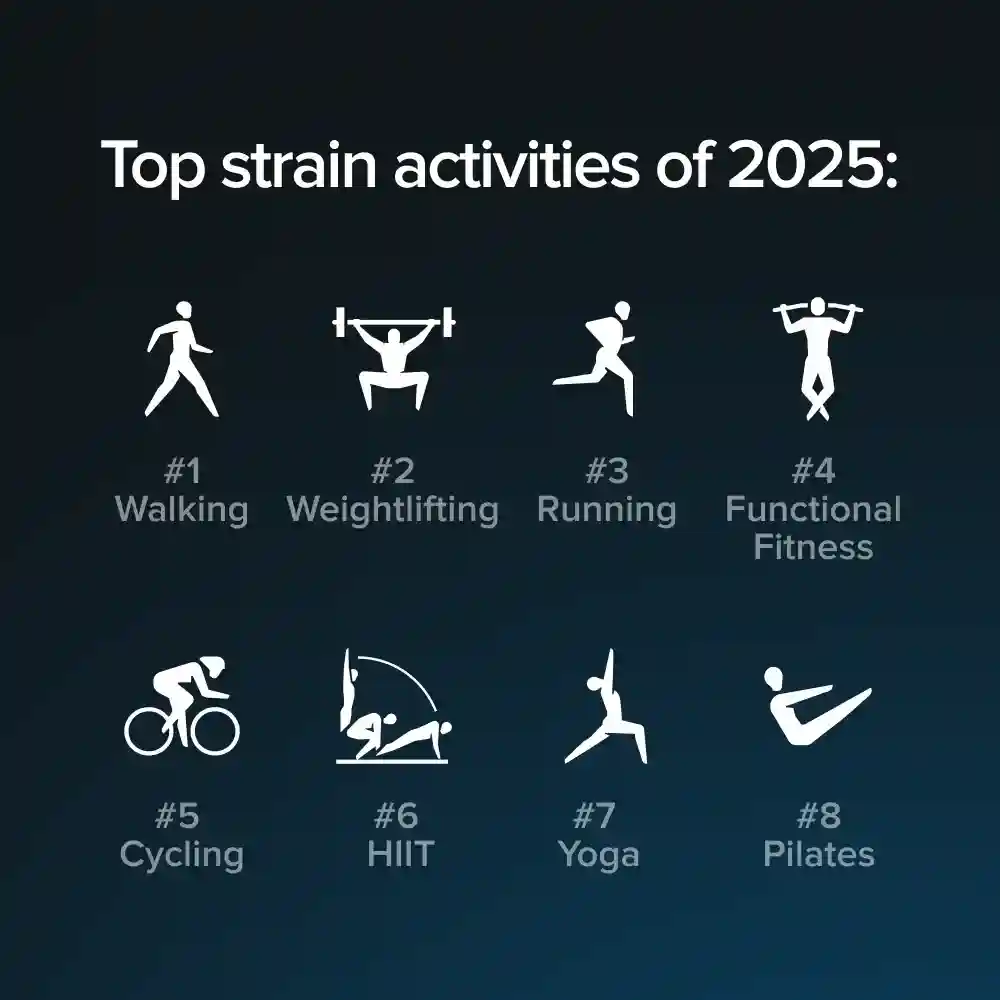
From walking to weightlifting, members balanced movement across endurance, strength, and recovery.
Which activities are trending — and which aren’t
Strength and sports gained ground in 2025, while outdoor and recreational activities saw the steepest drop-offs.
Biggest growth in 2025:
- Weightlifting (+122%)
- Field Hockey (+91%)
- Padel (+78%)
- Gymnastics (+55%)
- Jumping Rope (+33%)
Biggest declines in 2025:
- Hiking / Rucking (–39.6%)
- Parkour (–37.3%)
- Stage Performance (–33.2%)
- Spikeball (–32.1%)
- Martial Arts (–25.4%)
The countries leading global Recovery
Finland once again topped the global leaderboard for Recovery, followed by Ireland and Sweden. Consistency paid off too — Finland also recorded the longest average green streak of the year.
Top Recovery performers (average green days per member):
- Finland — 101.9 days
- Ireland — 96.9 days
- Sweden — 95.7 days
Longest average green streak: Finland — 7 days
What helped – and hurt – Recovery most?
WHOOP data revealed the biggest daily factors that improved (or undermined) Recovery in 2025. Consistency, sleep, and routine continued to drive strong results, while alcohol and stress remained the biggest setbacks.
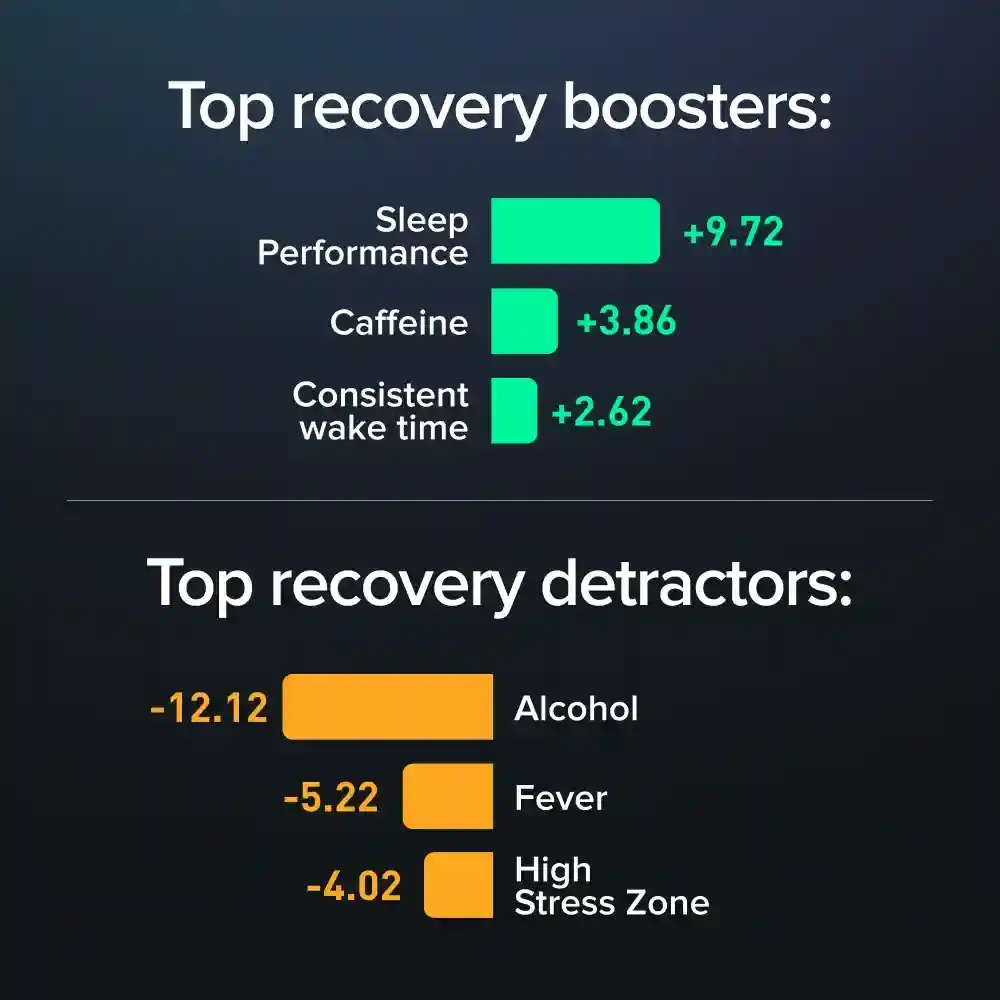
The Recovery boosting behaviors are associated with the ability to decrease your heart rate, improve HRV, and boost mood, while the detractors do the opposite. WHOOP data shows that every additional drink plays a critical role in next day recovery.
The countries leading the way in healthy aging
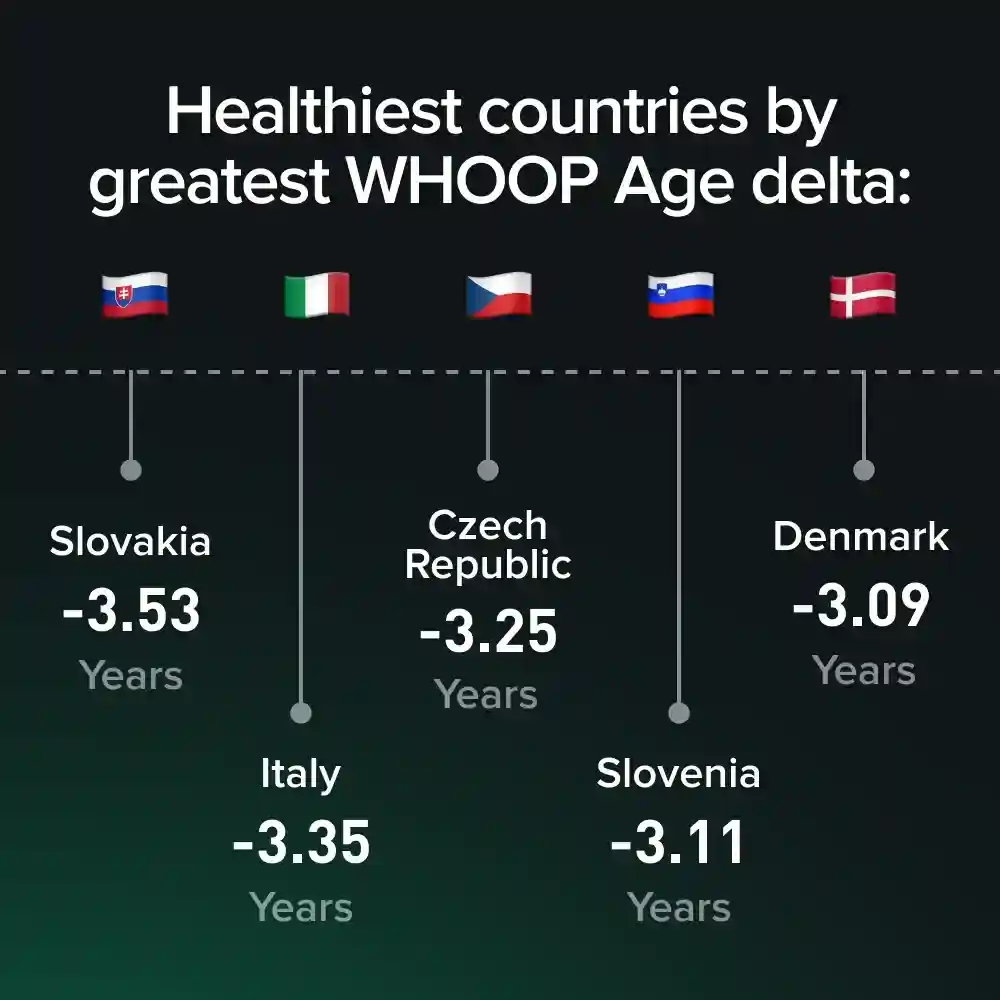
Healthspan redefined longevity this year — as quality of life, not just quantity. WHOOP data highlighted the key factors that promoted a younger physiological age and the habits that held members back.
Top promoters for WHOOP Age:
- VO₂ Max (–0.82)
- Time in Zones 1–3 (–0.45)
- Daily Steps (–0.17)
Top detractors for WHOOP Age:
- Sleep Duration Deficits (+0.24)
- Insufficient Strength Training Time (+0.12)
- Limited High-Intensity Strain (Zones 4–5) (+0.02)
The data shows that countries in central and northern Europe have the best physiological age – maybe because these regions share some environmental characteristics that may play a role in their longevity advantage. With a strong outdoor recreation culture where movement is naturally integrated into daily life through activities like cycling, hiking, and walking, it could contribute to better overall health outcomes.
Communities setting the pace for better health
From Finland’s unbeatable sleep hygiene to Gen Z’s lead in daily movement, 2025 proved that health culture is both local and generational.
Most common activities in the healthiest countries:
- Walking
- Cycling
- Running
Average daily steps (by generation):
- Gen Z: 11,375 steps (highest)
- Millennials: 10,843 steps
- Gen X: 10,489 steps
- Boomers: 9,419 steps
Most consistent sleepers:
- Boomers: 71.4% sleep consistency
The Top 10 most popular behaviors in 2025
From caffeine and alcohol to sleep and hydration, these were the habits members logged most in 2025.
Most-logged journal behaviors:
- Caffeine (5.06%)
- Alcohol (4.87%)
- Late Meal (4.24%)
- Read in Bed (3.80%)
- Hydration (2.70%)
- Device in Bed (2.44%)
- Protein (2.18%)
- Shared Bed (2.12%)
- Sickness (2.10%)
- Sexual Activity (1.89%)
The new and trending Journal Behaviors
2025 saw a shift toward recovery-focused habits, with members prioritizing supplements, sleep environment, and small changes that support long-term health.
Journal behaviors with the biggest year-over-year growth (2025 vs. 2024):
- Magnesium (+78.7%)
- Parenting Sick Child (+76.0%)
- Sleeping in a Dark Room (+56.3%)
- Blue-Light Blocking Glasses (+51.9%)
Followed by Fiber (+49.4%), Sodium (+44.0%), Calcium (+39.7%), Red Light Therapy (+34.3%), Nasal Strip (+31.3%).
The habits and supplements that shaped recovery
Small choices made a measurable difference in recovery this year — from hydration to protein.
Average impact on Recovery Score:
Positive impacts: Hydration (+2.20) Protein (+1.98) Creatine (+1.21) Magnesium (+0.50) Multivitamin (+0.16)
Negative impacts*: Fiber (–0.18) Electrolytes (–0.22)
*Note: People usually log these on days when they’re already dealing with co-occurring symptoms — feeling sick, hungover, dehydrated, or having gut issues. So the lower Recovery might be more tied to what’s going on in the body, not the fiber or electrolytes themselves.
And still the biggest recovery killer: Alcohol (–12.12)
From electrolyte drinks to evidence-based supplements, people began treating nutrition as a proactive form of taking care of themselves. WHOOP data shows hydration and nutrient tracking now play a measurable role in recovery, sleep, and performance.
The surprising recovery benefits
Some of the year’s most unexpected recovery boosts? They came from connection with partners, pets, and better sleep habits.
Sleeping next to pets
- Members who slept with dogs or cats saw measurable gains in recovery.
- Dog in the bedroom → more sleep (427 vs. 418 min), higher consistency (69.9% vs. 67.0%), and lower sleep stress (3.59% vs. 3.69%).
- Average recovery impact: Dog (+2.00), Cat (+1.22)
Sharing a bed
- Members who shared a bed improved recovery by an average of +2.28.
Sex & performance
- Women who reported more frequent sex showed lower resting heart rate (–3.9 bpm), higher recovery (+1.8 pp), and better sleep quality.
- Men who reported sex more often tended to train harder and sleep slightly better, with no recovery downside.
Research by WHOOP reveals direct relationships between sex, sleep, and recovery – and how and why the timing of sex can make all the difference. Certain key benefits of sexual activity can be traced back to the hormonal changes that occur during and after sex.
The truth about stress
WHOOP data showed that how you think about stress shapes how you recover. Members who logged breathwork or meditation at least three times a week saw +4 Recovery points on average — echoing findings from WHOOP Research on stress perception.
Every moment matters
This was the year we realized something bigger: everything counts. Every walk, every late night, every cold plunge — it all added up. You may not have noticed the change, but WHOOP did. And those little things count, helping you add healthier years to your life.
It’s your turn
Check out your 2025 Year in Review in the WHOOP app. Share your story. Celebrate your wins and comebacks. Compare your WHOOP Age.
How did you stack up this year?