Topics
- Post
- Sleep
How naps improve recovery, focus, and sleep debt management
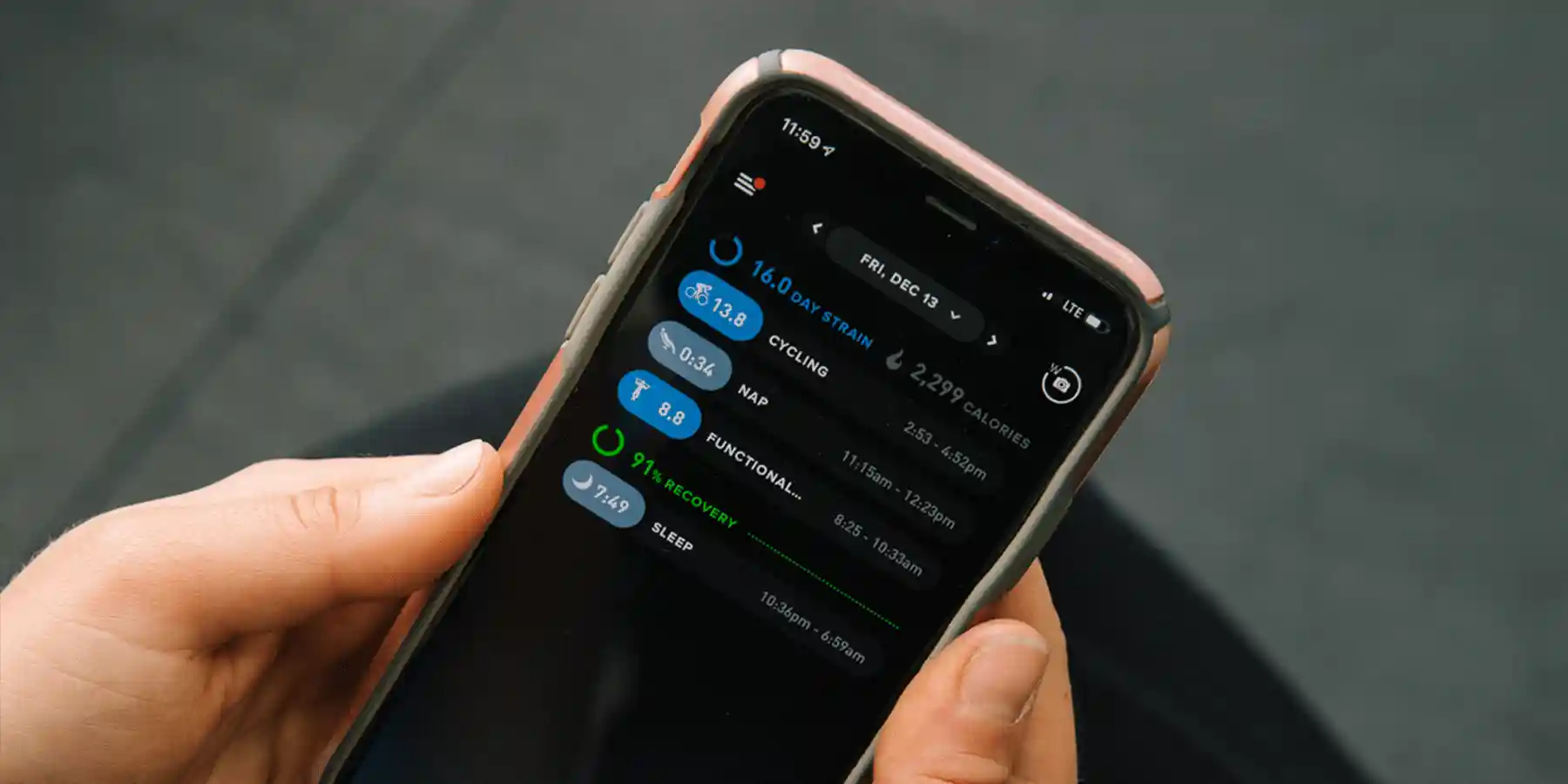
Podcast episode originally published on January 22, 2020
Naps can improve recovery, reduce sleep debt, and sharpen focus when you time them well. In this episode of the WHOOP Podcast, Dr. Kristen Holmes, Global Head of Human Performance, Principal Scientist at WHOOP, and Emily Capodilupo, Senior Vice President of Research, Algorithms, and Data at WHOOP, explain how nap length, training load, sleep stages, and circadian timing change what you get from daytime sleep. Their discussion goes well beyond a generic quick nap rule. Holmes and Capodilupo break down when naps support physical recovery, when they help learning and attention, how late naps can cut into nighttime sleep, and how the WHOOP app can help you spot rising sleep debt before it starts to affect training or health.
For the full discussion from Holmes and Capodilupo on nap science, recovery, and sleep debt, listen to Episode 057 of the WHOOP Podcast on Spotify.
How do naps help recovery after training or short sleep?
Naps help recovery by giving your body extra time to repay sleep loss and, in some cases, start the repair process after training. The benefit depends on the kind of stress you created earlier in the day.
Capodilupo explains that recovery needs change with the training stimulus. Steady-state endurance work can leave you with higher glycogen demand and general fatigue, while short, intense work can place more load on the musculoskeletal system. That means a nap after a long aerobic session does not serve exactly the same purpose as a nap after heavy lifting, repeated sprints, or a hard change-of-direction practice. The nap is part of the recovery plan, but the plan still has to match the strain.
That point also applies when you do something unfamiliar. A person who runs regularly may recover well from another run because the body has adapted to that type of work. The same person might need much more recovery after a basketball game, a skiing day, or a lifting session that recruits muscles in a new way. Holmes frames that as a practical planning issue: if the stimulus is new, assume the recovery demand is higher and make room for it.
The WHOOP view of recovery fits that logic. Recovery reflects how ready your body is to take on strain, and that readiness is shaped by sleep, resting heart rate, heart rate variability, and the total load you have absorbed. If you want more context on that score, see the deep dive on WHOOP Recovery and the Project PR episode on training based on Recovery.
Capodilupo summed up the starting point clearly:
“The way that we stress our bodies will determine how we need to recover.”
What you should take away
- Different training stress creates different recovery needs, so the value of a nap depends on what your body is trying to repair.
- New or unfamiliar activity often raises recovery demand, even when the session does not feel especially long.
- A nap supports recovery best when it fits into a broader plan that includes sleep, low added strain, and enough time to recover fully.
When can a nap support a rest day instead of hurting it?
A nap supports a rest day when it replaces load, instead of getting added on top of an already busy day. Rest works best when the day is actually restful.
Holmes and Capodilupo make an important distinction here. Skipping a workout creates time, and that time can go toward recovery. If a normal training day includes a 90-minute session, a rest day creates 90 minutes you can shift toward sleep, quiet time, or a planned nap. Used that way, a nap becomes part of the rest day structure rather than a random add-on.
The mistake is filling the day with other stress. Capodilupo points out that people often call it a rest day even when they spend it on their feet, doing chores, socializing, moving equipment, or running errands from morning to night. That kind of day lowers training load in one sense, but it still adds external load the body has to absorb. Recovery stays limited, and the next hard session starts from a weaker place.
In the episode, Capodilupo says WHOOP data from athletes shows a clear pattern on true rest days. Lower Strain is associated with better recovery rebound, and she gives a practical threshold: under 6.0. Holmes connects that to the bigger performance goal. The point of recovery is not a passive day off. The point is showing up to the next session able to repeat effort with quality.
Capodilupo gave the number this way:
“What we found is that our athletes who really keep their strain low, and we’re talking under 6 on a rest day, their recovery rebounds so much more.”
Holmes and Capodilupo also discuss how sleep debt carries over for several days. If you reach a rest day without being fully caught up on sleep, using extra time for a nap can help you leave that day in a better place. People who want a broader look at sleep need and athletic recovery can also read how sleep impacts performance.
If you want to hear Holmes and Capodilupo explain how low-Strain rest days can set up a better next workout, go to the full episode on Spotify.
What you should take away
- A rest day creates recovery time only when you protect that time from other stress
- WHOOP athlete data discussed in the episode points to keeping Strain under 6.0 on rest days when the goal is stronger rebound
- A nap can be a productive use of rest-day time when you are carrying sleep debt into the day
- Recovery before the next session raises the chance that the next session produces a better training response
What kind of nap helps focus, learning, and cognitive performance?
The best nap for cognitive performance depends on the mental task in front of you. Very short naps can reduce sleepiness quickly, while longer naps change what kinds of memory and attention you may improve.
Holmes opens this part of the conversation with a useful summary of the research: brief 5 to 15 minute naps tend to work quickly and can improve alertness for 1 to 3 hours. Naps of 30 minutes or more can create sleep inertia, the groggy period after waking, yet they can also produce longer-lasting gains. Capodilupo then adds the mechanism by walking through sleep stages.
Her key point is that duration alone is an incomplete measure. What matters is whether the nap includes the sleep stages linked to the benefit you want. She cites a 2005 study in the journal Sleep by Tadao Hori, which found that people needed at least 3 minutes of slow-wave sleep to show cognitive benefit from the nap. If you only have time to doze for a couple of minutes, the pause may still feel calming, but the sleep-specific cognitive benefit probably does not arrive.
Capodilupo then points to a 2006 paper in Neurobiology of Learning and Memory by William Fishbein. In the episode, she explains that naps without REM sleep can improve procedural memory, the kind tied to a skill or movement pattern, while declarative memory benefits require REM sleep. That is a practical distinction. A tennis player rehearsing movement patterns may get something useful from a shorter nap that includes slow-wave sleep. A person preparing for an interview or trying to hold onto details may need the kind of nap long enough to reach REM.
Capodilupo distilled the threshold this way:
“If you don’t get 3 minutes of slow-wave sleep, there’s actually no cognitive benefit to the nap.”
Holmes adds a useful alternative for people who only have a few spare minutes. If there is not enough time to fall asleep and stay asleep long enough to reach slow-wave sleep, quiet rest, mindfulness, or breathing work may be a better use of the window. For a larger explanation of sleep stages and why slow-wave sleep and REM matter, read how sleep impacts performance.
What you should take away
- Brief naps can reduce sleepiness quickly, while longer naps can support longer periods of improved mental performance
- The research Capodilupo cited suggests a nap needs about 3 minutes of slow-wave sleep to produce a cognitive benefit
- Procedural memory and declarative memory do not respond to naps in the same way, because REM sleep changes what the nap can support
- When time is extremely short, quiet rest or mindfulness may fit the moment better than forcing a nap
How long should a nap be for different goals?
Nap length should match the outcome you want. Short naps tend to favor quick alertness, medium naps can raise the chance of sleep inertia, and longer naps can support deeper recovery or memory goals when your schedule allows them.
Holmes and Capodilupo repeatedly return to one practical reality: longer is not always better. A short nap can give a quick lift in energy and attention. Around 30 minutes, people are more likely to wake up groggy because they have started to move deeper into sleep. Once a nap approaches 90 minutes, the physiology changes again, because REM becomes more likely. That is why a full sleep cycle can be useful when the goal is cognitive processing or deeper recovery between sessions.
For high-level athletes training twice in one day, Capodilupo sees real value in hitting slow-wave sleep between workouts. In the episode, Holmes connects that to growth hormone production and the start of the repair process before the second session begins. In that case, a nap is serving as a recovery tool between two training demands, rather than a general energy boost.
Capodilupo also sets an upper limit. She says 2 to 3 hours is about as far as you want to go. Beyond that point, the nap can remove too much sleep pressure and make it harder to fall asleep that night. People often feel they are buying recovery in the afternoon, while they are actually borrowing from nighttime sleep.
Her benchmark for REM was direct:
“Typically you’re not going to get into REM sleep unless your nap is at least 90 minutes.”
The episode also covers the so-called nappuccino, sometimes called a coffee nap. The idea is to drink caffeine and fall asleep immediately, so the caffeine enters the bloodstream about 20 to 25 minutes later and helps wake you up. Capodilupo treats it as a real but hard-to-execute tactic. You have to fall asleep very quickly for it to work, which means it fits only a narrow set of people and situations.
If you want the full explanation of nap length, sleep inertia, and the 90-minute threshold, hear Holmes and Capodilupo in the full episode on Spotify.
What you should take away
- Short naps are useful for quick alertness, while longer naps shift the benefit toward deeper recovery or more complex cognitive goals
- REM sleep usually requires a nap of about 90 minutes, which changes the kinds of memory tasks that may improve
- Naps longer than about 2 to 3 hours can lower sleep pressure too much and make nighttime sleep harder
- Athletes training twice in one day may benefit from a planned nap between sessions to start recovery earlier
When is the best time to nap without hurting nighttime sleep?
The best nap time is based on your bedtime and wake time, not a fixed clock rule. Holmes and Capodilupo recommend thinking in terms of your biology, with a nap roughly 6 to 8 hours before bedtime and near the midpoint of your wake day.
Capodilupo pushes back on generic advice like never nap after 2:00 p.m. because that assumes everybody lives on the same schedule. A person who goes to bed at 8:00 p.m. and a person who goes to bed at 2:00 a.m. do not share the same best nap window. The right question is how close the nap sits to bedtime and how it interacts with two systems: circadian timing and homeostatic sleep pressure.
Nap too early, and you can shift the circadian rhythm, almost as if you delayed the sleep from the night before. Nap too late, and you reduce the pressure to fall asleep that night. Capodilupo says the midpoint between waking and the next sleep period creates less circadian disruption, which is why many people land in a middle-of-the-day window. Holmes then translates that midpoint into something practical: often about 6 to 8 hours after waking.
The episode also includes a strong caution on late naps. Holmes says WHOOP data from athletes shows clear decreases in sleep quality after a late biological afternoon nap. She puts the drop in deeper sleep at up to 15 percent when the nap creeps past biological 4:00 p.m. For a fuller explanation of circadian timing, meal timing, and light exposure, read the circadian rhythm sleep hack.
Capodilupo framed the timing rule this way:
“You really want to think about at least 6-8 hours before bedtime so that you don’t interfere with your sleep pressure.”
What you should take away
- The best nap time depends on your bedtime and wake time, rather than a universal afternoon cutoff
- A nap around the midpoint of your wake day tends to create less circadian disruption than a very early or very late nap
- Late biological afternoon naps can raise sleep latency and cut into deeper nighttime sleep
- Night owls and early risers should expect different nap windows because their bedtimes differ
How can WHOOP help you decide whether you need a nap today?
WHOOP helps by turning a vague tired feeling into a measurable recovery decision. Sleep debt, Sleep Need, Recovery, and Strain give context for whether a nap is a useful tool today or whether the bigger issue is a pattern of sleep loss.
Holmes gives a clear example in the episode. If you have 40 minutes of accumulated sleep debt, a 30-minute nap can make sense. The larger goal is to keep sleep debt from rising for days at a time. In the conversation, Holmes says the standard used with many collegiate and professional athletes is to keep accumulated sleep debt under 30 minutes. That is a practical target because the longer debt builds, the more likely performance, health, and training adaptation suffer.
Capodilupo explains the risk with a simple model. When sleep debt grows, the body starts operating in a lower-power state. Core functions keep getting priority, while less urgent repair and adaptation get reduced. Over time, that means you can catch up on the clock and still carry the cost of several days or weeks spent under-recovered. Holmes uses that to argue against binge sleeping as a regular strategy. One long catch-up sleep helps, but a daily break-even habit is better.
This is also where WHOOP data can shape behavior on rest days and after hard blocks of training. If Recovery is low, Strain has stayed high, and sleep debt is growing, a nap is easier to justify. If Recovery is stable and sleep debt is minimal, the answer may be a normal bedtime routine instead. People who want more context on the link between training load and next-day readiness can also read the episode on sleep, hydration, and recovery.
Holmes set the operating standard clearly:
“You don’t want your sleep debt to accumulate over 30 minutes. That’s the standard across the collegiate and professional athletes that we work with.”
For the full explanation of sleep debt, low-power mode, and why binge sleeping has limits, listen to the full episode on Spotify.
What you should take away
- WHOOP sleep debt helps convert a short night into a practical nap decision instead of a guess
- Holmes says many athletes aim to keep accumulated sleep debt under 30 minutes
- A nap can help repay sleep debt, while repeated binge sleeping leaves you with days spent under-recovered
- Recovery, Strain, and Sleep Need together give better context than tiredness alone
The bottom line
- Different forms of training create different recovery needs, so the purpose of a nap changes with the stress you placed on your body
- A rest day supports stronger next-day Recovery when total strain stays low, and Capodilupo cites under 6.0 as a useful rest-day target from athlete data discussed in the episode
- The research Capodilupo referenced suggests a nap needs about 3 minutes of slow-wave sleep to produce a measurable cognitive benefit
- REM sleep usually requires a nap of about 90 minutes, which means nap length changes the kinds of learning and memory a nap can support
- Naps longer than about 2 to 3 hours can reduce sleep pressure enough to make nighttime sleep harder
- Nap timing should be based on your biology, with a window roughly 6 to 8 hours before bedtime and around the midpoint of your wake day
- Late biological afternoon naps can reduce nighttime sleep quality, and Holmes cites WHOOP athlete data showing deeper sleep can drop by up to 15 percent
- WHOOP sleep debt helps people decide when a nap is worth using, with Holmes citing a practical target of keeping accumulated sleep debt under 30 minutes
Frequently asked questions about things discussed in this episode
How does WHOOP show sleep debt?
WHOOP shows sleep debt inside the sleep view of the WHOOP app, where it compares how much sleep you needed with how much you actually got. That number helps you see whether tiredness today is tied to a short night or to a longer pattern of missed sleep.
What does WHOOP do for deciding whether a nap makes sense today?
WHOOP helps decide whether a nap fits today by putting Sleep Need, sleep debt, Recovery, and Strain in one place. A nap is easier to justify when sleep debt is growing, Recovery is lagging, or recent strain has been high.
How does WHOOP help protect nighttime sleep when you nap?
WHOOP helps protect nighttime sleep by showing whether late naps are followed by lower sleep quality and slower sleep onset. Holmes says the episode data points to worse nighttime sleep after late biological afternoon naps, which makes timing part of the decision.
What does WHOOP measure that relates naps to recovery?
WHOOP measures several signals tied to recovery, including sleep duration, heart rate variability, resting heart rate, Recovery, and Strain. Those metrics help show whether a nap is supporting a one-day rebound or whether the bigger issue is accumulated sleep loss.
How does WHOOP help on rest days?
WHOOP helps on rest days by showing whether the day stayed low in strain and whether recovery rebounded the next morning. In this episode, Capodilupo says athlete data points to stronger recovery rebound when rest-day Strain stays under 6.0.
What does WHOOP show after a late nap?
WHOOP can show the cost of a late nap in your nighttime sleep data. Holmes says late biological afternoon naps are associated with worse sleep quality and less time in deeper stages later that night.
For days when nighttime sleep falls short, WHOOP turns naps from a guess into a timing decision tied to sleep debt, Strain, and next-day Recovery.