Topics
- Article
- Health & Wellness
- Training & Exercise
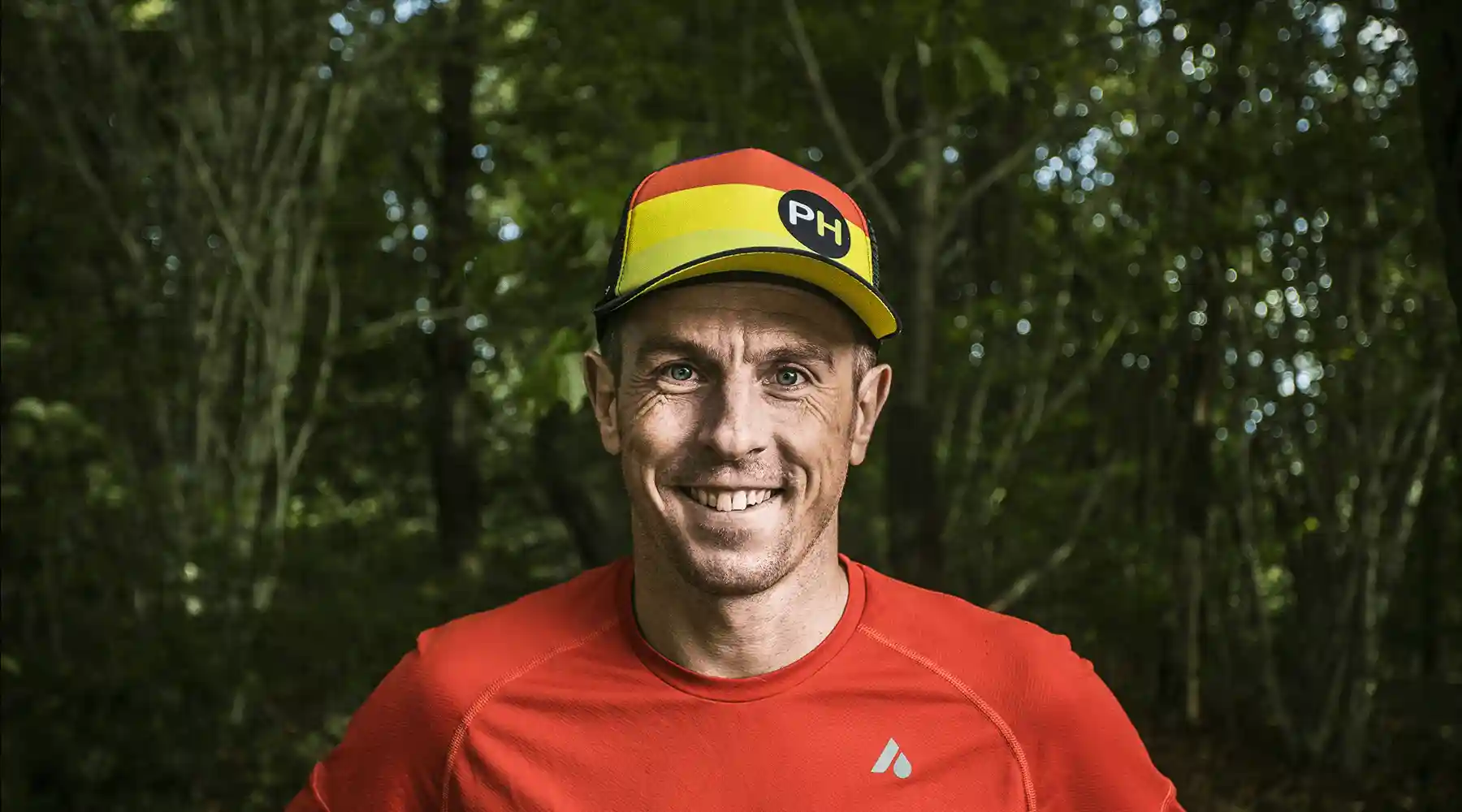
How to build a better hydration strategy for training with Andy Blow
Originally published on July 19, 2022
Hydration strategy shapes performance by changing blood volume, perceived effort, and how hard the heart has to work. In Episode 181 of the WHOOP Podcast, Global Head of Human Performance, Principal Scientist at WHOOP Kristen Holmes talks with sports scientist Andy Blow, founder of Precision Fuel and Hydration, about how to build a plan that fits your sweat rate, sodium loss, training conditions, and goals. Blow also draws on work with the Benetton and Renault Formula 1 teams and the Porsche Human Performance Center. This article answers six practical questions: what sweat does to performance, why hydration needs vary so much, when thirst is enough, how to prehydrate, how electrolytes and alcohol change the plan, and where carbohydrates fit.
To listen to episode 181 in full, head to the WHOOP Podcast on YouTube.
How does sweating change performance and perceived effort?
Sweating protects core temperature, but it also pulls fluid out of blood plasma. As blood volume drops, the cardiovascular system has to work harder, heart rate climbs, and the same pace starts to feel harder.
Early in the conversation, Holmes linked hydration to patterns WHOOP often sees in Strain and in the heart rate and HRV trends described in what WHOOP measures across sleep, recovery, and strain. Blow explained why that happens. Sweat is part of thermoregulation: the hypothalamus detects rising core temperature, signals sweat glands to release fluid onto the skin, and evaporation removes heat. The tradeoff is that the fluid comes from the bloodstream.
Blow said the biggest performance cost of dehydration is not mild discomfort. It is the hit to circulating blood volume during exercise, especially in cardiovascular work and in hot conditions.
Blow explained the mechanism in simple terms.
"The crucial thing is that sweat is coming from your blood plasma, so that is decreasing your blood volume."
That mechanism helps explain why hot sessions can raise perceived effort so quickly. If less blood is available to move oxygen and manage heat at the same time, the heart has to beat faster to keep up. For WHOOP members, that can show up as lower HRV and higher resting heart rate after a dehydrating day, even when the workout itself was expected.
What you should take away
- Sweat cools the body by evaporation, but the fluid lost during sweating comes from blood plasma.
- Lower blood volume can raise heart rate, raise perceived effort, and slow performance during hard or hot training.
- Hydration patterns often line up with changes in HRV, resting heart rate, and next-day Recovery.
If you want to hear Blow unpack how sweat loss changes blood volume, listen to the full episode on Youtube.
Why do hydration needs vary so much from person to person?
Once the basic mechanism is clear, the next question is why one person's simple bottle works and another person's does not. Hydration needs are individual because both sweat rate and sweat sodium concentration vary widely, even among athletes doing the same session in the same weather.
Blow used his own lab result as an example. He loses more than 1,850 milligrams of sodium per liter of sweat, which puts him near the upper end of the range he sees in testing. He described a spectrum that starts near 200 milligrams per liter on the low end and reaches roughly 2,000 to 2,200 milligrams per liter on the high end. That spread helps explain why he could race well in cold weather and unravel in hot long-course triathlons until he changed his fluid and sodium plan.
He pointed Holmes to population work from the Gatorade Sports Science Institute and to Dr. Sandra Godek's research in American football players, which showed that athletes on the same preseason schedule can have very different losses.
Blow used one comparison from that research to make the point concrete.
"Some players required less than a teaspoon of salt a day to replace their electrolyte needs, and other players needed handfuls of salt to replace what they were losing and gallons of fluid to go with it."
For athletes, the practical lesson is simple: copying a teammate's bottle or a generic sports drink label can miss the mark by a wide margin. It also helps explain cramps, salt marks on clothing, and performance that holds up in cool weather but falls apart in the heat.
What you should take away
- Sweat sodium loss can range from about 200 to about 2,200 milligrams per liter.
- Two athletes in the same workout can need very different amounts of fluid and sodium.
- Salt marks, repeated cramps, and heat-specific performance drop-offs can all be clues that your hydration plan is too generic.
If you want to hear Blow go deeper on individual sweat and sodium losses, watch the full episode on YouTube.
Should you drink only when you are thirsty or follow a plan?
Those differences lead to the next practical question: should you simply respond to thirst or arrive with a schedule for drinking? Thirst works well for many normal training sessions, but long, hot, or high-stakes efforts often need a plan.
Blow walked through the well-known 2 percent dehydration rule. Aggregate research shows performance often starts to fall when people are pushed to around 2 percent body mass loss. But he said that figure is not universal, because many lab protocols force dehydration in ways that do not match real training. He also pointed to marathon data showing some runners finishing with around 6 percent body mass loss and still performing well.
The risk runs in both directions. Drink too little in a long hot event and blood volume falls. Drink too much plain water and blood sodium can fall as well. Blow cited research from the Spartathlon in Greece where roughly 10 to 12 percent of athletes on the start line already showed hyponatremia, likely after aggressive prehydration with water alone.
Blow's summary was deliberately nuanced.
"A lot of the time most people can approach hydration in a very natural way, which is to listen to their body and respond to thirst. But in a race like the Hawaii Ironman in 85 degree heat and 90 percent humidity, going in without a hydration plan is a serious roll of the dice."
One more common mistake is overreading urine color. Very dark urine can signal dehydration, but clear urine after a large glass of water and coffee may simply reflect a diuretic effect, not a perfectly topped-up system.
What you should take away
- Thirst is often a useful guide for ordinary training sessions.
- Long, hot, or high-stakes events usually need a fluid and sodium plan instead of guesswork.
- Overdrinking plain water can create hyponatremia, especially when athletes aggressively prehydrate before endurance events.
- Urine color can be misleading when caffeine or large fluid boluses are involved.
If you want to hear Blow unpack when thirst is enough and when it is not, listen to the full episode on Youtube.
What does good prehydration actually look like?
Once a session or event calls for a plan, prehydration becomes the next lever. Good prehydration means starting with more circulating fluid on board without washing sodium out of the bloodstream.
Blow said many athletes do the opposite. They drink large amounts of plain water the night before or morning of a hot event, then spend the next few hours peeing and diluting blood sodium. His preferred approach is a strong electrolyte drink about an hour before the start. The goal is to move fluid from the gut into the bloodstream and hold it there.
Before giving examples from his work with athletes, Blow put a number on that concentration difference.
"Very strong electrolyte drinks, about 3 or 4 times the concentration of a regular sports drink, can help your body move the fluid from the gut into the bloodstream and hold it there."
He shared one case from the National Football League. A player who cramped regularly had been taught since college that more water always meant better hydration. Before games, he drank so much that he expected to be standing on the sideline peeing into his pants and took that as proof he was ready. Blow's fix was direct: less total fluid, more sodium. The cramping eased once the player changed the mix.
This is also where hydration ties back to evening recovery habits. A hot session, travel day, or summer practice can leave you behind on fluids going into the night, and that can carry into the next morning's Recovery and into the quality of your sleep and recovery habits.
What you should take away
- Prehydration works best when sodium helps move fluid into the bloodstream and keep it there.
- Large amounts of plain water before training can increase bathroom trips and dilute blood sodium.
- A strong electrolyte drink about 60 to 90 minutes before training or racing can be useful in hot conditions and long events.
- Repeated cramping can sometimes reflect a poor prehydration strategy rather than a lack of effort or fitness.
If you want to hear Blow go deeper on prehydration and cramping, listen to the full episode on Youtube.
How do electrolytes, caffeine, keto, and alcohol change hydration needs?
From there, the discussion turns to what belongs in the bottle and what other habits change the answer. Sodium is the main electrolyte to replace after heavy sweating, while caffeine, alcohol, low carb eating, and fasting can all shift how much fluid you hold onto.
Blow divided body fluid into two main pools. Potassium is the major electrolyte inside cells. Sodium is the major electrolyte outside cells, including blood plasma and interstitial fluid. Calcium and magnesium also matter for muscle contraction and cellular signaling, but they are not the minerals lost in the biggest amounts in sweat.
Blow made the hierarchy clear.
"The major electrolyte that is of significance when it comes to supplementation for athletes, for those who sweat heavily, is sodium, because sodium is the one that is lost in the highest volumes by far in sweat."
That has several knock-on effects. People eating keto or other low carbohydrate patterns often lose water quickly as glycogen stores fall, because glycogen is stored with water. In that setting, Blow recommends sodium-rich fluids before training, fluids by thirst during training, and another sodium-rich drink or salty meal afterward. His rule of thumb was about 8 to 24 ounces before and again after, scaled to body size.
Caffeine changes the picture less than many people think. Blow said 3 to 6 milligrams per kilogram about an hour before exercise is a common performance protocol, and during exercise the anti-diuretic effect of hard work often blunts extra fluid loss. Across the day, though, several strong coffees can still leave some people behind on hydration.
Alcohol is harder to finesse. Blow treats a night of drinking almost like a workout from a hydration standpoint: go in well hydrated, include electrolytes before bed or late in the evening, and use another electrolyte drink the next morning. For WHOOP members, that helps explain why alcohol can keep Recovery suppressed for several days, especially when it arrives on top of travel, heat, or hard training.
What you should take away
- Sodium is the main electrolyte lost in sweat and the main mineral to think about replacing during heavy sweat loss.
- Low carbohydrate eating and fasting can increase the need for sodium-rich fluids because glycogen loss pulls water with it.
- Caffeine can support performance, but large amounts across the day can still leave some people behind on hydration.
- Alcohol increases fluid loss, so a simple electrolyte plan before bed and the next morning can reduce the damage.
What role do carbohydrates play alongside hydration?
After fluids and sodium, the final layer is fuel. Hydration and carbohydrate intake work together during endurance exercise, and a fluid plan alone is incomplete once duration starts to climb.
Blow said athletes kept asking what to eat alongside the fluid plan, which pushed Precision Fuel and Hydration to build more tools around fueling rather than hydration alone. His practical ranges are straightforward. Around 30 grams of carbohydrate per hour can fit shorter efforts. Longer events often land near 60 grams per hour. Elite endurance athletes may push to 90 grams per hour, and Blow said some case studies on the Precision Fuel and Hydration site reach 110 grams per hour.
He summarized the scale this way.
"For shorter duration activities, 30 grams of carbohydrate an hour is a decent level of fueling. As duration increases, you might go up to 60 grams and then even 90 grams, and we have seen case studies of athletes taking 110 grams per hour."
Those numbers are high for a reason. Endurance performance depends heavily on carbohydrate availability at higher aerobic outputs, and athletes who want to use bigger intakes need to train the gut as well as the legs. Blow repeatedly returned to one principle that applies to both fuel and fluids: know your own numbers. A calculator, a sweat test, and a race rehearsal can get you much closer than guessing from a label.
If you want to go deeper on race-day planning, the Precision Fuel and Hydration case study library shows how individual athletes combine fluid, sodium, caffeine, and carbohydrate in real events.
What you should take away
- Hydration and fueling should be planned together for longer endurance work.
- Carbohydrate intake often starts around 30 grams per hour, rises toward 60 grams per hour in longer sessions, and can reach 90 grams per hour or more in elite racing.
- Bigger carbohydrate intakes require practice, because the gut has to adapt along with the rest of the body.
- Personal numbers beat generic labels when you are building a race-day plan.
The bottom line
- Sweat cools the body, but heavy sweat loss reduces blood plasma volume and can raise heart rate and perceived effort.
- Sweat sodium loss varies from person to person by a wide margin, so one hydration script does not fit everyone.
- Thirst works well for many ordinary training sessions, but long, hot, or high-stakes efforts call for a fluid and sodium plan.
- Prehydration works better with sodium than with large amounts of plain water, which can dilute blood sodium and increase bathroom trips.
- Sodium is the main electrolyte lost in sweat, while caffeine, alcohol, low carb diets, and fasting can all shift fluid balance.
- Endurance fueling usually starts around 30 grams of carbohydrate per hour and can rise to 60, 90, or even 110 grams per hour when trained and rehearsed.
Frequently asked questions about things discussed in this episode
How does WHOOP help you spot when hydration may be affecting recovery?
WHOOP helps flag hydration-related strain indirectly through patterns in Recovery, heart rate variability, resting heart rate, sleep, and workout context after hot sessions, long endurance work, travel, or alcohol.
What does WHOOP do for hydration if it does not provide a hydration score?
WHOOP does not currently provide a direct hydration score, so the best use is to pair WHOOP trends with your own notes on heat, sweat loss, sodium intake, thirst, and fluid habits.
How does WHOOP measure the signals that often change when you are underhydrated?
WHOOP measures heart rate, heart rate variability, sleep, and strain continuously, which lets you see when dehydration may be pushing resting heart rate up or HRV down after training.
What can WHOOP Journal do for alcohol, caffeine, and hydration habits?
WHOOP Journal lets you log behaviors such as alcohol use, caffeine timing, and other habits so you can look for repeat patterns against next-day Recovery.
How should WHOOP members use Recovery after a hot workout or race?
WHOOP Recovery works best as context rather than as a direct hydration readout. After a hot or sweaty session, low Recovery can be a cue to replace fluid and sodium, prioritize sleep, and avoid stacking more stress too soon.
What does WHOOP show if fasted training or low carb eating is affecting fluid balance?
WHOOP can show the aftereffects indirectly through lower Recovery, lower HRV, higher resting heart rate, and harder-feeling workouts when fasted training or low carb eating reduces fluid and sodium availability.
Used with a simple record of heat, sodium, fluid, caffeine, and alcohol, WHOOP can help show whether your hydration plan actually held up once the workout was over.