Topics
- Post
- Member Stories
How to rebuild recovery and purpose after addiction with Steve-O
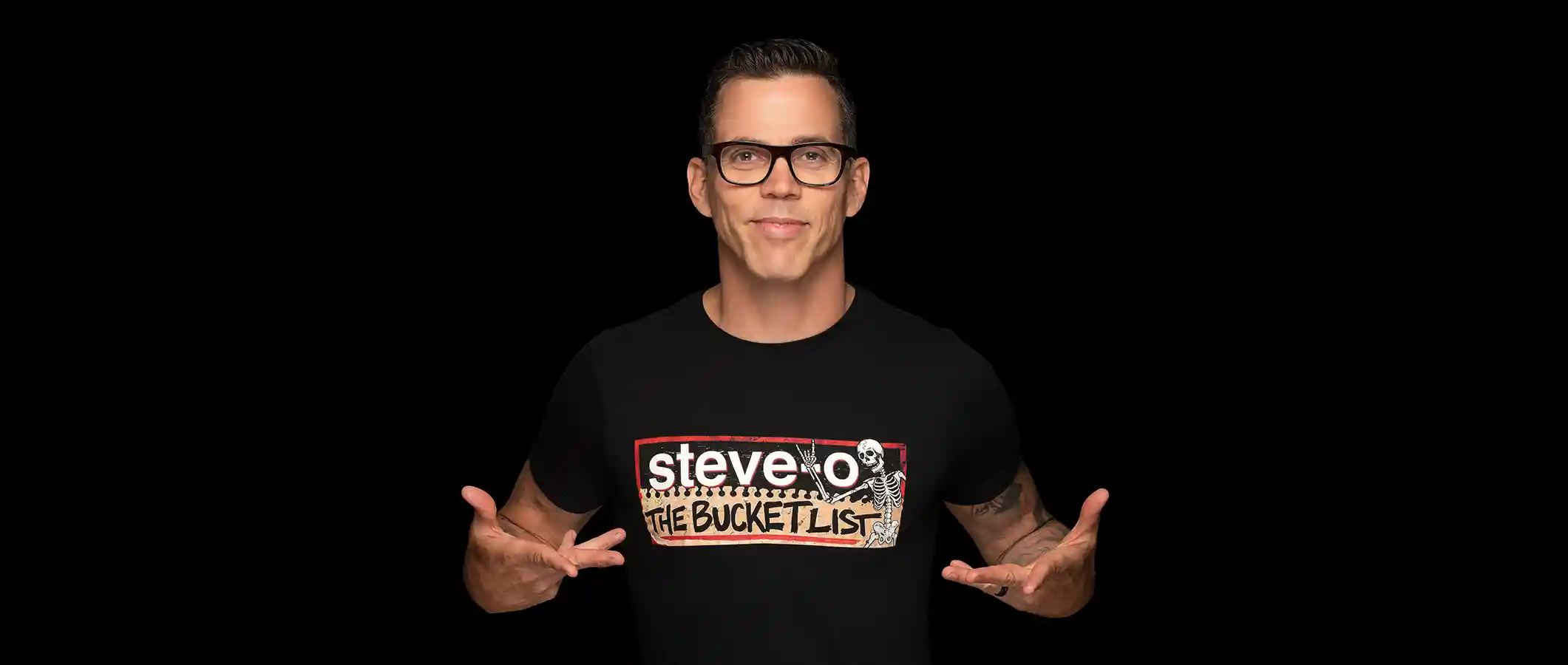
Podcast episode originally published on January 13, 2021
Recovery after addiction depends on more than sobriety alone, it also depends on identity, daily structure, and habits that support the body under stress. In Episode 106 of the WHOOP Podcast, Steve-O, legendary stunt performer and star of MTV’s Jackass, explains how early discomfort, sudden fame, homelessness, and substance use shaped his life, and how meditation, gratitude, and daily WHOOP data now help him stay grounded. This article breaks down the most useful parts of that conversation, including what drove his risk-taking, what fame did to his sense of self, and what his HRV, resting heart rate, and routines suggest about long-term recovery.
To listen to episode 106 in full, head to the WHOOP Podcast on Spotify.
Why did Steve-O think he would not live past 30?
Steve-O says that belief started long before fame. He describes an early sense of defectiveness, discomfort, and family history that made self-destruction feel almost expected.
The conversation opens with a striking admission: he never assumed adulthood was guaranteed. Steve-O ties that feeling to a long family history of alcoholism on his mother’s side and to a persistent sense that he did not fit in. He frames the issue less as teenage rebellion and more as a default emotional state, one built around restlessness, shame, and the feeling that something was wrong with him.
He also pushes back on an easy explanation for that discomfort. As a child, he moved across London, Toronto, Brazil, Miami, and Connecticut, but he does not blame the moving itself. In his view, the deeper issue was that every new place felt like a fresh start, yet he brought the same discomfort with him every time. That distinction matters for recovery because it separates environment from pattern. A new city, new job, or new identity can help, but it does not automatically change the inner script.
In the surrounding conversation, Steve-O describes trying too hard to be accepted, only to become more overwhelming and less understood. That pattern later fed directly into the way he sought attention on camera.
Steve-O puts the emotional baseline plainly:
“I never thought I would see 30. [...] I had a feeling of being defective and not fitting in and not equipped to survive in the world. That was my default setting.”
What you should take away
- Steve-O traces his early self-destructive thinking to chronic discomfort and family alcoholism, not to fame alone
- Moving often gave him repeated fresh starts, but it did not change the underlying pattern he carried with him
- Recovery stories often begin before substance use becomes visible, with beliefs about identity, belonging, and self-worth
If you want to hear Steve-O go deeper on the roots of his early self-image, head to the WHOOP Podcast on Spotify.
How did attention-seeking turn into a stunt career?
That early discomfort eventually found a medium. Steve-O says stunt work came from attention-seeking, video editing, and persistence, not from an unusual tolerance for pain.
He describes skateboarding as one of the healthiest phases of his life because it taught him hard work, sacrifice, and persistence. Just as important, it introduced him to filming and editing. The camera let him shape a version of himself by cutting out failed attempts and keeping the moments that landed. That interest in edited presentation became a career skill long before it became a television persona.
Steve-O is also explicit about what stunt work was not. He says he never viewed himself as someone who enjoyed pain more than other people. Injuries were simply the price he accepted in exchange for attention. Later, when he dropped out of the University of Miami after a breakup, that need for attention, combined with heartbreak, pool-diving, rappelling, and home-video production, became the raw material for his first stunt tapes.
His description of that leap is useful because it shows how careers can form from a messy mix of skills and impulse. He loved editing, he wanted to be seen, and he kept mailing tapes until someone paid attention. There was no established path for a home-video stunt career at that time, which makes the persistence as important as the idea.
Steve-O describes the ambition in the terms he used at the time:
“When I dropped out [...] I said, ‘I’m going to videotape stunts. I’m going to become a crazy famous stuntman.’ [...] there was no precedent for that.”
What you should take away
- Steve-O says his stunt career grew from attention-seeking and video storytelling, not from a high pain threshold
- Skateboarding mattered because it taught him persistence before television ever entered the picture
- A career path can start as a strange combination of heartbreak, obsession, and one skill that keeps getting sharper.
If you want to hear Steve-O unpack how skateboarding, editing, and heartbreak fed the stunt career, head to the WHOOP Podcast on Spotify.
What happens when fame arrives before stability?
Once that home-video ambition became real, the pressure changed shape. Steve-O says Jackass made him instantly recognizable, but it did not give him personal stability at the same speed.
He points to one specific media moment: the second-week airing of the Goldfish segment on Jackass. After that episode, his life changed overnight. In 2000, media was less fragmented, and a hit on MTV could reach huge numbers of people at once. The result was immediate visibility, and it arrived while he was broke, couch surfing, and deep in substance use.
The numbers make the contrast sharper. Steve-O says he had earned less than $1,500 total for the first season of Jackass. When MTV ordered 16 more episodes and offered $2,000 per episode, he did the math in his head and thought he was suddenly rich. The first half-payment, after taxes, came to about $10,000. That money mattered, but it did not fix the instability that fame had landed on top of.
He also describes the emotional downside of public success. Once he reached Los Angeles, the message around him became urgency: stay hot, move fast, strike while the iron is hot. For someone already dependent on external validation, that is fuel on the fire. It turns visibility into a treadmill.
Steve-O sums up the contradiction with one of the most memorable facts in the episode:
“I was homeless, I was completely broke. I had made less than $1,500 all told for the first season of Jackass [...] I was unemployed, homeless, broke, and a star on the number one show in the history of MTV.”
What you should take away
- Public success can arrive much faster than financial stability or emotional stability
- Steve-O says Jackass changed his visibility overnight while he was still homeless and underpaid
- Fame can intensify an existing dependence on external validation instead of resolving it.
If you want to hear Steve-O go deeper on sudden fame, money, and homelessness during Jackass, head to the WHOOP Podcast on Spotify.
How did sobriety change Steve-O’s idea of recovery?
That instability leads to the central recovery lesson of the episode. Steve-O says sobriety forced him to separate the public persona of Steve-O from the private person trying to live a sane life.
He is clear that celebrity runs on external validation, and he sees that as fundamentally unstable. In his telling, public attention is useful for a career, but dangerous as a basis for self-worth. The healthier shift came through sobriety, recovery work, and spirituality, which helped him build a distinction between persona and identity.
This section of the conversation is especially useful because Steve-O is not romantic about fame. He says celebrity can feel good, and he is grateful for it, but he does not describe it as a foundation for happiness. Instead, he argues that happiness has to be built from within and through intimate relationships, not through mass approval. That is a practical definition of recovery because it moves the goal from image management to internal stability.
For readers who want the technical side of how WHOOP defines readiness, Episode 40 of the WHOOP Podcast gives a deeper explanation of how Recovery combines heart rate variability, resting heart rate, sleep, and other context. Steve-O is using the word recovery in the broader human sense here, but the overlap is real: both ideas are about whether the body and mind are prepared to respond well to stress.
Steve-O frames the danger of fame with a definition worth quoting:
“Everything that celebrity is based on is inherently, by definition, external validation. I think everything that happiness is based on is within.”
What you should take away
- Steve-O describes sobriety as a process of separating persona from identity
- External validation can support a career, but he argues that it is a poor basis for self-worth
- Recovery, in the broad sense, means building a life that can withstand stress without depending on applause.
If you want to hear Steve-O go deeper on sobriety, spirituality, and separating fame from identity, head to the WHOOP Podcast on Spotify.
What can WHOOP data reveal about long-term recovery habits?
After identity and sobriety came a more measurable layer. Steve-O says the WHOOP app helps him check whether daily behaviors such as meditation, melatonin use, and bodywork line up with better recovery signals over time.
The eye-catching numbers from the episode are his resting heart rate of about 45 beats per minute and an HRV reading around 160 on a day when he reported 97% Recovery. Ahmed points out that a high HRV is interesting in this context because heavy long-term drug and alcohol use can suppress HRV over time. Steve-O’s data does not prove a universal rule, but it does show why trend tracking matters more than assumptions about what a person should look like from the outside.
Just as useful is the way Steve-O talks about changes. He says his HRV had slipped from an earlier high point and suspects that loosening a strict no-sugar, no-flour routine played a role. That is exactly how wearable data becomes practical. It does not need to declare a universal cause. It helps you run a personal experiment, watch your own baseline, and see whether a behavior shift lines up with a physiological shift.
That same self-observation shows up in other WHOOP Podcast conversations. In Episode 122 of the WHOOP Podcast, Steve Cook describes seeing illness and very low Recovery reflected in his data. And in Episode 83 of the WHOOP Podcast, WHOOP discusses how respiratory rate trends helped flag changes people could not always feel yet.
Steve-O gives one concrete snapshot of his routine and his data here:
“I got 97% recovery with 160 HRV.”
What you should take away
- WHOOP data is most useful when it helps connect daily habits to your own baseline over time
- Steve-O reported a resting heart rate around 45 and an HRV around 160 during a strong recovery stretch
- Self-experimentation works best when you treat HRV and Recovery as personal signals, not as numbers to compare with someone else
- Changes in diet, sleep, or routine can show up in trend lines before they are obvious in how you feel
Why do meditation and gratitude show up in recovery routines?
Those measurements point back to the habits Steve-O believes matter most. He credits disciplined meditation and a daily gratitude journal with helping him stay steady, and Ahmed connects those practices to patterns he hears from many high performers.
Steve-O says he meditates twice a day and tracks the practice closely. In the episode, he shows Ahmed a streak of 366 straight days averaging 41 minutes a day. He describes meditation as something that helps him feel connected, calmer, and better able to keep his life in order. The important point is not the exact method. It is the discipline and repetition.
He pairs meditation with a gratitude journal, which he treats as another practical tool rather than a vague wellness ritual. Ahmed responds that many successful guests across the WHOOP Podcast mention gratitude in some form. He also references neuroscientist [Andrew Huberman] when discussing how gratitude may influence brain chemistry, including serotonin. The episode keeps that point broad, but the behavioral takeaway is clear: reflection practices can change the emotional tone you bring into a day.
This same theme appears across other WHOOP Podcast episodes. Episode 46 of the WHOOP Podcast connects sleep, routine, and consistency to better performance. Episode 11 of the WHOOP Podcast explores mindfulness and the importance of the other 22 hours outside a workout. And Episode 138 of the WHOOP Podcast shows how chronic under-resting can push a high performer into a hole.
Steve-O offers a rare piece of numerical specificity when he describes his meditation practice:
“This is my meditation. I’m on 366 straight days averaging 41 minutes per day.”
What you should take away
- Steve-O treats meditation as a daily discipline, not as an occasional reset
- A gratitude journal can make recovery practices more concrete by directing attention toward what is already working
- Repeated reflection habits show up across WHOOP Podcast guests because they help steady behavior under stress
- Consistency in attention, sleep, and routine often supports better recovery than intensity by itself
The bottom line
- Steve-O traces his early self-destructive thinking to chronic discomfort, family alcoholism, and a feeling that he did not fit in long before fame
- Steve-O says stunt work grew from attention-seeking, video editing, and persistence, not from an unusually high tolerance for pain
- Jackass became a hit while Steve-O was homeless and had earned less than $1,500 for the first season, showing how public success can arrive before personal stability
- Steve-O argues that celebrity runs on external validation, while durable happiness has to come from within and from close relationships
- Steve-O says sobriety helped him separate the Steve-O persona from his actual identity, which became a core part of recovery
- Steve-O uses WHOOP daily and reported a resting heart rate around 45 and an HRV around 160 during one strong recovery stretch
- Steve-O links his best recovery habits to disciplined meditation, gratitude, and daily self-observation rather than to intensity alone
Frequently asked questions about things discussed in this episode
How does WHOOP measure Recovery in a way that can reflect daily habits?
WHOOP measures Recovery by combining signals such as heart rate variability, resting heart rate, sleep, and other physiological context to estimate how ready your body is to take on strain. Logging behaviors in the WHOOP app can then help connect habits such as meditation, alcohol use, or melatonin to next-day trends.
What does WHOOP do for heart rate variability over time?
WHOOP shows HRV as an individual trend, which makes it more useful for tracking your own baseline than for comparing yourself with someone else. In practice, that means a number such as Steve-O’s 160 only becomes meaningful when viewed against that person’s history and routine.
How does WHOOP help track habits like meditation or melatonin?
WHOOP lets you log behaviors in the WHOOP app so you can review how specific routines line up with future Recovery. That is why habit tracking becomes more valuable over weeks and months than in one isolated day.
What does WHOOP measure for resting heart rate?
WHOOP measures resting heart rate during sleep, which gives a stable view of baseline cardiovascular load. A lower number can be useful context, but the real value comes from watching how it moves with stress, sleep, illness, or routine changes.
How does WHOOP help show changes you may not feel yet?
WHOOP highlights trends in metrics such as respiratory rate, sleep, and Recovery that can shift before your subjective feeling catches up. That makes it useful for spotting a change in strain, illness risk, or under-recovery early enough to adjust behavior.
What does WHOOP show about recovery after quitting alcohol or changing nutrition?
WHOOP can show how your own physiology responds to behavior change over time, but the signal is personal rather than universal. Steve-O’s comments in this episode are a good example, because he noticed a change in HRV alongside a change in how strictly he was eating.
For anyone rebuilding life after chaos, WHOOP can turn vague feelings about sleep, stress, and routine into daily signals that are easier to act on.