Topics
- Article
- Stress
- Sleep
Wearables at Work: Employee Data, Trust, and Value
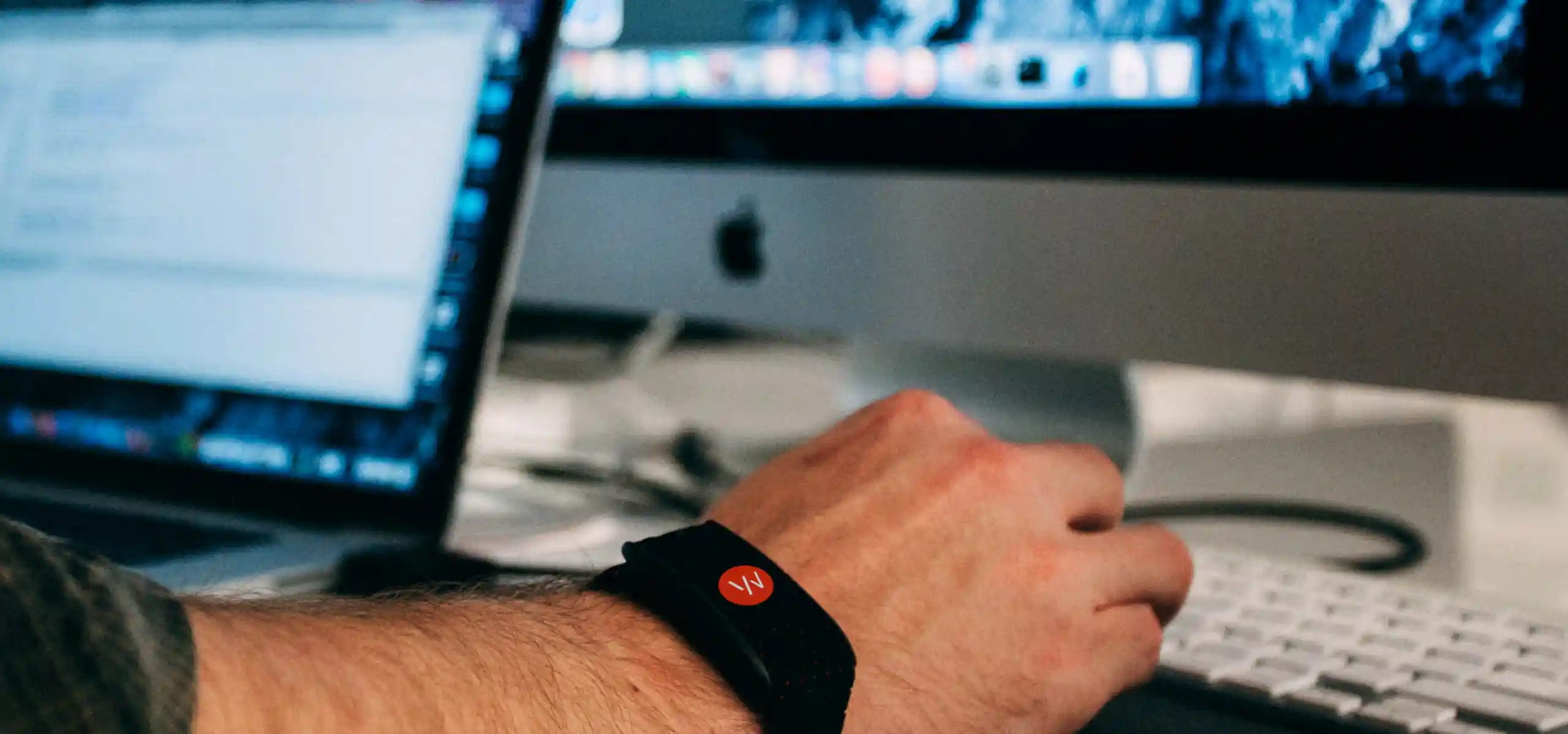
Corporate wellness programs have evolved significantly over the past decade. What started as basic gym memberships and health screenings has expanded into sophisticated initiatives that leverage technology to support employee health. Wearable devices have emerged as a key component of these programs, offering continuous insights into sleep, stress, and physical activity.
This article explores what workplace wearables are, how they create value for both employees and organizations, and how to build a culture of trust around the data they generate.
What are workplace wearables?
Workplace wearables are devices worn by employees to provide insights into their health and well-being. Unlike simple step counters, modern wearables measure key physiological metrics like sleep quality, daily stress, and physical strain. The goal is to provide individuals with personalized information they can use to improve their health, reduce burnout, and perform at their best.
The benefits of wearables for your team
When employees have a better understanding of their bodies, it can lead to powerful organizational outcomes. By providing tools that help individuals manage stress, prioritize sleep, and balance strain, companies can foster a healthier, more resilient workforce. This often translates to improved focus, higher engagement, and a stronger sense of community as teams build healthy habits together.
It shifts the focus of wellness from a top-down initiative to a personalized, employee-driven journey.
How WHOOP supports employee wellness and performance
WHOOP provides a continuous, 24/7 view of your body's data through key metrics like Sleep, Strain, and Recovery. Instead of just presenting data, WHOOP offers actionable coaching to help you make sense of it. For example, the Stress monitor can help you identify your body's response to a demanding workday and suggest science-backed techniques to build resilience.
By giving you direct insight into your physiology, WHOOP empowers you to make smarter decisions that improve your health and sustain your performance over the long term.
Building a culture of trust around employee data
As these programs continue to grow both in scope and popularity, a hot-button topic is whether or not the use of wearable technology, specifically fitness trackers, should be included. From Adi Gaskell of Forbes.com:
"Of course, there is a possibility that wellness programs can creep into the creepy territory. For instance, it's increasingly likely that when we work out in our own time, we use a wearable device to track our performance. Which is great for us, but how keen would you be if your boss had access to that data?"
In an article for Backchannel.com, author Cathy O'Neil takes an even more suspicious view:
"My fear goes a step further. Once companies amass troves of data on employees' health, what will stop them from developing health scores and wielding them to sift through job candidates? … As we've seen, they routinely reject applicants on the basis of credit scores and personality tests. Health scores represent a natural—and frightening—next step."
However, a 2017 AXA PPP Health Tech & You survey found that 57% of the British workforce would be open to wearing a company paid-for fitness band during working hours, as long as it was supplied free of charge.
Of those who said they would be willing to wear a work-sponsored fitness tracker, 58% also stated that they'd be fine with sharing their data with their employer if it was beneficial to the program.
A new contract between employer and employee
The Wall Street Journal spoke with Dr. Chris Brauer, director of innovation and senior lecturer at Goldsmiths, University of London. Here are his thoughts on the subject:
"It's about a social contract between employer and employee. It's in nobody's interest to have overworked, stressed and anxious employees who often aren't even aware of their own condition. Making things visible is a good thing if there is a culture of trust and accountability."
Brauer also believes wearables can serve a similar purpose in the workplace as they do in sports. Via Warable.com, he said: "We understand the importance of the concept of 'sport science' in optimizing athletic performance through technology and analytics. Wearable technologies will provide a rejuvenated form of 'management science', optimizing workplace productivities and performance through everyday integration of these devices and sensors into the workplace."
At the time this article was originally published, every employee was given a WHOOP Strap on their first day. It's not mandatory that we wear them and there's no specific incentive for doing so, but for the most part, everybody does. Granted, it's an atypical example–we're highly motivated since it's the company we're working for.
Regardless, the "culture of trust" that Brauer refers to exists here. Data privacy is paramount, and WHOOP's policy states that a member's personal data is not accessed or shared without an explicit need, such as providing services or support.
From a recent story by Alison DeNisco of TechRepublic.com:
"Federal contractor VectorCSP has no formal wearables wellness program, but is still seeing benefits from allowing them in the workplace, according to director of IT services David Wilson. 'We have been encouraging the wearing of step trackers and fitness monitors,' Wilson said. 'It is something that seems to give employees a kind of bond that was not there.'"
This is something that happens at WHOOP as well. Employees who may not interact under normal circumstances come together for conversations about workout tracking, sleep patterns and Recovery, among other things.
Empower your team to take control of their health
The privacy concerns will always be a dilemma. Just as pro athletes aim to protect ownership of their wearable data, workers will wonder if theirs can be used against them. Employers might be better served by not even asking for the data in the first place.
Since I started wearing WHOOP, I'm much more aware of how much sleep I need and I make a concerted effort to get it. There's no doubt that I'm a better worker because of this, whether anyone else looks at my data or not.
The most effective workplace wellness programs are built on empowering individuals. When you give your team the tools to understand their own health, you provide them with the autonomy to make better choices for themselves. This creates a positive cycle where healthier individuals contribute to a healthier, more effective organization.
Frequently asked questions about workplace wearables
Can wearables detect health issues like arrhythmia?
Some advanced wearables are designed to monitor heart health and can provide notifications for irregularities. For example, the WHOOP Life membership includes a Heart Screener with on-demand ECG readings and can provide Irregular Heart Rhythm Notifications. These features are intended to provide you with more information about your health that you can share with a medical professional, not to diagnose conditions.
How do wearables monitor for fatigue?
Wearables monitor fatigue by analyzing a combination of physiological inputs. They measure the quality and duration of your sleep each night and quantify the physical and mental strain your body accumulates during the day. By looking at the balance between your daily strain and your nightly recovery, a wearable can determine your body's readiness to perform, giving you an indication of your physiological fatigue level.
What is the difference between a wellness device and a medical device?
A general wellness device, like WHOOP One or WHOOP Peak, is intended to help you track and improve your lifestyle choices for health and performance. A medical device, like the one included with a WHOOP Life membership, has undergone regulatory review for specific medical functions, such as taking an ECG. While wellness devices provide powerful insights, they are not intended for medical diagnosis, which should always be done by a qualified healthcare provider.