Topics
- Post
How WHOOP Measures Muscular Load

Most wearables measure effort by tracking your heart rate. That works well for running, cycling, and other cardio — but it misses something important. Weightlifting, functional fitness, and other forms of strength training stress your muscles, bones, joints, and soft tissues. Your heart rate doesn’t tell the full story.
WHOOP is the only wearable that captures both cardiovascular and muscular load, giving you a more complete picture of your training demands.
What is muscular load
Muscular load is the measured stress put on your muscles, bones, joints, and soft tissues during exercise – separate from cardiovascular strain. It’s the strain your musculoskeletal system takes on — separate from what your cardiovascular system experiences.
WHOOP measures muscular load using two components:
- Volume — How much work you’re doing. This incorporates “effective mass,” which accounts for your body mass and the specific parts of your body that are moving. A full-body exercise like a squat produces more muscular load than a bench press because more of your body is involved in the movement.
- Intensity — How hard you’re working. This measures your effort and exertion — how close you are to lifting your maximum, and the speed of your movement. Lifting heavier or moving faster increases intensity.
These components combine to quantify the total load on your body during strength-based activities.
How WHOOP measures muscular load
WHOOP calculates muscular load in four ways, ranging from estimated to highly precise.
Estimated — no logging required
WHOOP automatically estimates muscular load for various activities:
Strength activities: For weightlifting, functional fitness, HIIT, powerlifting, bodybuilding, and similar activities, WHOOP automatically estimates muscular strain based on activity type and duration. These estimates were derived from millions of real Strength Trainer sessions, giving the algorithm a strong foundation in how actual workouts stress the body, no manual logging required.
Because this estimate is based on duration, a longer workout will show more muscular strain than a shorter one — even if the shorter session was more intense. For workouts where intensity matters, linking your exercises gives WHOOP more to work with.
Yoga, Pilates, barre, and more (see below): These activities include automatic muscular load calculations tailored to the specific movement patterns for each activity. Your Strain score reflects both the cardiovascular and muscular demands without any manual input.
With logging — more precision
Link exercises after your workout: Want more precise measurements? For traditional strength training activities like weightlifting, HIIT, and functional fitness, you can link the exercises you performed after your activity ends. WHOOP uses your selected movements to estimate a more precise muscular load — accounting for factors like which muscle groups were involved and the typical demands of each exercise.
Log in real-time with Strength Trainer: For the most precise tracking, log your sets, reps, and weights during your workout using Strength Trainer. Over time, Strength Trainer learns your baselines and upper limits, making the measurement more individualized. Track your work and rest in real time, so every part of your session is captured. Over time, Strength Trainer uses your history to learn your baselines and limits — delivering more personalized and accurate muscular load insights.
How muscular load affects your Strain and Recovery
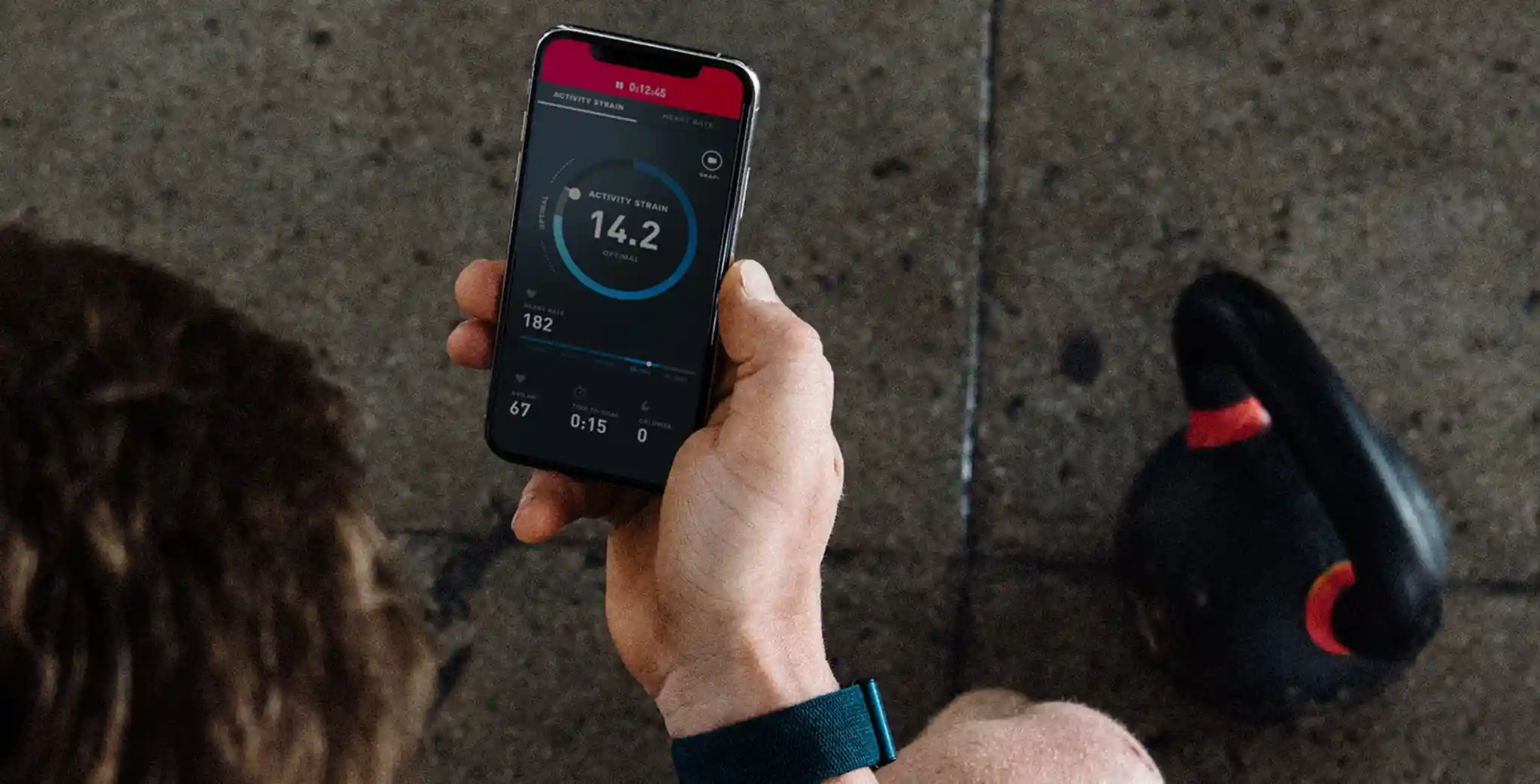
When muscular load is factored in, your Activity Strain reflects a more complete picture of your exertion. If you’re seeing higher Strain for strength workouts than before, that’s expected — your body was always doing this work, and now WHOOP is automatically estimating it.
Higher Strain from muscular load may also increase your Sleep Need. This isn’t a bug — it’s WHOOP recognizing that your muscles need time to repair and adapt. Recovery isn’t just about what your heart did. It’s about everything your body took on.
The bottom line
Muscular load fills a gap that heart rate alone can’t cover. Whether you’re lifting, doing HIIT, or flowing through a yoga session, WHOOP captures the full demand on your body — automatically. If you want more precision, you can link exercises after or log in real-time. But the baseline credit is already there.
Frequently asked questions about WHOOP muscular load
What activities accumulate estimated muscular load?
- Babywearing
- Barre
- Barre3
- Barry's
- Bodybuilding
- Bouldering
- Box Fitness
- Canoeing
- Cross Country Skiing
- F45 Training
- Functional Fitness
- HIIT
- Hot Yoga
- Kayaking
- Kite Boarding
- Manual Labor
- Pilates
- Powerlifting
- Reformer Pilates
- Rock Climbing
- Rowing
- Rucking
- Sculpt Yoga
- Ski Touring
- Skiing
- Snow Shoveling
- Snowboarding
- solidcore
- Toddlerwearing
- Wakeboarding
- Water Skiing
- Weightlifting
- Wheelchair Pushing
- Yoga
Can WHOOP detect weightlifting automatically?
Yes, WHOOP automatically detects strength training and provides estimated muscular load.
Does WHOOP measure muscle mass?
No, muscular load measures workout strain, not muscle mass. WHOOP tracks training load over time to help optimize muscle-building workouts.
Do I need to log my workouts for accurate muscular load tracking?
No, WHOOP automatically provides muscular load scores for strength activities. Logging with Strength Trainer or linking exercises to your activity after the fact improves accuracy.
Related Articles

Strength Trainer: Quantify Muscular Load for Smarter Training

Topics
- Strength Training
- App & Features
- Strain