Topics
- Article
- Heart Health
- Heart Rate
Heart Rate Recovery: What It Is, How to Measure It
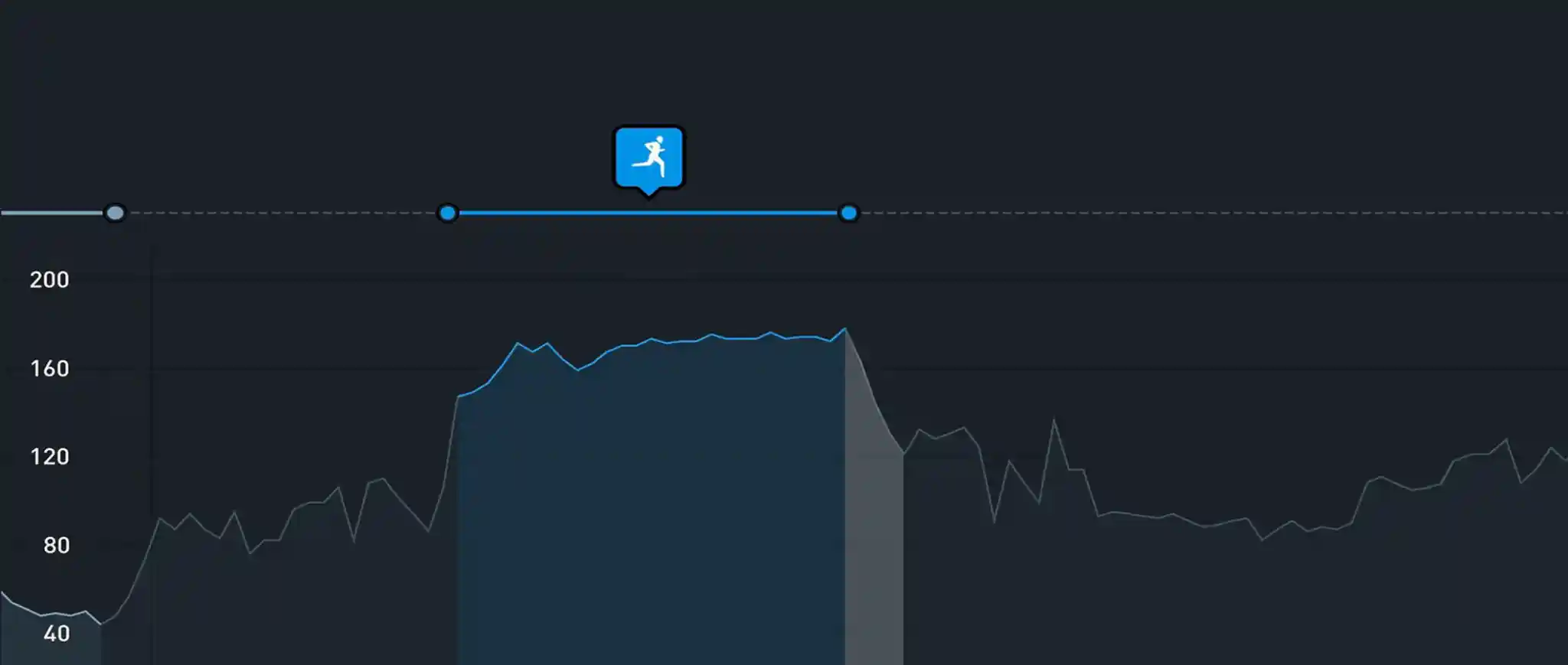
Heart rate recovery is a powerful indicator of your cardiovascular fitness and your body's ability to adapt to stress. Understanding how to measure this metric, what it signifies, and how to improve it can help you make smarter decisions about your training. This guide explains what heart rate recovery is and how you can use it to track your fitness over time.
What is heart rate recovery?
Heart rate recovery (HRR) is the rate at which your heart rate declines after a period of strenuous activity. This metric is a key indicator of your overall cardiovascular fitness and how efficiently your body adapts to stress.
How to measure heart rate recovery after exercise
You can calculate your HRR with a simple process. While it is most commonly measured at the one-minute mark, you can also measure it at two or three minutes post-exercise.
- Check your heart rate immediately after you stop exercising.
- Check your heart rate again after one minute of rest.
- Subtract the second number from the first to find your 1-minute HRR.
For example, if your heart rate is 170 beats per minute (bpm) when you finish and drops to 140 bpm a minute later, your HRR is 30 bpm.
Why heart rate recovery is a sign of fitness
Your HRR is a direct reflection of your autonomic nervous system's ability to switch from a state of stress to a state of rest. This process is managed by two key branches:
- Sympathetic branch: The "fight or flight" system that increases your heart rate during exercise to deliver more oxygen to your muscles.
- Parasympathetic branch: The "rest and digest" system that slows your heart rate down once the exercise stops.
A faster HRR indicates that your nervous system is balanced and can efficiently shift gears from sympathetic to parasympathetic control. This is a sign that your body is well-conditioned to adapt to its environment. Studies also show that a faster HRR correlates with better overall cardiovascular health and lower risk of cardiac events.
What is a good heart rate recovery?
What's considered a "good" HRR can vary based on age, fitness level, and activity. However, research provides some useful benchmarks for a 1-minute measurement:
- A New England Journal of Medicine study found a median HRR of 17 bpm for adults with an average age of 57.
- A 2015 study of elite male athletes found an average HRR of 29.5 bpm.
Your HRR can also fluctuate daily. As shown in a case study on runners, athletes had faster heart rate recovery times on days when their WHOOP Recovery was higher.
What factors influence your heart rate recovery?
Your HRR is a dynamic metric that changes based on your physiological state. Key factors include:
- Cardiovascular fitness: A higher level of fitness generally leads to a faster HRR.
- Age: HRR tends to naturally decline with age.
- Daily readiness: Your WHOOP Recovery score can impact HRR, with higher scores often correlating with faster recovery.
- Lifestyle factors: Hydration, nutrition, stress levels, and sleep quality all play a significant role.
How can you improve your heart rate recovery?
Improving your HRR involves focusing on long-term fitness and daily habits. Consider these strategies:
- Consistent exercise: Regular cardiovascular and strength training improves your heart's efficiency.
- Prioritize sleep: Aim for consistent sleep and wake times to support your body's circadian rhythm.
- Manage stress: Practices like meditation or breathwork can help balance your nervous system.
- Focus on nutrition and hydration: Proper nutrition and sufficient hydration are foundational for recovery.
- Limit alcohol: Avoiding alcohol can prevent unnecessary strain on your cardiovascular system.
Monitor your heart rate recovery with WHOOP
With the WHOOP Strain Coach, you can watch your live heart rate while you're working out, and see the impact of your exercise in real time as quantified by our Strain metric (a measure of cardiovascular exertion). It gives you activity level recommendations based on your daily Recovery, and also tracks which heart rate zones (percentage of max heart rate) you're training in. Upon concluding your workout, continue to monitor your heart rate for 1 minute in order to determine your HRR (WHOOP does not automatically track it).
Understand your fitness with WHOOP
Heart rate recovery is more than a number — it's a direct reflection of your cardiovascular fitness and your body's ability to adapt to stress. By understanding and improving it, you are taking an active role in your long-term health. WHOOP provides the insights to see how your daily behaviors affect your fitness, helping you make smarter choices to improve your healthspan.
Frequently asked questions about heart rate recovery
Is a higher heart rate recovery better?
Yes. A higher or faster heart rate recovery, indicated by a larger drop in beats per minute after exercise, is a sign of a well-conditioned cardiovascular system. It means your body can efficiently transition from a state of exertion back to rest.
What is a good 1-minute heart rate recovery?
While a drop of 12-23 bpm is common for many adults, elite athletes can have an HRR of 29 bpm or higher. The most important goal is to improve your own personal trend over time.
What is a good heart rate recovery by age?
Heart rate recovery tends to decrease with age. A healthy HRR for a 25-year-old will likely be higher than for a 65-year-old. The key is to focus on maintaining or improving your own baseline, as consistency in healthy habits can help mitigate the effects of aging on your cardiovascular fitness.