Topics
- Article
- Recovery
- Metrics
WHOOP Recovery Explained: Measure, Improve, and Optimize
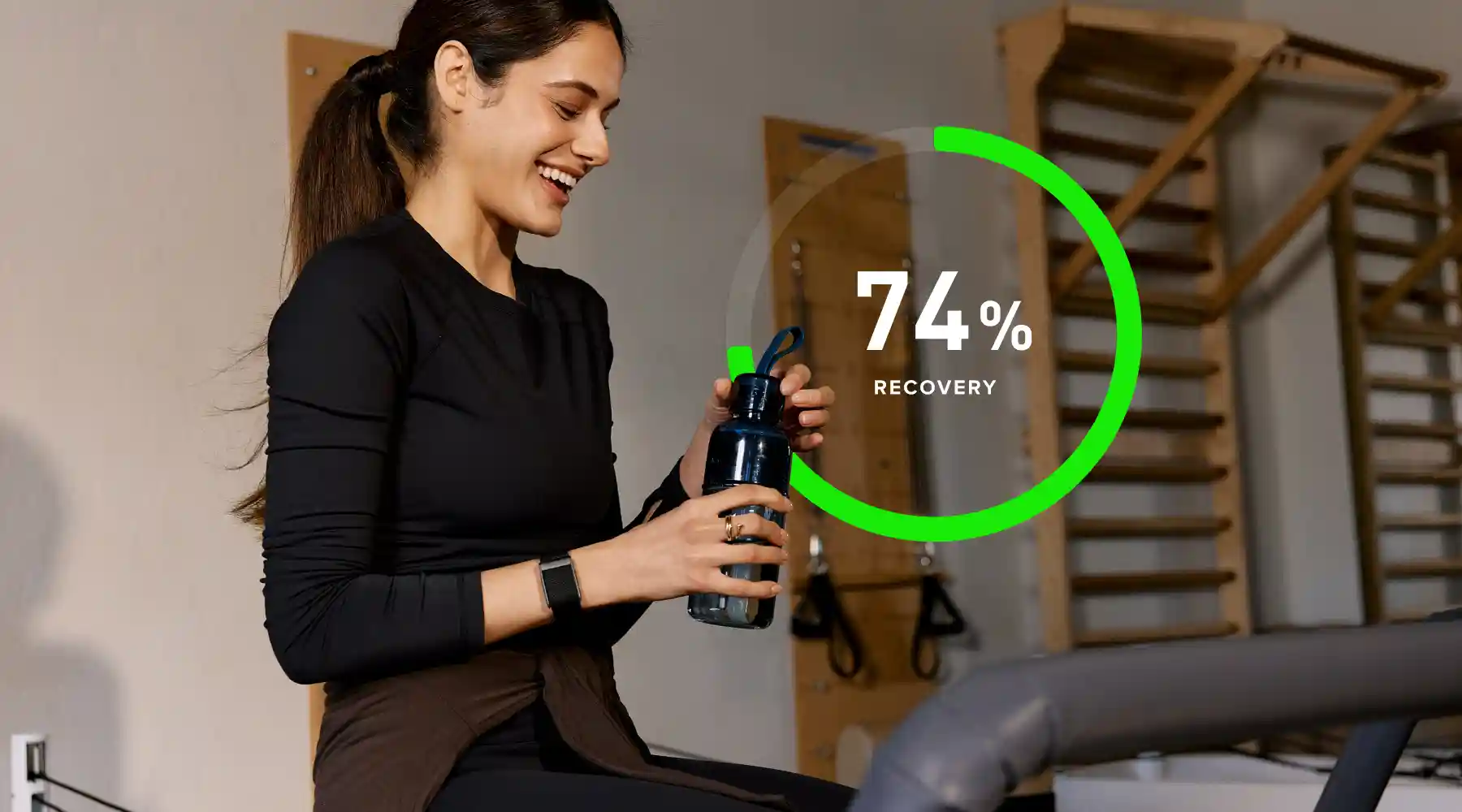
Recovery 101: Everything you need to know about how WHOOP measures your body's readiness to perform.
Below we'll dive into Recovery, what it means, how it's calculated, what you can do to improve it, the relationship between Recovery and Strain, plus how to figure out which choices and behaviors impact your Recovery the most.
What is WHOOP Recovery?
WHOOP Recovery is a daily measure of how prepared your body is to perform, no matter what it is that you do. It quantifies how your body is adapting to various stressors — from training for elite athletic competition to working from home. After you get up each morning, WHOOP calculates your Recovery as a percentage, and categorizes it as green, yellow, or red.
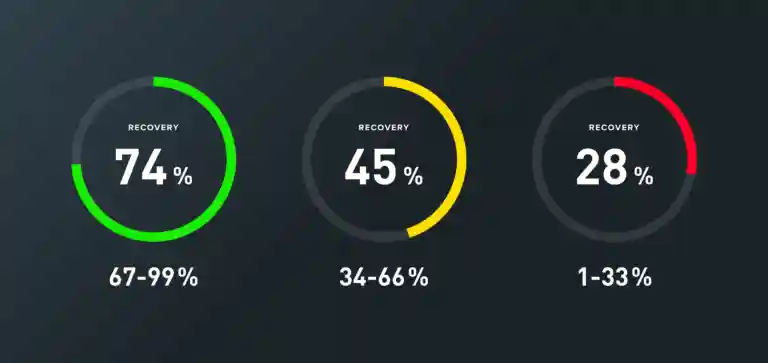
- Green(67-99%): You are well recovered and primed to perform. Whether it's at home, at work, or in the gym, your body is signaling that it can handle a strenuous day.
- Yellow (34-66%): Your body is maintaining and ready to take on moderate amounts of Strain.
- Red (1-33%): Rest is likely what your body needs. It is working hard to recover, potentially from overtraining, sickness, stress, lack of sleep, or other lifestyle factors. Consider active recovery activities to support your body's restoration process.
The average Recovery for WHOOP members is approximately 58%.
How does WHOOP calculate Recovery?
WHOOP incorporates several key physiological metrics into your daily Recovery:
Heart Rate Variability (HRV): The variance in time between your heart beats, HRV is a benchmark of your autonomic nervous system that is very useful for evaluating physical fitness.
Resting Heart Rate (RHR): Another valuable fitness indicator, a lower RHR is a sign that your heart doesn't need to work as hard to pump blood throughout your body.
Sleep Performance: The amount of sleep you get compared to the amount of sleep you need. Your body and mind restore and repair themselves during sleep, so it is an essential part of recovery.
Respiratory Rate: The number of breaths you take per minute generally stays fairly consistent from night to night and often doesn't impact your Recovery. However, significant changes are likely meaningful and possibly a sign of sickness.
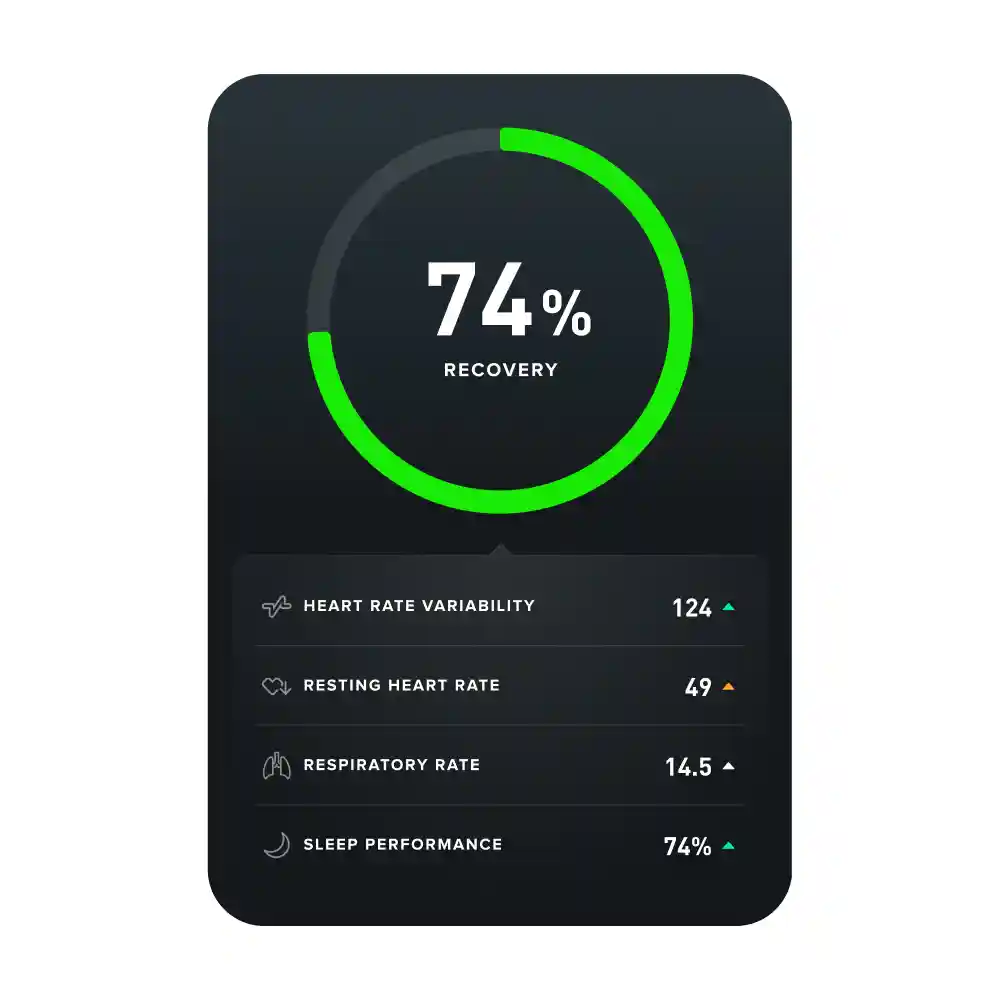
HRV, Resting Heart Rate, Sleep, and Respiratory Rate are all factored into your daily Recovery. Blood oxygen level and skin temperature are available in Health Monitor and can help provide a better understanding of when you may be ill.
Recovery and Strain
How recovered you are each morning determines your capability to take on Strain that day—the better your Recovery, the more Strain your body is prepared for.
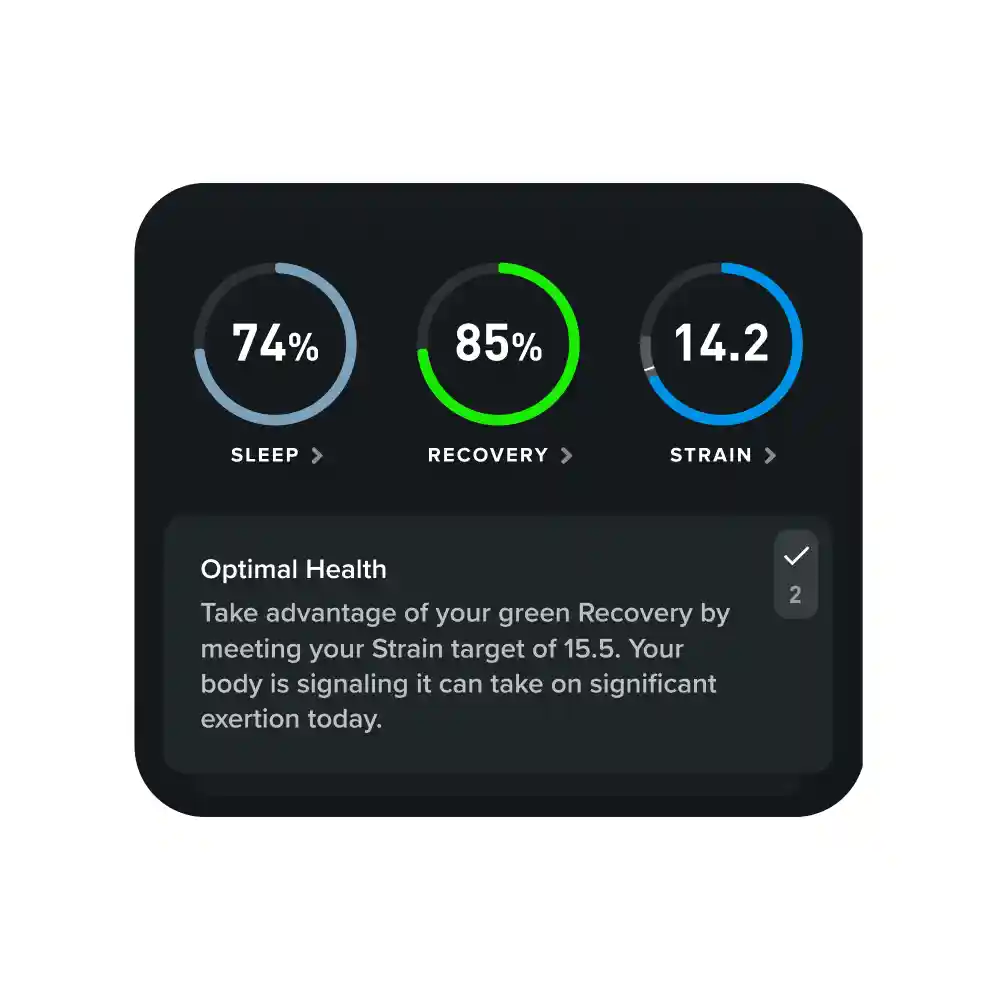
Your Recovery dictates how much Strain your body is ready to handle. Based on your Recovery, WHOOP recommends an optimal Strain each day through Strain Target. This suggested amount allows you to maintain fitness while enabling your body to adequately recover.
Go above and you are "overreaching." Stay below and you are "restoring."
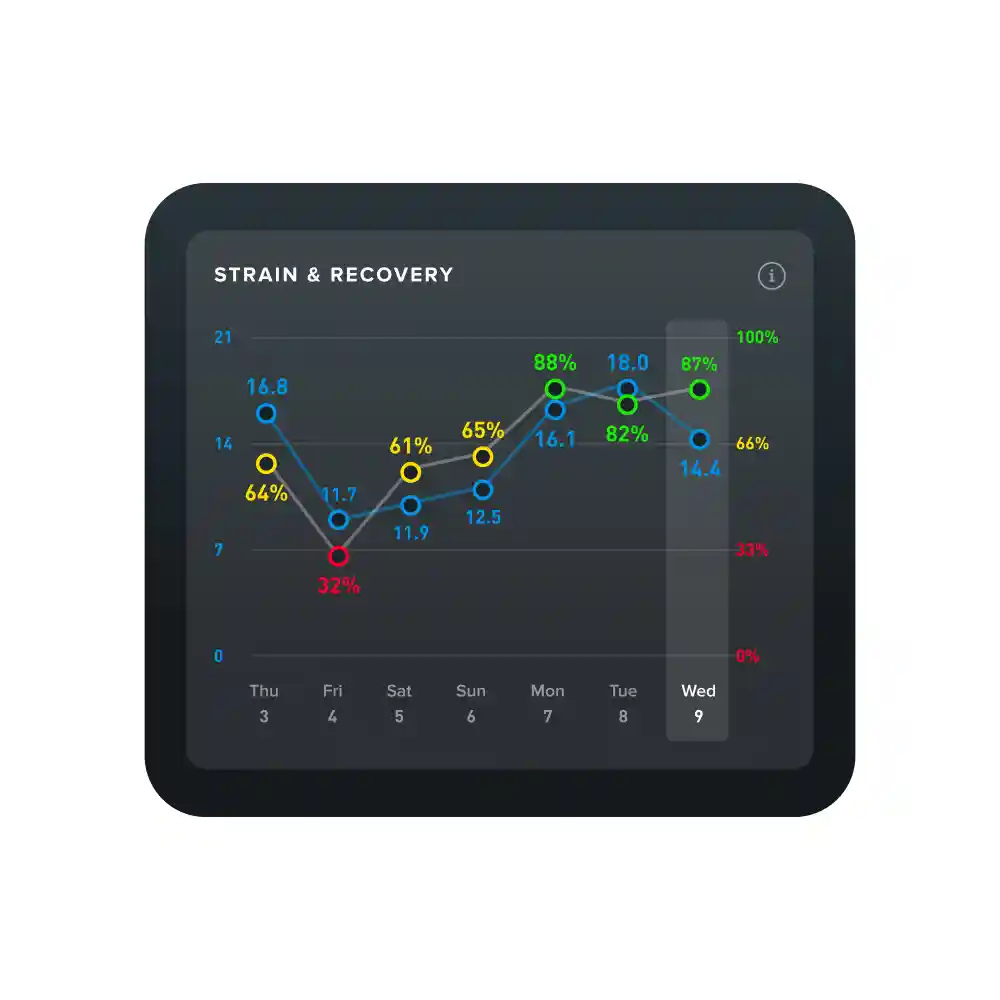
Training based on your Recovery
A 2020 study found that runners who adjusted their workouts depending on their WHOOP recoveries experienced fewer injuries and spent less time training than those who did not—all while making equal fitness gains. Specifically, they increased activity duration and intensity when in the green and reduced when in the red. Using WHOOP Recovery as a guide empowers you to train smarter and more efficiently.
How can I improve my Recovery?
Beyond getting all the sleep you need at night and generally engaging in healthy behaviors, here are several habits that can help boost your Recovery:
- Hydrating properly
- Good nutrition
- Mid-day naps
- Meditating and/or breathwork
- Keeping your circadian rhythm aligned
What hurts Recovery?
A poor night's sleep, being sick or ill, and high levels of Strain the day before all tend to have a negative effect on your Recovery. Some other things that are detrimental to it include:
- Stress
- Consuming alcohol(this is a big one!)
- Irregular sleep patterns
- Poor eating or insufficient fueling
- Traveling across time zones or to high altitudes
Learn what impacts your Recovery with the WHOOP Journal
WHOOP Recovery is extremely personalized to you, and various influences will affect yours differently than others. The WHOOP Journal lets you log specific choices and behaviors to see the impact they have on your Recovery.
For example, many of our members have found that increasing their fruit and vegetable intake, taking melatonin or magnesium before bed, and wearing a sleep mask are beneficial to their next-day Recovery. On the other hand, eating a late meal usually does the opposite.
Check out your Behavior Impacts to understand how your choices influence your Recovery.
Put your Recovery data into action
Understanding your Recovery is the first step — acting on it is how you unlock your potential. Your daily Recovery score is more than just a number; it's a personalized recommendation for how to approach your day. Use it to decide when to push for a new personal best, when to maintain your fitness, and when to prioritize rest.
By balancing your daily Strain with your Recovery, you create a sustainable path to achieving your goals. Ready to turn insights into outcomes? Join WHOOP.
Frequently asked questions about WHOOP Recovery
Is WHOOP good for recovery?
WHOOP is a powerful tool for understanding your body's readiness. It measures your cardiovascular and nervous system recovery through metrics like HRV and Resting Heart Rate, not muscle soreness. This gives you a clear picture of your physiological preparedness to take on Strain, helping you train smarter and avoid overreaching.
What should my Recovery be on WHOOP?
There is no single "correct" Recovery score, as it is highly personalized. The goal is to understand what the different zones mean for you.
A green Recovery (67-100%) indicates you are primed for a high-Strain day. A yellow Recovery (34-66%) means you are ready for moderate Strain. A red Recovery (0-33%) is a signal to prioritize rest or active recovery.
The average Recovery for WHOOP members is 58%.
What does a 1% Recovery mean on WHOOP?
A 1% Recovery places you in the red zone, signaling that your body is under significant stress and needs to focus on rest. This can be due to factors like intense training, illness, poor sleep, high stress, or alcohol consumption. On a 1% Recovery day, take on minimal Strain to allow your body to repair and restore itself.