Topics
- Post
- Training & Exercise
- Health & Wellness
- Nutrition
How to stay fit through pregnancy, parenting, and busy seasons
Originally published on August 27, 2024
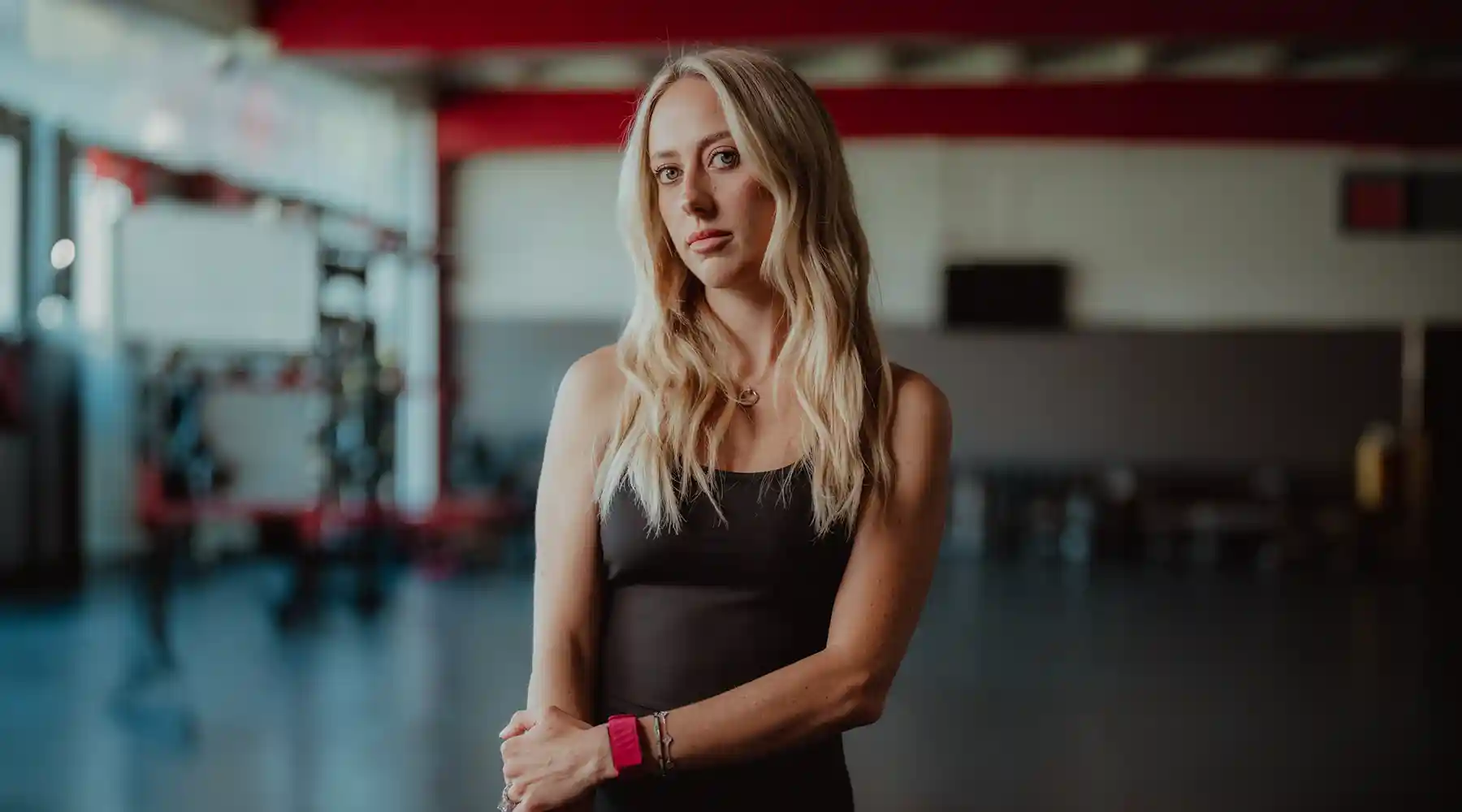
Pregnancy fitness is easier to sustain when sleep, strength training, recovery, and family logistics work together. In Episode 286 of the WHOOP Podcast, Brittany Mahomes, former professional soccer player, co-owner of the Kansas City Current of the National Women's Soccer League, and mother of two with a third child on the way, explains how she builds training around real life. She talks through five practical areas: the athlete mindset she built early, her weekly workout structure, how she uses sleep and food to recover, why pelvic floor work changed her return to training, and what people miss about elite performance behind closed doors.
To listen to Episode 286 of the WHOOP Podcast in full, head to the WHOOP Podcast on YouTube.
How did Brittany Mahomes build an athlete mindset that still shapes her routine today?
Mahomes built her fitness identity long before marriage, motherhood, or public attention. She says the base came from playing multiple sports early, then narrowing her focus to soccer in high school and eventually playing professionally in Iceland.
That matters for the rest of the conversation because her current routine is built around performance habits, not quick fixes. Mahomes describes her time overseas as a period where soccer and gym work were her whole schedule, which helped turn training into part of daily life. She also says competing at a high level helped her understand the mindset required to support another elite athlete at home.
In the conversation, Mahomes gives a concise picture of how early that started.
"I started playing sports, specifically soccer, when I was like 4 years old, but I did play basically every sport growing up."
What you should take away
- Early sport exposure can build a lasting training identity that carries into adulthood.
- Mahomes links her current consistency to habits formed before parenthood.
- A background in competitive sport can make it easier to understand the discipline elite performance requires.
If you want to hear Mahomes unpack her early years in sport and her time playing pro soccer, listen to the full episode on Spotify.
What does a realistic weekly workout schedule look like with kids and another pregnancy underway?
Mahomes keeps her routine simple and repeatable. She aims to train in the late morning, usually around 10 or 10:30, and she tries to get the session done before the rest of the day fills up.
That structure is specific to her life. Her gym is at home, so she times workouts around when the kids are out of the house and treats training as protected time rather than an optional extra. She also says pregnancy changes the plan, especially when fatigue is high, and she gives herself more flexibility when a hard session is unrealistic.
The detail that makes this useful is how fixed the anchor is. Instead of chasing a perfect program, she protects a repeatable time window.
"I try to do it, 10, 10:30 in the morning, often when the kids are out of the house, because our gym's at our house."
What you should take away
- A repeatable workout time can matter more than a complicated training split.
- Mahomes plans her day around the workout, not the other way around.
- Pregnancy fatigue changes execution, so she uses consistency with flexibility.
If you want to hear Mahomes go deeper on her weekly workout schedule and how pregnancy changes it, watch the full episode on YouTube.
How do sleep, naps, and food support recovery during pregnancy and parenting?
Mahomes treats sleep as the first recovery tool. She says she loves sleep, avoids staying up late, and uses naps during pregnancy when fatigue makes training or childcare harder.
That emphasis lines up naturally with how WHOOP surfaces Sleep and Recovery. Mahomes says the recovery side is what interests her most because it helps confirm whether she slept well and whether a nap may be needed. Even on days without a formal workout, she still tries to stay active with walks, park trips, and time outside with her kids.
Food follows the same middle ground. She does not describe a rigid diet, but she does describe a pattern of protein, vegetables, and carbs across the day. Her breakfast is usually protein waffles and eggs, lunch might be sea bass with coconut rice and vegetables, and dinner might be steak or chicken with a carb and vegetables. For Patrick Mahomes, she says a home game day meal is usually a grilled chicken sandwich with french fries and ketchup. Patrick Mahomes also discussed sleep and Recovery habits in Episode 287 of the WHOOP Podcast.
Mahomes sums up the recovery lens clearly.
"I love to wake up every morning and see if I'm going to need a nap today and if I'm tired or if I'm going to have a good day."
What you should take away
- Mahomes treats sleep as the main recovery lever during pregnancy and parenting.
- Recovery can still improve on days without formal training if activity stays high.
- Her nutrition approach is structured enough to support training without becoming rigid.
If you want to hear Mahomes unpack sleep, naps, and the meals that support her recovery, listen to the full episode on Spotify.
What should women know about pelvic floor therapy before returning to hard training after pregnancy?
Mahomes says returning to training after pregnancy requires more than jumping back into old workouts. After injuring her back, she realized that breathing mechanics, core control, and pelvic floor work needed more attention than they had before.
This is where the episode becomes especially practical. Mahomes explains that years of training did not protect her from post pregnancy changes, and she now sees internal stability as the foundation for heavier work. That fits with guidance from the American College of Obstetricians and Gynecologists on exercise during pregnancy and the postpartum period, which advises a gradual return based on symptoms and recovery status. Mahomes returned to this broader motherhood and training discussion in Episode 327 of the WHOOP Podcast.
Her most specific point comes from the injury itself.
"I hurt my back [...] and a lot of people talk about pelvic floor therapy and really strengthening your pelvic floor after you've had kids and how important that is."
What you should take away
- Post pregnancy training may need breathing, core, and pelvic floor work before heavier loading.
- Mahomes changed her approach after a back injury, even with a long training background.
- A gradual return is more realistic than assuming pre pregnancy training will immediately fit again.
If you want to hear Mahomes go deeper on pelvic floor therapy and her return to training after injury, watch the full episode on YouTube.
What does Brittany Mahomes say people miss about elite performance behind closed doors?
The public usually sees games, headlines, and outcomes. Mahomes says the hidden work is the study, discipline, and self accountability that happen long before kickoff.
That view comes from living inside a high performance household. She says last season showed her the clearest version of Patrick Mahomes as a leader because difficult stretches never turned into blame. Instead, he kept asking what he could do better, studied more, and doubled down on preparation. During football season, she says she tries to remove stress from home life so he can stay focused on the work. Patrick Mahomes explored his own preparation and film study in Episode 124 of the WHOOP Podcast, and trainer Bobby Stroupe described the structure around that work in Episode 154 of the WHOOP Podcast.
Mahomes gives the strongest framing late in the episode.
"When they were losing, he would never once blame it on anybody else. It was always like, what am I doing wrong? How can I be better as a leader?"
What you should take away
- Mahomes says elite performance is built on study, discipline, and self accountability away from public view.
- Leadership during a hard season can look like better questions, not louder reactions.
- Family support during a competitive season can mean reducing outside stress so preparation stays protected.
The bottom line
- Mahomes built her current fitness habits on an early background of playing multiple sports and later competing in professional soccer.
- A realistic training schedule can be as simple as protecting one repeatable workout window each day.
- Sleep is the recovery habit Mahomes prioritizes most during pregnancy and parenting.
- Recovery still matters on non workout days, and Mahomes keeps activity high through walks, outdoor time, and childcare.
- Mahomes describes a balanced eating pattern built around protein, vegetables, and carbs rather than a rigid diet.
- Pelvic floor therapy, breathing mechanics, and core control became more important to Mahomes after a back injury following pregnancy.
- Mahomes says the hidden side of elite performance is study, discipline, and refusing to blame other people when things go wrong.
Frequently asked questions about things discussed in this episode
How does WHOOP track sleep during pregnancy?
WHOOP tracks sleep by measuring sleep duration, sleep stages, and related recovery signals each night, which can help you spot whether pregnancy fatigue is building and whether extra rest may be needed.
What does WHOOP do for recovery when parenting leaves you tired?
WHOOP shows recovery status each day using signals such as sleep and heart rate patterns, which can help you judge whether the day is better suited for training, lighter activity, or more rest.
How can WHOOP help you choose between a workout and a nap?
WHOOP can help you choose by putting Sleep and Recovery in one view, so you can compare how rested you feel with what the data shows before deciding on a hard session.
What does WHOOP measure if you stay active without doing a formal workout?
WHOOP measures all day physiological load, so walks, errands, childcare, and time outside can still contribute to daily Strain even when you never start a planned training session.
How does WHOOP support a return to training after pregnancy?
WHOOP supports a return to training by showing how sleep, recovery trends, and daily strain respond as you add activity back in, which can make it easier to progress gradually.
What does WHOOP show about whether your sleep habits are working?
WHOOP shows whether your sleep habits are working by pairing time asleep with sleep stages and next day recovery signals, which gives a clearer picture than guessing based on energy alone.
For people trying to fit workouts around pregnancy, childcare, and a full schedule, WHOOP can make the difference between guessing at readiness and seeing when recovery is asking for a nap, a walk, or a harder session.