Topics
- Post
- Health & Wellness
Clinical AI in Healthcare: Dr. Trishan Panch on What Wearables and AI Can Actually Do for Your Health
Dr. Trishan Panch is physician, entrepreneur, CEO of Lunar Studio, and teaches healthcare leaders at Harvard School of Public Health. His work sits at the intersection of clinical practice, high-risk population health, and emerging technology. On episode 367 of the WHOOP Podcast, Dr. Panch joins Emily Capodilupo, Senior Vice President of Research, Algorithms, and Data at WHOOP, to explore what AI can realistically deliver for healthcare, why wearables are filling gaps the medical system was never designed to address, and how clinicians and consumers alike should think about using these tools.
Can consumer technology actually replace doctors?
Dr. Panch says that it depends on what you're trying to accomplish. "The effective supply of healthcare for most people, most of the time is zero," he explains. Even in Boston, one of the world's biggest healthcare hubs, getting a same-day primary care appointment or timely access to mental health support remains nearly impossible for most people. The medical system simply isn't designed for continuous health support. That's where consumer technology steps in, creating a health operating system for continuous support. "What determines your health is what is going on for the other 364.5 days of the year that you're not in a medical facility," Dr. Panch notes. For improving health outcomes at scale, wearables and AI can unequivocally help because they fill a space where traditional healthcare has zero presence. But changing how the medical system itself operates? That's more nuanced. Clinical AI adoption faces unique challenges around regulation, professional culture, and the complexity of acute care that consumer wellness tools don't encounter. Hear Dr. Panch's full breakdown of where AI excels versus where clinicians remain essential in the complete episode.
Why is clinical AI harder to trust than traditional healthcare technology?
Dr. Panch teaches healthcare executives who are trying to figure out what's real in AI, and what’s just a hot topic. Modern AI operates fundamentally differently than the software clinicians learned to work with. "Software is basically a pre-written set of rules," he explains. "If you can describe the world in rules, you can put those rules into a computer, then the computer does fairly much the same thing every time." Clinical AI doesn't work that way. Foundation models and large language models are what's called non-deterministic; the same input doesn't always produce the same output. They're also impossibly large and complex, making traditional audit approaches inadequate. Understanding clinical AI from first principles requires some grasp of statistics and how computers work. Most physicians weren't trained for this. Yet they're now making decisions about deploying these technologies for patients and shaping the future of their organizations. This creates a real tension: clinicians know they need to engage with AI, but the tools to evaluate it properly aren't part of standard medical education. Dr. Panch's program at Harvard exists specifically to bridge this gap for healthcare leaders. The podcast dives deeper into what clinicians should focus on in learning about clinical AI.
How can we safely integrate clinical AI into our personal care?
There's no clear national statute governing clinical AI deployment. "Governments have essentially delegated this to individual healthcare organizations," Dr. Panch explains. Each health system is left figuring out what they think is safe and how to manage it. This decentralized approach slows adoption and creates massive variability. One hospital might embrace AI-assisted triage while another down the street prohibits it entirely. The lack of consistent standards means progress happens unevenly. For consumers using AI for personal health questions, Dr. Panch offers practical guidance: use the strongest reasoning model available, provide comprehensive context, ask it to generate follow-up questions like a clinician would, then cross-check the outputs. Dr. Panch shares his complete checklist for safe personal AI use in the full conversation.
The bottom line
Here are the key takeaways from the podcast episode:
- The access gap is real. Traditional healthcare isn't designed for continuous health support. Consumer technology fills space where medical supply is effectively zero.
- Clinical AI is different from traditional healthcare technology. Non-deterministic outputs and statistical foundations make clinical AI genuinely harder to evaluate than traditional digital health tools.
- Safe use requires context. Whether you're a clinician or consumer, richer input leads to better output. Share comprehensive data and use AI to critique AI.
WHOOP combines continuous physiological monitoring with AI-powered coaching to translate data into actionable guidance, creating the feedback loop that traditional healthcare lacks. Join now to start improving your health today. Listen to the full episode with Dr. Trishan Panch for his complete framework on navigating clinical AI as both a consumer and healthcare professional.
Related Articles
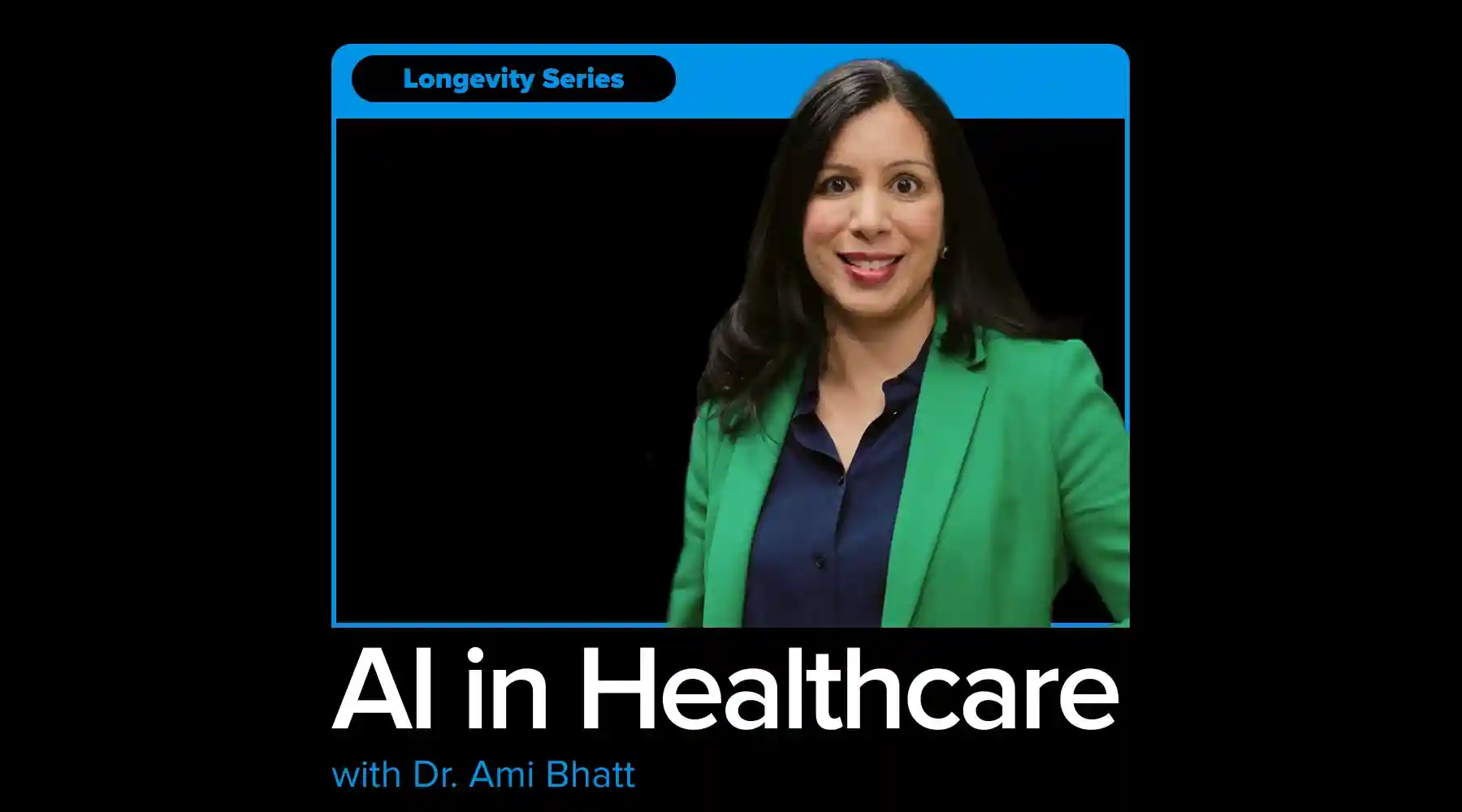
Podcast 360: How AI and Wearables Are Shaping The Future of Healthcare with Dr. Ami Bhatt
Topics
- Health & Wellness
- AI Coaching