Topics
- Post
- Strength Training
- Women’s Performance
How to train around your menstrual cycle through every life stage
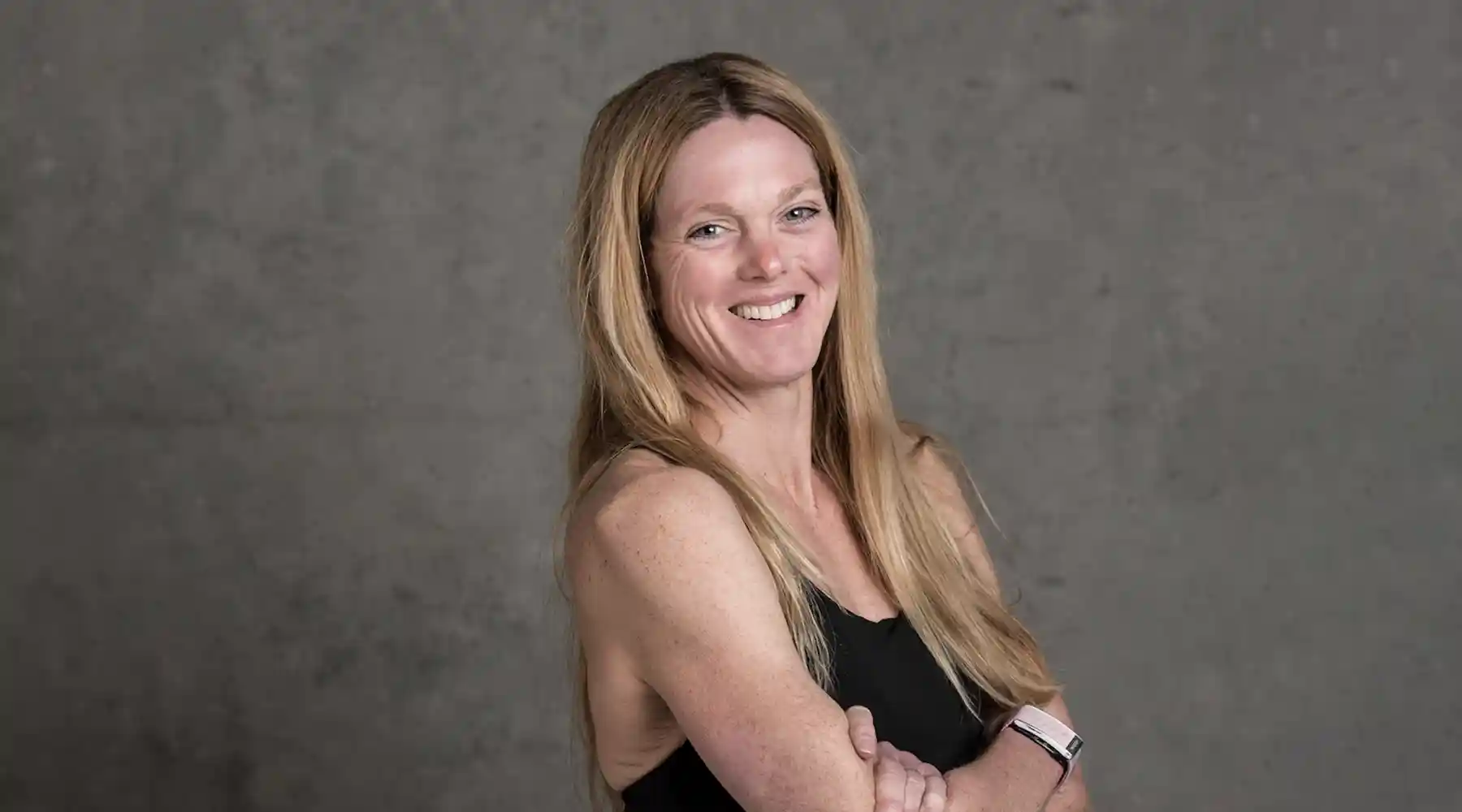
Originally published on March 8, 2023
Training around your menstrual cycle can help you place heavy lifting, intervals, recovery, and fueling where your body is most ready for them. In Episode 212 of the WHOOP Podcast, Dr. Stacy Sims joins Kristen Holmes, Global Head of Human Performance, Principal Scientist at WHOOP, to explain how puberty, cycle phase, perimenopause, menopause, and travel all shape training response.
Sims is an exercise physiologist and nutrition scientist who has led research programs at Stanford University, Auckland University of Technology, and the University of Waikato. Her framework is practical: train with hormone shifts instead of ignoring them, fuel for the work you are asking your body to do, and adjust the plan again as reproductive life stages change.
To listen to episode 212 in full, head to the WHOOP Podcast on Spotify.
How should puberty change the way girls train?
Puberty changes movement, coordination, body composition, and confidence, so training needs to change too. Sims argues that the goal during this period is to reteach fundamentals in the new body, not force girls through adult training models built around boys.
She explains that sex differences begin early, then accelerate with hormonal exposure during puberty. Boys often lean out and gain speed and power more quickly, while girls experience widening hips, a changing center of gravity, more body fat, and the start of menstruation. Those changes alter mechanics, so running, jumping, landing, and throwing can all feel different for a time.
That is why Sims recommends a temporary step back to movement quality. Coaches and parents should expect a short plateau, revisit squatting, landing, and running drills, and treat that period as skill development rather than failure. She also warns against using the oral contraceptive pill as a first answer for irregular cycles, skin issues, or heavy bleeding. In her view, the pill can mask symptoms rather than explain them, and heavy bleeding or persistent dysfunction deserves clinical follow-up.
In the conversation, Sims gave a concrete timeline for what many girls experience after menarche:
"Periods are irregular for the first 2 years after they start."
For families, the practical point is simple. A menstrual cycle is a health signal, and talking about it early can make training decisions better. If you want more background on cycle-aware training and symptom tracking, Menstrual Cycle Insights outlines how WHOOP helps people log cycle phase alongside sleep and training patterns.
What you should take away
- Puberty changes biomechanics, so girls often need movement retraining before they need more volume or intensity.
- Running, jumping, landing, and squatting drills can help bridge the gap between a pre-puberty body and a post-puberty body.
- Irregular cycles are common early after menarche, but persistent heavy bleeding or other symptoms should still be evaluated clinically.
- A menstrual cycle is a useful health marker, and open conversations at home and in sport can improve training decisions.
If you want to hear Sims unpack puberty, coordination changes, and coaching cues, listen to the full episode on Spotify.
How should naturally cycling women periodize training across the menstrual cycle?
Once puberty changes the baseline, the next question is how monthly hormone shifts affect training stress. Sims' answer is that most naturally cycling women do best with harder work in the low-hormone phase, then more controlled loading after ovulation.
She describes the follicular phase, which begins with menstruation and runs to ovulation, as a lower-hormone window where the body is generally more stress resilient. This is where heavy lifting, high-intensity work, and larger training loads often fit best. Sims says that phase-based resistance training can improve hypertrophy and strength, and the published literature points in the same direction. In one trial, Wikstrom-Frisén and colleagues found greater strength-related gains when resistance training was concentrated in the follicular phase.
After ovulation, the luteal phase changes the picture. Sims describes a shift in immune response, mood, cognition, and metabolism, with greater reliance on fat and less ready access to carbohydrate at higher intensities. Her training recommendation during this phase is more steady-state work, slightly lighter lifting, and a deliberate deload as the next bleed approaches. That lines up with earlier WHOOP reporting on cycle-linked recovery differences and coaching recommendations in Episode 150 of the WHOOP Podcast.
Sims put the late-luteal adjustment in concrete terms:
"Maybe the 4 or 5 days before, when we have a peak of those hormones and before they drop off, this is where we wanna deload, where we wanna look at functional work."
She is also clear that the framework is a pattern, not a rulebook. Some women feel awful on day 1 and should ease in. Others feel strong the day before their period and can push. If you track those patterns over time, it becomes easier to place heavy strength sessions, intervals, skill work, and recovery days where they fit you best. WHOOP members who want more detail on cycle-linked strength planning can also use this guide to strength training for women.
What you should take away
- The follicular phase is often the best place for heavy lifting, sprint work, and higher training loads.
- The luteal phase usually calls for more steady-state work, slightly lighter lifting, and extra attention to recovery.
- The final 4 to 5 days before a period can work well as a deload window for many naturally cycling women.
- Your own symptoms still matter, so track patterns across several cycles before making big changes.
If you want to hear Sims go deeper on follicular loading and late-luteal deloads, listen to the full episode on Spotify.
What should fueling and hydration look like in the luteal phase?
That training framework only works if fueling changes with it. Sims' main point is that the luteal phase raises the cost of underfueling, especially if you are trying to train hard.
Her first priority is carbohydrate availability around training. In the transcript, Sims explains that women clear blood glucose quickly before tapping more deeply into free fatty acids, which means high-intensity efforts can suffer if carbohydrate intake is too low. She also says protein needs increase in the luteal phase because the body is in a more catabolic state and overall metabolic rate rises.
Sims made the protein target especially clear:
"We also know that there's a 12% increase in protein needs because our body is in a more catabolic state."
She goes one step further by tying protein timing to cognition and motivation. Regular protein doses help keep leucine circulating, and she argues that this can support mental sharpness by competing with tryptophan transport across the blood-brain barrier. In practical terms, she and Holmes discuss aiming for about 3 grams of leucine per meal through high-quality protein sources such as meat, tofu, or tempeh.
Hydration changes matter too. Sims notes that progesterone increases sodium loss, so salting food and paying closer attention to electrolytes during the luteal phase can help. She also mentions vitamin D status as relevant to PMS-related inflammation. For a deeper nutrition breakdown by cycle phase, this article on sports nutrition for women and the menstrual cycle expands on the same themes.
Her broader rule stays consistent across the episode: women should fuel for the activity they are asking the body to perform. She is especially direct about avoiding fasted training when the goal is adaptation, strength, or high-quality work.
What you should take away
- The luteal phase often requires more carbohydrate around training to support higher intensities.
- Protein needs can rise in the luteal phase, and regular protein feedings may also support cognition and motivation.
- Sodium losses can increase with progesterone, so salting food and paying attention to electrolytes can help.
- Fasted training is a poor default for women when the goal is adaptation, recovery, or performance.
If you want to hear Sims unpack carbohydrate timing, leucine, and luteal-phase hydration, listen to the full episode on Spotify.
Can women still perform well on any day of the menstrual cycle?
Yes. Sims draws a sharp distinction between training and performance, and that distinction changes the conversation. Training should usually work with hormone patterns, but race day or game day can still go well on any cycle day if preparation is solid.
Her reasoning is that performance sits on top of many controllable factors, including sleep, taper, fueling, mindset, and the work already done in the weeks before the event. If an athlete believes day 23 always feels flat, Sims does not accept that as the end of the story. She looks at branched-chain amino acids, carbohydrate availability, taper design, sleep, and ways to reduce heavy bleeding in the cycles leading into the event.
Sims summarized the evidence in one clear line:
"There's no menstrual cycle phase effect on performance."
That is an expert framing, not a promise that every day feels the same. Training response can change across the cycle. Performance capacity can still show up when the event matters. For people using WHOOP, this is where trend data becomes useful. Logging cycle phase and symptoms in Women’s Hormonal Insights can help you compare Recovery, Sleep, resting heart rate, and other patterns against how you actually feel and perform, instead of relying on a fixed belief about one part of the month.
WHOOP members who want a more specific look at why some people feel strong during menstruation can also read why you should work out during your period.
What you should take away
- Training response and competition performance are related, but they are not the same thing.
- A menstrual cycle phase does not automatically limit race-day or game-day performance.
- Taper, sleep, fueling, and mindset can all be adjusted to support performance on any cycle day.
- Tracking how your body actually responds is more useful than assuming one day of the cycle always goes badly.
If you want to hear Sims go deeper on performance beliefs and competition-day prep, listen to the full episode on Spotify.
How should training change in perimenopause and postmenopause?
As cycle patterns become less predictable, training needs another shift. Sims says the core priority in perimenopause and postmenopause is heavy resistance training, paired with true high-intensity work and lower overall volume.
She separates early perimenopause from late perimenopause. In early perimenopause, many women still have regular cycles, so some phase-based planning still works, but recovery usually needs more respect. In late perimenopause, anovulatory cycles become more common, estrogen and progesterone patterns change, and body-composition shifts, abdominal fat gain, lean-mass loss, and lower insulin sensitivity can become more noticeable.
At that point, Sims recommends more external training stress aimed at replacing what hormones used to support. That means heavy lifting for neuromuscular recruitment, sprint interval training for metabolic health, and avoiding a constant middle zone of moderate intensity that can keep stress high without delivering the same adaptation. She also describes a two-weeks-on, one-week-deload structure for many women in this stage.
Sims gave the weekly template directly:
"In 1 week, we're doing minimum 3 heavy resistance training, 2 sprint interval."
She is equally clear about what to prioritize if time is limited: resistance training wins. In the episode, she connects that choice to body composition, metabolic control, brain health, proprioception, and quality of life later in life. She also notes that women farther into postmenopause may need more frequent exposures to very high intensity work than women in early postmenopause. For a broader symptom and training reference, this FAQ on exercise, menstruation, menopause, and performance covers several adjacent questions.
What you should take away
- Perimenopause and postmenopause usually call for less training volume and more emphasis on heavy lifting and true high intensity.
- Resistance training is the first priority if you can only fit a few sessions into the week.
- Sprint interval training means short, very hard efforts with long enough recovery to keep quality high.
- A two-weeks-on, one-week-deload structure can fit the less predictable physiology of late perimenopause.
If you want to hear Sims unpack perimenopause, sprint intervals, and resistance training priorities, listen to the full episode on Spotify.
What should sleep, travel, and recovery look like when your schedule gets chaotic?
After life-stage training changes, the final layer is real life. Sims says chaotic travel is a reason to simplify your recovery routine, anchor yourself to the new time zone fast, and avoid adding training stress that your nervous system cannot absorb.
Her own travel strategy starts with light. She tries to ignore the old time zone, get outside early, and line up alert behaviors such as walking, eating, and training with local daylight. On the training side, she avoids high-intensity work when jet lag makes her feel dizzy or off balance, and she defaults to heavy lifting, mobility, and walking instead. In the transcript, she describes arriving in Boston, walking in the sun to the gym, lifting with 5x5 and 5x6 total-body work, then walking back outside again.
Sims also describes a personal supplement routine built around rhodiola, ashwagandha, and schisandra when she travels long haul. That is her own practice, not a universal prescription, and supplement choices should be reviewed with a clinician if you have a medical condition or take other medications. The behavioral part of the plan is broadly useful either way: daylight, protein, a fast switch to local time, and simpler training.
When Holmes asked for specifics, Sims shared one detail from that personal routine:
"640 milligrams I think is the kind of going rate."
Even without supplements, the performance lesson is straightforward. Jet lag is a recovery problem first. Prioritize the behaviors that help sleep pressure, appetite regulation, and local circadian timing settle down. Then use WHOOP trends in sleep, resting heart rate, and Recovery to decide when it is time to add harder work back in.
What you should take away
- Morning light, local meal timing, and local training timing can help you adapt to a new time zone faster.
- Heavy lifting and walking are often better travel-day choices than high-intensity intervals when coordination feels off.
- Protein can be a useful anchor when jet lag increases cravings and disrupts routine.
- Supplements discussed in the episode reflect Sims' personal travel routine and should not replace individual medical advice.
If you want to hear Sims go deeper on jet lag, training choices, and travel routines, listen to the full episode on Spotify.
The bottom line
- Puberty changes biomechanics, so girls often need movement retraining and reassurance before they need more training volume.
- Naturally cycling women often tolerate heavy lifting and high-intensity work best in the low-hormone follicular phase.
- The late luteal phase is often a good time to reduce load, shift toward steady-state or skill work, and protect recovery.
- Luteal-phase fueling usually needs more attention to carbohydrate availability, protein intake, and sodium losses.
- Race-day performance can still be strong on any cycle day when sleep, taper, fueling, and mindset are handled well.
- Perimenopause and postmenopause usually respond better to heavy resistance training and true sprint intervals than to constant moderate-intensity volume.
- Resistance training is the highest-priority training mode for many women in menopause because it supports lean mass, metabolic health, brain health, and function.
- Travel recovery works best when you simplify the plan, switch to the new time zone quickly, and use objective recovery trends to guide intensity.
Frequently asked questions about things discussed in this episode
How does WHOOP help you track menstrual cycle patterns alongside training?
WHOOP helps you connect cycle phase to performance trends by letting you log cycle information and symptoms, then view those patterns beside metrics such as Recovery, Sleep, Strain, resting heart rate, and skin temperature.
What does WHOOP do for training guidance across menstrual cycle phases?
WHOOP can tailor sleep and strain guidance around cycle phase for people who use cycle tracking features, helping place harder sessions and recovery days in context with changing physiology.
How does WHOOP show when sleep may be changing before a period?
WHOOP shows sleep and recovery trends across time, which can make late-luteal changes easier to spot when they line up with lower Recovery, higher resting heart rate, or changes in sleep quality.
What does WHOOP track if you are in perimenopause or postmenopause?
WHOOP lets you log relevant life-stage information in the WHOOP Journal so you can compare symptoms and life-stage transitions with sleep, recovery, and training trends over time.
How does WHOOP help you compare heavy lifting, intervals, and deload weeks?
WHOOP helps you compare training blocks by showing how different weeks affect Strain, Recovery, sleep, and next-day readiness, which makes it easier to see whether a plan is working for your physiology.
What does WHOOP do when travel and jet lag disrupt recovery?
WHOOP shows how travel stress appears in sleep and recovery metrics, which can help you decide when to keep intensity low and when your body is ready for harder work again.
Tracking cycle phase, sleep, Recovery, and Strain in the WHOOP app can make these life-stage training decisions visible enough to act on.