Topics
- Post
- Soccer
- Training & Exercise
- Health & Wellness
How Cristiano Ronaldo trains, recovers, and stays at the top
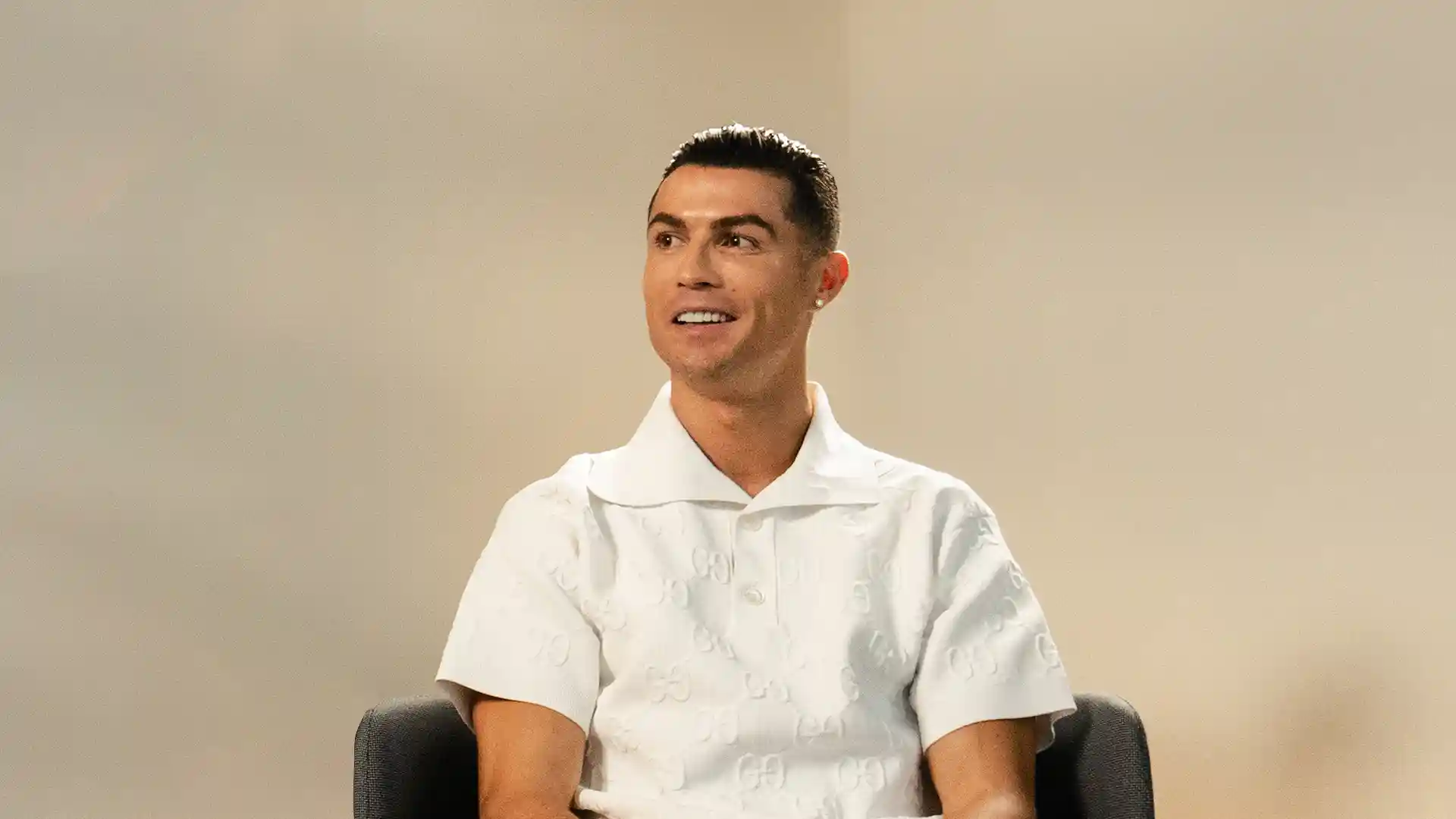
Originally published on May 15, 2024
Elite performance habits start long before match day, and this conversation shows how Cristiano Ronaldo built routines that support training, sleep, recovery, and mental control. In Episode 272 of the WHOOP Podcast, Ronaldo joins Will Ahmed to explain how early family support, a move away from home at 11, and two decades of discipline shaped one of football's longest runs at the top. He also shares how he uses WHOOP data, cold exposure, morning light, hydration, breathing, and visualization to stay ready. If you want a clear look at how a global athlete turns consistency into a repeatable system, this article pulls the most useful lessons from the discussion.
To listen to episode 272 in full, head to the WHOOP Podcast on YouTube.
How did Cristiano Ronaldo build elite work ethic so early?
Ronaldo's first football memories are simple: playing in the street with friends at 7, 8, and 9 years old, then moving into more structured football at Andorinha, a local club in Madeira. He says the first driver was enjoyment, not a plan to become a global star.
That matters for how he describes talent. Ronaldo says he did not feel clearly different from everyone else at 14, 15, or 16. The change came later, around 18 to 20, when he started to feel his path separating from the field. By then, family support, early discipline, and repetition had already shaped his habits.
What stands out most is how directly he links talent to daily behavior. Ronaldo rejects the idea that natural ability alone explains a long career. In his view, talent and work ethic have to reinforce each other, or neither gets very far.
If you want to hear Ronaldo unpack the balance between talent and discipline, listen to the full episode on Youtube.
"Talent without work is nothing, and work without talent is nothing too."
What you should take away
- Ronaldo says early enjoyment came before ambition, which helps explain why his discipline lasted.
- Family support mattered early, especially the push to move from street football into a club setting.
- Ronaldo places talent and work ethic in the same system, rather than treating one as more important than the other.
What does it take to stay at the top for 20 years?
Once that foundation was in place, the bigger challenge became stretching it across decades. Ronaldo says the hardest professional step may have come at 11, when he left Madeira for Lisbon without his family.
He describes that move as one of the most difficult periods of his career, because it forced independence early. That experience also sharpened the mental side of performance. Later, once he reached the top level, the challenge shifted again: staying ready while younger, faster players tried to prove themselves against him.
Ronaldo frames longevity as a daily contest with motivation. He says people often miss the cost of staying prepared physically and mentally when the work is no longer new. His answer is simple and demanding: treat the body well, keep preparing, and accept that consistency is hardest on the days you do not feel like doing the work.
For Ronaldo's full take on longevity, sacrifice, and motivation, watch the full episode on YouTube.
"If you see my career for the last 20 years, my level was high [...] if you are top for 20 years, it's unbelievable."
What you should take away
- Ronaldo sees longevity as a mental challenge as much as a physical one.
- Leaving home at 11 helped build the independence he later needed in elite sport.
- Competing against younger players becomes part of the motivation to stay prepared.
- Ronaldo believes long careers depend on how consistently you treat your body well.
How does Cristiano Ronaldo use WHOOP to track recovery?
That long-term durability becomes easier to understand when you look at the data Ronaldo tracks every day. He says WHOOP became part of his routine a few years ago because it helped him understand physical and mental readiness, along with sleep.
Ahmed read a snapshot of Ronaldo's data during the conversation, and the numbers are unusually strong even by elite standards. At that point, Ronaldo had worn WHOOP for 646 days with 95% compliance. His resting heart rate was 43 beats per minute, his average Sleep Performance was 81%, his average daily Strain was 14.9, and 51% of his days were in the green for Recovery.
Ronaldo also uses the WHOOP Journal in detail. He logs 43 behaviors, including carbohydrates, turmeric, zinc, caffeine, vitamin B, vitamin C, and multiple recovery habits. His point is that small details add up over time, which is also a theme in conversations with Rory McIlroy and Justin Thomas, who both describe using WHOOP to test how routines affect sleep and readiness.
For Ronaldo's full take on WHOOP data and the habits he logs, watch the full episode on YouTube.
Ahmed sums up the snapshot with numbers that make the routine concrete:
"You've been on WHOOP for 646 days now [...] You have a resting heart rate of 43 beats per minute [...] your sleep performance, 81% [...] on average, your strain is 14.9 every single day."
What you should take away
- Ronaldo uses WHOOP as a daily feedback tool for sleep, recovery, and training load.
- The data snapshot in Episode 272 of the WHOOP Podcast showed 95% compliance across 646 days of wear.
- Ronaldo's logged behaviors suggest he treats nutrition, supplements, and recovery work as trackable variables.
- WHOOP Journal is most useful when it helps connect small daily choices to longer-term patterns.
Which daily habits support Cristiano Ronaldo's recovery?
The data makes more sense once Ronaldo explains the routine behind it. He says cold showers, cold plunge, hydration, and morning light exposure are not occasional fixes for him. They are part of a day that looks similar most of the time.
In the episode, Ahmed notes that Ronaldo had logged 208 days of cold showers and had recorded a recovery modality on 35% of days. Ronaldo says that kind of behavior no longer feels like a sacrifice. He treats it as a normal part of the day, in the same way someone else might treat coffee or brushing their teeth.
His morning sequence is especially clear. He wakes up, drinks water, gets into the cold plunge first, showers, spends time with family, and then gets a few minutes of morning light in his eyes before coffee. He says those first 2 to 3 minutes of light help signal to the brain that the day has started. That routine lines up closely with the habits featured on the CR7 x WHOOP page, where sleep, strain, recovery, and behavior tracking sit in the same performance picture.
If you want to hear Ronaldo go deeper on cold plunge, hydration, and morning light, watch the full episode on YouTube.
"I wake up, I go there, first thing I diving in [...] 2-3 minutes just to give the information to my brain that it's early."
What you should take away
- Ronaldo treats recovery habits as routine behaviors, not occasional extras.
- Cold exposure and hydration happen early in his day, before the rest of the schedule gets crowded.
- Morning light is one of the first signals he uses to start the day.
- Routine works best when the behavior is simple enough to repeat most days.
How does Cristiano Ronaldo prepare mentally before matches?
From there, the physical routine carries into pre-match mental control. Ronaldo says he does not meditate every day, but he uses breathing and meditation more when he feels stressed, especially on match day.
He also uses visualization before games. Sometimes he pictures moments from the walk into the stadium, the warm-up, or the match itself. Ronaldo says this helps him feel more prepared if those moments happen for real. He even describes occasions when he sensed a penalty or a key event before kick-off and felt more ready because he had already run the possibility through his mind.
Breathing is part of that same process. Ronaldo says the breath he takes before a free kick or penalty is not a random gesture. It is a practiced habit that helps calm him and bring his heart rate down. He says he repeats that routine in training, which is why it is available under pressure in a game. A similar connection between calm, leadership, and football performance shows up in Virgil van Dijk: How he Leads his Club and Country.
That mental discipline also helps explain why the partnership itself feels credible. Ronaldo says WHOOP helped him become a better athlete, a better person, and better informed about what happens during his day and night. The company expanded on that relationship in the Cristiano Ronaldo partnership announcement, and his later conversation in Cristiano Ronaldo's Secrets to Longevity and Peak Performance continues many of the same themes.
If you want to hear Ronaldo unpack breathing, visualization, and match-day calm, watch the full episode on YouTube.
"If you visualize before, you will be more prepared for that moment."
What you should take away
- Ronaldo uses breathing as a trained habit to lower arousal before key moments.
- Visualization is part of his match-day preparation, especially when stress is higher.
- Mental routines become more reliable when they are rehearsed in training, not saved for competition.
- Ronaldo's partnership with WHOOP is rooted in how often he uses the product in daily life.
The bottom line
- Cristiano Ronaldo says talent and work ethic need each other, and his career reflects years of building both at the same time.
- Ronaldo identifies consistency as the hardest part of elite performance, especially on days when motivation is low.
- Episode 272 of the WHOOP Podcast shared a data snapshot that included a 43 beats per minute resting heart rate, 81% Sleep Performance, 14.9 average daily Strain, and 51% green Recovery days.
- Ronaldo uses WHOOP Journal to log 43 behaviors, which shows how seriously he tracks nutrition, supplements, and recovery habits.
- Cold plunge, hydration, and a few minutes of morning light are fixed parts of Ronaldo's daily routine.
- Ronaldo practices breathing in training so it is available before penalties, free kicks, and other high-pressure moments.
- Visualization is one of Ronaldo's pre-match tools for feeling prepared before key situations happen.
- Ronaldo's approach shows that high performance is built from repeatable behaviors, not isolated big efforts.
Frequently asked questions about things discussed in this episode
How does WHOOP measure recovery like Cristiano Ronaldo tracks it?
WHOOP calculates Recovery from signals including sleep, heart rate variability, resting heart rate, and related physiological data, then shows how ready your body may be for strain that day.
What does WHOOP Journal do for habits like cold plunge, caffeine, or vitamins?
WHOOP Journal lets you log daily behaviors and compare them with trends in sleep and Recovery over time, which helps surface patterns in routines that are easy to miss.
How does WHOOP measure Strain during training days?
WHOOP measures Strain from cardiovascular load across the day and converts it into a 0 to 21 scale, so your training load is easier to compare from one day to the next.
What does WHOOP track during sleep?
WHOOP tracks sleep duration, timing, stages, and related physiological signals so you can see how nightly sleep connects to next-day Recovery and performance readiness.
What can WHOOP show about resting heart rate?
WHOOP shows resting heart rate as a trend over time, which can help you spot whether your body appears more recovered, more stressed, or less adapted to recent load.
How can WHOOP help with pre-competition routines?
WHOOP helps by showing whether sleep, recovery work, and the behaviors you log are lining up with better readiness before training sessions, matches, or other high-pressure events.
Ronaldo's routine shows that WHOOP data becomes most useful when it supports the same recovery habits, breathing patterns, and preparation choices you are willing to repeat every day.