Topics
- Article
- Biomarkers
- Sleep
- Healthspan
Could One of These Biomarkers Be Disrupting Your Sleep?
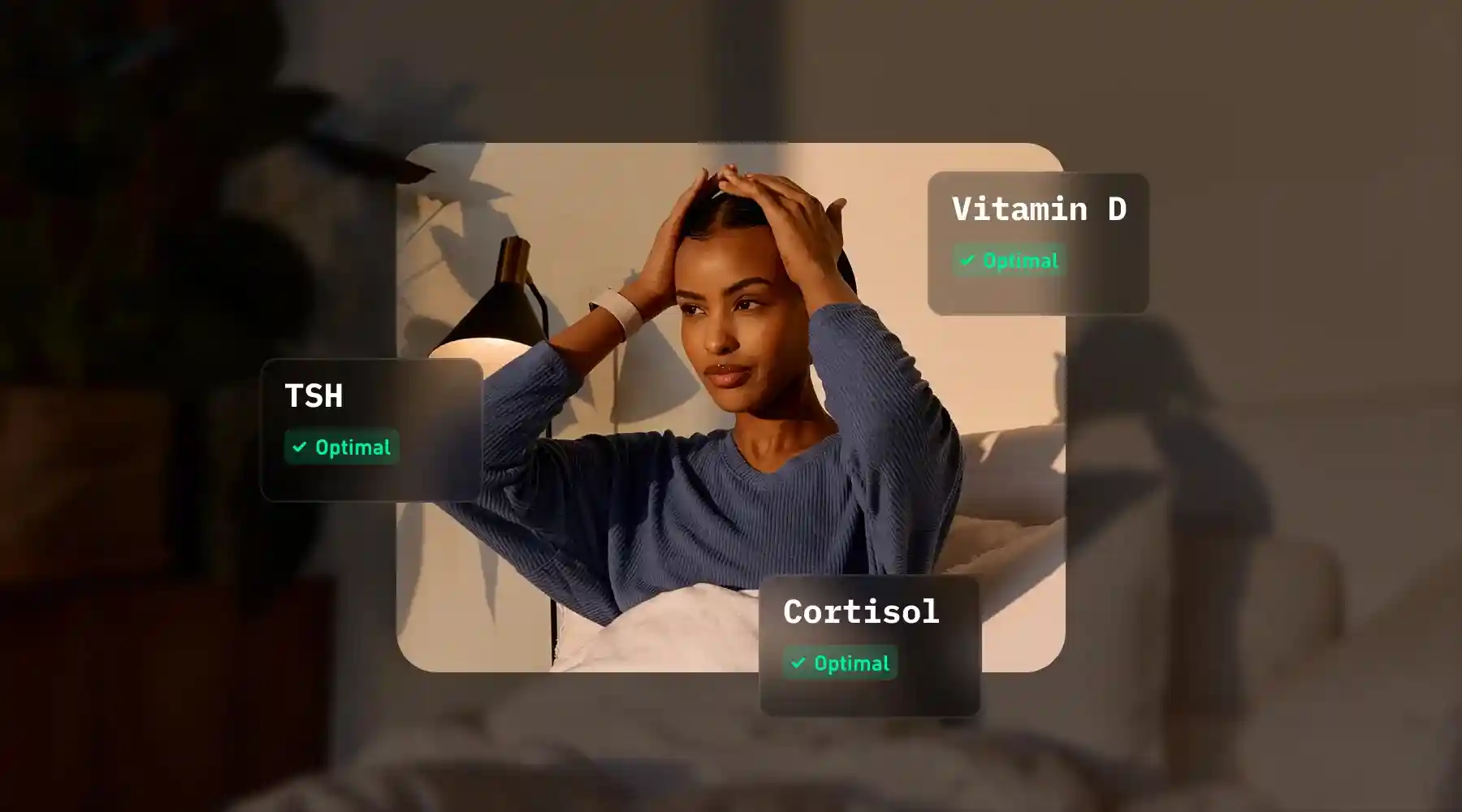
If you’ve been doing “all the right things” — giving yourself enough time in bed, avoiding screen time before sleep, blackout curtains, cool room temperature — and your sleep still doesn’t feel right, it might not just be your habits. It might be your biomarkers.
By combining Healthspan with WHOOP Advanced Labs, you can move from guessing to understanding. We’ll break down the biomarkers most closely tied to sleep, and how each one can interfere with the high-quality rest your Healthspan depends on.
Sleep biomarkers are measurable biological indicators that reveal what's happening inside your body during sleep. These include hormones, vitamins, and minerals that may influence your sleep quality and recovery.
Unlike subjective feelings of being tired or rested, biomarkers provide objective data about your physiological state. They help identify specific biological factors that may be disrupting your sleep despite good habits.
Why sleep biomarkers matter more than habits alone
Good sleep hygiene is the foundation of restorative rest, but habits are only part of the equation. Your internal biology plays an equally critical role through:
- Circadian regulation: hormones that control your sleep-wake cycle
- Inflammation management: biomarkers that affect recovery quality
- Deep sleep facilitation: nutrients that support restorative sleep stages
When biomarkers are out of range, even perfect sleep habits can fall short.
How WHOOP connects sleep, biomarkers, and Healthspan
Healthspan uses nine key metrics to estimate your WHOOP Age (your physiological age) and your Pace of Aging (how quickly that age is changing). Short, irregular, or inconsistent sleep can add years to your WHOOP Age and accelerate your Pace of Aging.
Healthspan points out habits that could help improve these metrics. However, your underlying biology influences how easily you fall asleep, how deeply you stay asleep, and how recovered you feel in the morning. Biomarkers help reveal what habits alone can't.
7 biomarkers that may be impacting your sleep
These biomarkers show strong connections to sleep quality, recovery, and longevity. 1. Vitamin D
Vitamin D helps regulate melatonin production: the hormone that cues your brain to wind down and fall asleep. Low levels can disrupt your circadian rhythm and increase inflammation, making it harder to fall asleep or stay asleep, especially after high-strain days.
Signs of low vitamin D:
- Persistent fatigue: you hit your Sleep Need but still feel tired
- Post-strain restlessness: high Strain disrupts your sleep
- Stagnant progress: good habits don't improve WHOOP Age
Optimized vitamin D supports deeper rest and reduced inflammation, key drivers of recovery and Healthspan.
2. TSH (Thyroid-Stimulating Hormone) TSH reflects thyroid regulation, which influences metabolism and circadian rhythm. When thyroid hormones are out of balance, people often feel “wired but tired” at night, or groggy in the morning.
Signs of TSH imbalance:
- Drifting schedule: bedtime and wake time drift even when you're trying to stay consistent
- Energy compensation: you rely more on caffeine or naps to get through the day
- Accelerated aging: irregular sleep patterns contribute to faster Pace of Aging trends
Balanced TSH promotes stable sleep timing and energy regulation, contributing to better daily functioning and long-term health.
3. Cortisol
Cortisol is your primary stress hormone. Ideally, it should peak in the morning and decline at night. When it stays elevated late in the day, sleep becomes lighter, shorter, and more fragmented.
Signs of elevated cortisol:
- Stress response: elevated resting heart rate on stressful days
- Poor recovery: lower Sleep Performance after emotionally demanding days
- Opportunity mismatch: enough hours in bed but still waking up with low recovery
Balanced cortisol helps support deep, restorative sleep and protects long-term cardiovascular and metabolic health.
4. BUN/Creatinine
The BUN/Creatinine ratio reflects hydration status and how efficiently your body clears metabolic waste. When this ratio is out of range, your body may be underhydrated or under-recovered, both of which can elevate nighttime heart rate, increase body temperature, and make it harder to fully relax into deeper sleep stages.
Signs of BUN/Creatinine imbalance:
- Recovery disconnect: high Strain followed by disproportionately poor Sleep Performance or Recovery
- Morning lethargy: waking up feeling groggy or heavy despite adequate sleep time
Healthy hydration and metabolic clearance support better sleep, physical performance, and long-term cardiovascular function.
5. Potassium
Potassium stabilizes nerve and muscle function, including heart rhythm and muscular relaxation. Low levels can cause restlessness, cramps, or frequent wake-ups.
Signs of low potassium affecting sleep:
- Frequent disruptions: frequent wake-ups or discomfort despite consistent habits
- Inconsistent recovery: Recovery Scores that dip even after moderate strain
Adequate potassium supports uninterrupted sleep, efficient muscle recovery, and sustained daytime performance.
6. Ferritin
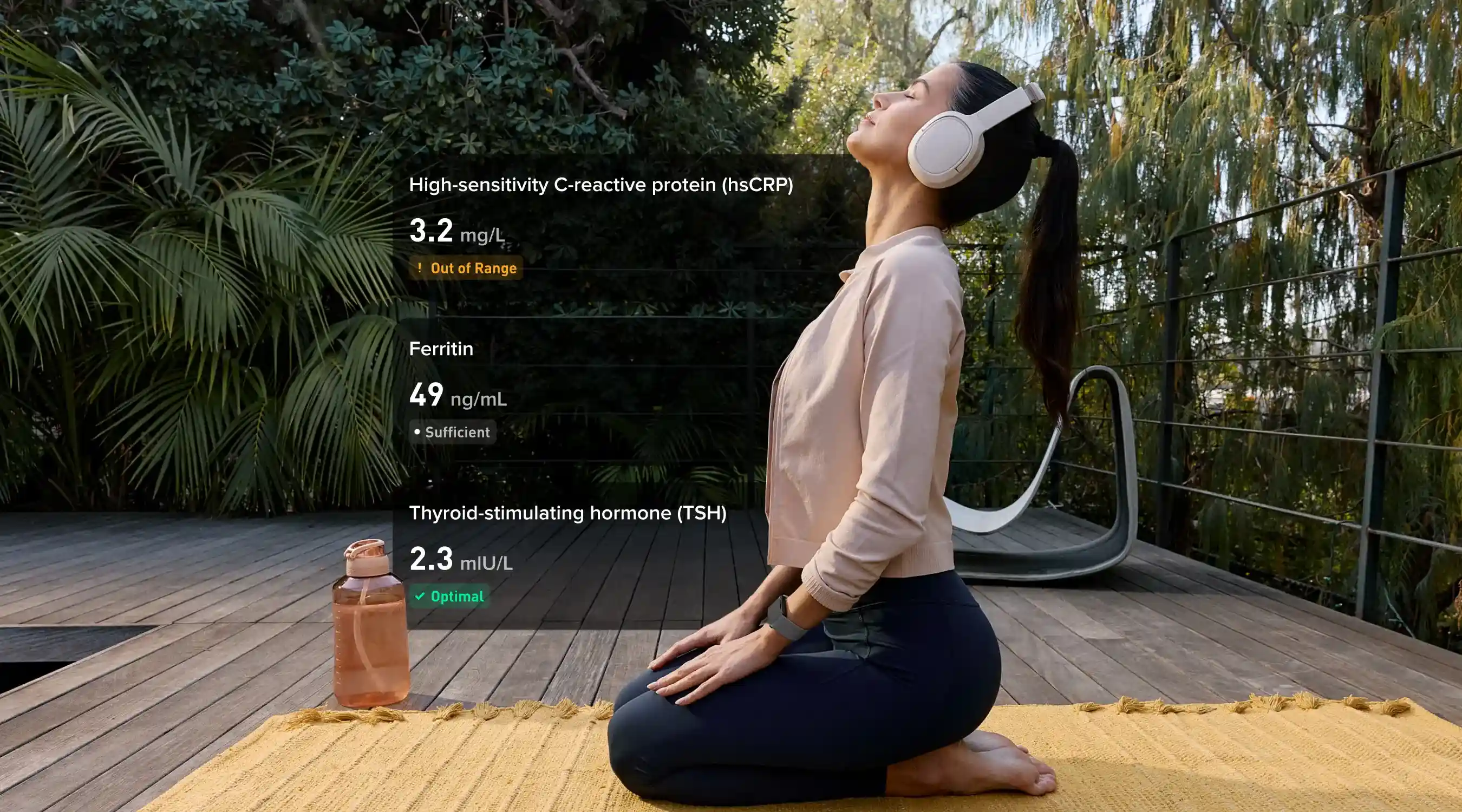
Ferritin is a key marker of iron stores, which fuel oxygen transport and energy production. Low ferritin can impair both physical recovery and deep sleep.
Signs of low ferritin:
- Quantity without quality: you log 7-9 hours in bed, but deep sleep and Recovery Score remain low
- Suppressed HRV: HRV trends stay suppressed, even after moderate Strain
Healthy iron stores improve sleep quality, reduce fatigue, and support physical capacity.
7. Hemoglobin Hemoglobin carries oxygen throughout your body. Low hemoglobin forces your body to work harder to meet basic oxygen demands, elevating resting heart rate and reducing deep and REM sleep.
Signs of low hemoglobin:
- Elevated nighttime heart rate: nighttime heart rate elevated above baseline
- Insufficient recovery: Sleep Duration looks sufficient, but next-day readiness feels poor
- Declining fitness: VO₂ Max trends decline over time
Healthy hemoglobin supports sleep quality, aerobic performance, and more efficient recovery — all contributors to a healthier WHOOP Age.
Take action with your biomarker insights
Great sleep isn’t driven by habits alone. If your routines are solid but your sleep still feels off, the answer may be that your biomarkers. With WHOOP, you can see the impact of your sleep on your long-term health with Healthspan. WHOOP Advanced Labs reveals which biomarkers may be holding sleep back. Paired with daily sleep, strain, and recovery data, you can see how your body responds in real time and move toward a sleep routine that supports your health, fitness, and longevity. Join WHOOP to start improving today.
Frequently asked questions about sleep biomarkers
What biomarkers are most strongly linked to sleep disruptions?
Elevated evening cortisol and thyroid hormone imbalances (measured by TSH) are most commonly linked to sleep difficulties.
Can sleep biomarkers provide early context for future sleep problems?
Yes, consistently out-of-range biomarkers can signal developing sleep issues before symptoms appear, allowing for proactive intervention.
How often should I test my sleep biomarkers?
After testing initially for baseline, it’s optimal to test every 3-6 months for signs of change.
Disclaimers Healthspan: This feature is not available for users under the age of 18. This feature is for wellness purposes only and not for medical use. WHOOP Advanced Labs: WHOOP Advanced Labs is only available in the United States and requires an active WHOOP membership or trial. You must be 18 years or older and not pregnant to participate. Advanced Labs testing is not available in Arizona, Hawaii, Wyoming, North Dakota, or South Dakota; however, tests may be completed out of state. If you are within 20 weeks postpartum, weigh under 100 lbs (45 kg), have severe anemia (Hb < 8 g/dL), or have recently undergone surgery, we recommend waiting until you have been cleared by your clinician before testing.
Related Articles
Understanding Sleep Debt: Impact on Performance and Recovery

Topics
- Sleep
- Health & Wellness
- App & Features
- Research Studies
New WHOOP Study Reveals the Relationship between Sleep Consistency and Mental Health