Topics
- Post
- Recovery
- Respiratory Rate
How respiratory rate improves WHOOP Recovery and daily readiness
Podcast episode originally published on July 29, 2020
Respiratory rate can add useful context to WHOOP Recovery, especially when overnight breathing moves away from your normal baseline.
In Episode 084 of the WHOOP Podcast, Kristen Holmes, Global Head of Human Performance, Principal Scientist at WHOOP, and Emily Capodilupo, Senior Vice President of Research, Algorithms, and Data at WHOOP, explain why WHOOP added respiratory rate as a fourth input alongside heart rate variability, resting heart rate, and Sleep. Their discussion shows what Recovery is designed to measure, why overnight breathing changes can affect next-day performance, and how to interpret respiratory rate without confusing a low Recovery score with an illness diagnosis.
What does WHOOP Recovery actually measure?
WHOOP Recovery is meant to estimate how ready your body is to respond to strain and perform the next day. Capodilupo said the score started as a way to predict athletic performance, but the same physiology kept showing up in other settings where precision, focus, and decision-making matter.
That broader view is what makes Recovery more than a training score. In the episode, Capodilupo explained that the underlying signal is the state of your autonomic nervous system, which reflects how prepared your body is to respond to a stimulus. That can apply to a weight room session, a long ride, a demanding meeting, a surgical procedure, or any task that depends on coordination, attention, or emotional control.
Holmes added that WHOOP had also seen recovery line up with executive function in case work and in ongoing research involving 100 CEOs. Capodilupo pointed to similar patterns in academic performance, military settings, and surgical sharpness. The main idea is consistent: Recovery is about readiness, not about one narrow type of output.
Earlier WHOOP reporting in this Recovery deep dive explains the same foundation from another angle. Recovery is most useful when you stop reading it as a grade and start reading it as a readout of current capacity.
Capodilupo gave the clearest definition early in the conversation.
"The goal of the Recovery Score is to measure how ready your body is to adapt to a training stimulus. This is highly correlated with how ready you are to perform."
What you should take away
- WHOOP Recovery is designed to estimate readiness to adapt and perform, not simply to label a day as good or bad.
- WHOOP Recovery reflects whole-body readiness, which is why the same signal can relate to sport, decision-making, focus, and other forms of performance.
- WHOOP Recovery becomes more useful when you read it as context for your day rather than as a report card.
How do HRV, resting heart rate, Sleep, and respiratory rate work together?
That wider definition of readiness raises the next question: why combine several signals instead of relying on one number? WHOOP Recovery works as a combined score because heart rate variability, resting heart rate, Sleep, and now respiratory rate each add different context.
Capodilupo said the earliest internal versions started with heart rate variability, or HRV, alone. That made sense because HRV has a large research base linking it to next-day performance. But the team found that HRV by itself could miss important context. Resting heart rate often moves opposite HRV, which helps explain whether the change looks like strain, fatigue, or adaptation. In some cases, both metrics move down together, and that carries its own meaning.
The best example is parasympathetic saturation. Capodilupo described it as a pattern seen in well-trained endurance athletes during an effective taper. If HRV drops and resting heart rate also drops, the signal can point to positive adaptation rather than a simple decline in readiness. That is the kind of edge case a single-metric model can misread.
Sleep rounds out the picture. Capodilupo said Sleep has less weight in the algorithm than HRV, but it is often the clearest explanatory variable. If Sleep is short, WHOOP would expect higher resting heart rate and lower HRV. If Sleep duration is high and Recovery still looks suppressed, the answer may lie elsewhere, such as heavy training, emotional stress, or illness. Holmes added a practical point from coaching: time in bed is individual. During preseason or a hard training block, people may need to extend sleep, while too much time in bed can also distort the pattern.
Holmes also referenced work with the Corey Stringer Institute showing that the combined signals tracked performance better than any one input alone. That fits the core logic of Recovery: one metric can describe part of the story, but readiness usually shows up across systems.
Capodilupo used a specific endurance example to explain why resting heart rate belongs beside HRV.
"We actually see there's a phenomenon called parasympathetic saturation where heart rate variability goes down and resting heart rate also goes down. And that can be a sign of a really effective taper in well-trained endurance athletes."
What you should take away
- WHOOP Recovery works as a combined model because HRV, resting heart rate, and Sleep answer different parts of the readiness question.
- HRV alone can miss context, especially in cases like parasympathetic saturation during an effective taper.
- Sleep can explain why Recovery changes, even when Sleep itself carries less weight than HRV in the final score.
For a deeper listen on how these inputs fit together before respiratory rate was added, go to Episode 084 of the WHOOP Podcast on Spotify.
Why did WHOOP add respiratory rate to Recovery?
Once the original Recovery model is clear, the update makes more sense. WHOOP added respiratory rate because it contained useful information about next-day performance that was not already captured by HRV, resting heart rate, and Sleep.
Capodilupo said respiratory rate had been easy to overlook for years because it barely moved in healthy people. In research prepared for peer review, the team found that an average person's 30-day variability in respiratory rate was less than half of 1 respiration per minute. That stability changed how the team thought about the signal. If a metric is flat almost every night, the nights when it moves may carry real meaning.
The first push to reexamine respiratory rate came from WHOOP research related to COVID-19. From there, Capodilupo's team went back to fall 2019 data, before the pandemic affected WHOOP members, and tested whether respiratory rate explained part of performance that the existing Recovery model missed. The team compared predicted performance with actual next-day performance across several million days of data. When the gap between prediction and reality was large, respiratory rate was often elevated.
That is the key reason the update matters. Respiratory rate was not added because it was trendy or easy to surface in the app. It was added because it improved the match between what WHOOP predicted and what people actually did the next day.
Capodilupo summarized the finding directly.
"Respiratory rate contains information that's useful in predicting next-day performance, but that is independent of the information that we're already capturing in resting heart rate, heart rate variability, and sleep."
What you should take away
- WHOOP added respiratory rate because it improved Recovery when the older model missed some of the performance story.
- Respiratory rate is valuable partly because it is so stable in healthy people, which makes deviations from baseline easier to spot.
- WHOOP built this update from several million days of data, including pre-pandemic data used specifically to test performance prediction.
What can make respiratory rate rise during sleep?
That finding leads to the mechanism question. Respiratory rate usually stays very stable during sleep, so when it rises at rest, the cause is often environmental or respiratory rather than simply a hard workout.
Capodilupo drew a clear line between respiratory rate during exercise and respiratory rate during sleep. When you run harder, you breathe faster because your oxygen demand rises. Overnight, that demand should be far more stable. At rest, the question is less about activity and more about whether each breath is delivering the oxygen your body expects.
Environmental conditions can change that. Altitude lowers the amount of oxygen delivered with each breath, so respiratory rate rises to make up the difference. Poor air quality can do the same. Holmes mentioned a baseball player who saw changes during a dusty stay on a farm, which is a simple coaching example of the same principle. Allergies may also reduce breathing efficiency enough to shift nighttime respiratory rate.
Capodilupo also described internal causes. Lower respiratory tract infections can damage gas exchange inside the lungs, which means each breath becomes less effective. Her explanation used a drive-through analogy: blood passes by the parts of the lungs where oxygen should cross into circulation, and if those exchange sites are damaged, the body has to take more breaths to move the same amount of oxygen. The cause can differ, but the performance consequence is similar. If breathing is less efficient overnight, the body has to work harder just to cover baseline needs.
That is why respiratory rate can improve Recovery without turning Recovery into a diagnosis tool. A higher overnight breathing rate does not tell WHOOP exactly what is wrong. It does tell WHOOP that something relevant changed in the conditions supporting next-day performance.
Capodilupo reduced the research finding to one practical sentence
"When respiratory rate was elevated, the next day performance was decreased."
What you should take away
- WHOOP respiratory rate is most useful during sleep because resting oxygen needs are relatively stable overnight.
- Altitude, dust, air quality, allergies, and lower respiratory tract infections can all raise respiratory rate at rest.
- Elevated respiratory rate can lower next-day readiness even when the cause is environmental rather than training-related.
Capodilupo walks through these physiology examples in more detail in Episode 084 of the WHOOP Podcast on Spotify.
How should WHOOP members interpret respiratory rate changes and COVID context?
Because respiratory rate can rise for more than one reason, interpretation depends on pattern, not panic. WHOOP uses respiratory rate as one input into Recovery, and Capodilupo made a separate point just as clearly: a low Recovery score is not a diagnosis.
In the illness context, personal baseline matters more than any universal cutoff. Capodilupo said hospitals often have to use simple lines, such as respiratory rate above 20 or 30, because they do not have weeks of prior data for comparison. WHOOP does. That lets the system look at how far your overnight breathing has moved away from your normal level rather than treating one population threshold as meaningful for everyone.
That personalized view also helped WHOOP study how respiratory rate behaved around COVID-19. Capodilupo said the pattern often began with a subtle climb during the incubation period, followed by a sharper rise 1 or 2 days before symptom onset. In some cases, respiratory rate reached roughly 30% to 40% above baseline around symptom onset, stayed high for 2 to 4 days, and then eased down without fully returning to normal right away. She contrasted that with altitude, where the change tends to happen quickly and then level off.
The important boundary is this: the Recovery update was not built to detect COVID-19. Capodilupo said the updated model used fall 2019 data, long before COVID-19 affected WHOOP members. Respiratory rate can help explain lower readiness, and WHOOP respiratory rate trends can provide useful context, but red Recovery scores existed before the pandemic and will continue to exist for many reasons after it.
WHOOP members who want more background on respiratory data in illness and recovery can read the related COVID-19 recovery study article.
Capodilupo stated the boundary as plainly as possible
"Don't confuse a low Recovery score with WHOOP saying that you have COVID-19."
What you should take away
- WHOOP interprets respiratory rate best against your personal baseline, not against a one-size-fits-all cutoff.
- WHOOP respiratory rate patterns around illness can differ from patterns caused by altitude or air quality.
- WHOOP Recovery is a readiness score, and a low score alone is not an illness diagnosis.
What actually changes for WHOOP members after this update?
Once the context is clear, the practical question is what changed inside WHOOP. The short answer is that most people will see little or no shift in their day-to-day Recovery scores, but the algorithm is better positioned to catch nights when breathing changes add important context.
Capodilupo said respiratory rate mainly improves the outlier cases, which matches the earlier research logic. Because respiratory rate is usually stable, it will not move enough on most nights to change Recovery meaningfully. When it does move, though, the added signal can help the score match next-day performance more closely.
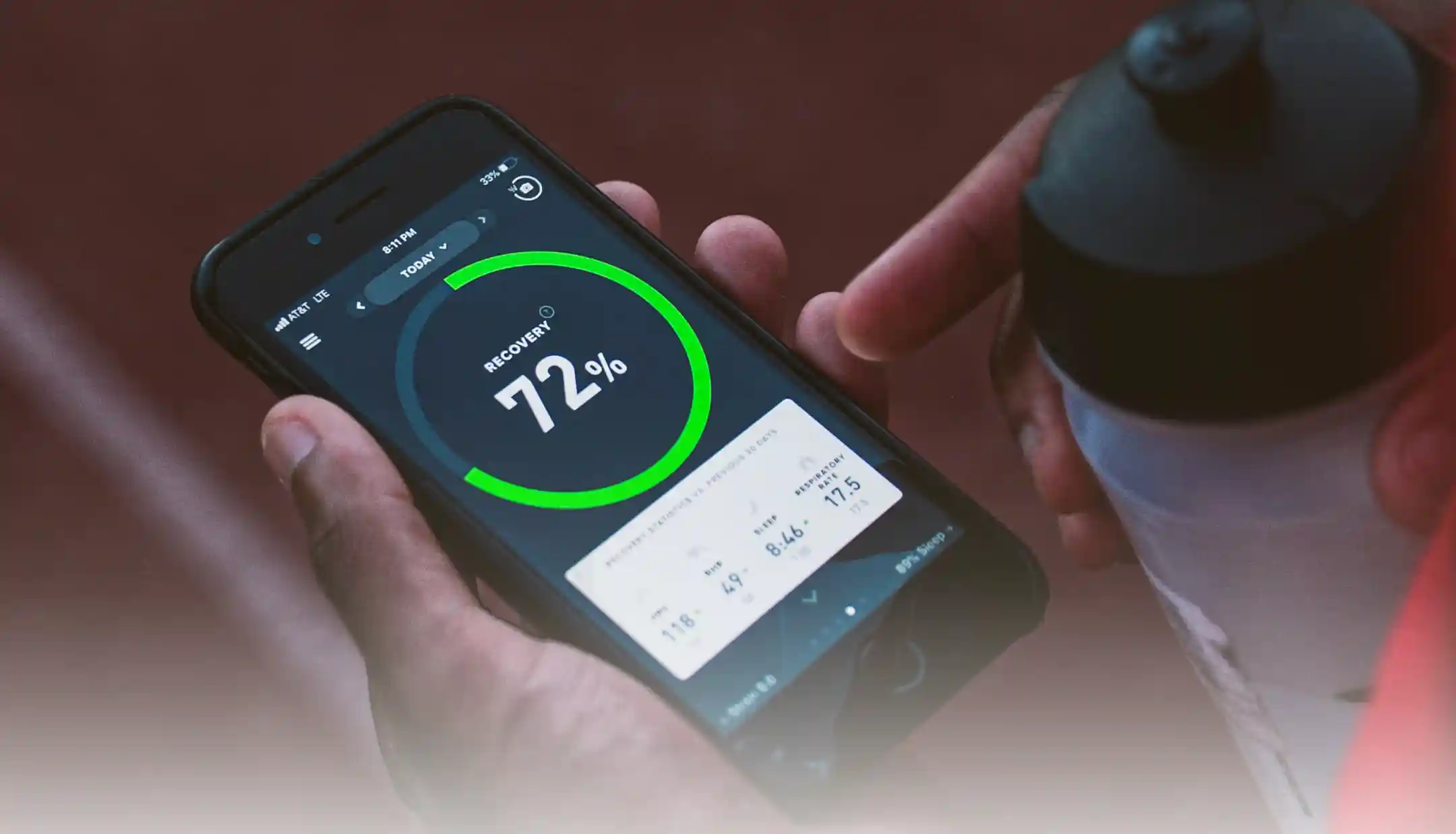
The visible app change is simple. Respiratory rate moved from the Sleep page to the Recovery page, where it now sits beside HRV, resting heart rate, and Sleep. Capodilupo said the value itself did not change. WHOOP still shows the median respiratory rate across the full night of sleep. The update changed where members see the metric and how WHOOP uses it in the Recovery model.
Holmes also tied the update to a larger standard inside WHOOP: the company rarely changes Recovery, and it does so publicly when it does. She pointed to third-party validation from the University of Arizona that included respiratory rate and showed strong agreement with gold-standard measurement . The bigger point is less about one number and more about process. WHOOP treats Recovery as a core score, so updates only happen when the data justify them.
For day-to-day decisions, this means context still matters. If respiratory rate rises and Recovery drops, the explanation may be altitude, air quality, allergies, illness, heavy training, or a combination of factors. Holmes said the best use of the data is to adjust behavior intelligently, such as extending sleep during a hard block or reducing training load when your body is clearly asking for more support. That same decision-making frame shows up in the Project PR study on Recovery-guided training, in Emily Capodilupo's recovery Q and A, and in the broader science of recovery conversation with Dr. Robin Thorpe.
Capodilupo set expectations clearly for members opening the app after the update.
"Users will likely notice almost no change, or really, most users will notice no change in their Recovery score itself."
What you should take away
- WHOOP added meaningful context to Recovery without changing how most people experience the score on a typical day.
- WHOOP now shows respiratory rate on the Recovery page beside HRV, resting heart rate, and Sleep.
- WHOOP members should treat respiratory rate changes as context for decisions, then use training, sleep, and environment clues to interpret the shift.
For the full conversation on the algorithm update and how to read respiratory rate inside the app, listen to Episode 084 of the WHOOP Podcast on Spotify.
The Bottom Line
- WHOOP Recovery is a readiness metric that estimates how prepared your body is to adapt to strain and perform the next day.
- WHOOP Recovery was originally built around HRV, resting heart rate, and Sleep because those signals explain different parts of next-day readiness.
- WHOOP added respiratory rate after analyzing several million days of data and finding that elevated overnight breathing explained performance differences the older model missed.
- WHOOP respiratory rate is especially useful because it is normally very stable in healthy people, so departures from baseline can carry real meaning.
- WHOOP respiratory rate can rise because of altitude, poor air quality, allergies, lower respiratory tract infections, or other factors that make overnight breathing less efficient.
- WHOOP Recovery uses respiratory rate as a readiness input, and a low Recovery score alone does not mean you are sick.
- WHOOP members will usually see little change in daily Recovery scores after this update, because respiratory rate mostly improves interpretation on outlier nights.
Frequently asked questions about things discussed in this episode
How does WHOOP measure respiratory rate for Recovery?
WHOOP measures respiratory rate during sleep and uses the median overnight value as the respiratory signal shown on the Recovery page.
What does WHOOP do with respiratory rate in the Recovery algorithm?
WHOOP uses respiratory rate as a fourth Recovery input when overnight breathing adds information that HRV, resting heart rate, and Sleep do not fully capture.
How does WHOOP interpret a high respiratory rate?
WHOOP interprets respiratory rate against your personal baseline, so a meaningful rise from your normal overnight range is more informative than a single population cutoff.
What does WHOOP Recovery mean when respiratory rate is elevated?
WHOOP Recovery can fall when respiratory rate is elevated because higher overnight breathing is associated with lower next-day performance, even when the cause is environmental.
What does WHOOP show in the app after this update?
WHOOP shows respiratory rate on the Recovery page alongside HRV, resting heart rate, and Sleep so the signal is easier to read in the same place as the other Recovery inputs.
How does WHOOP separate Recovery from illness detection?
WHOOP Recovery is a readiness score, not an illness diagnosis, and a low Recovery score by itself does not indicate that you have COVID-19 or any other illness.
Respiratory rate gives WHOOP another overnight signal for the uncommon nights when your breathing changes before the rest of your routine does.