Topics
- Post
- Basketball
- Cycling
How to stay disciplined and train for longevity with Reggie Miller
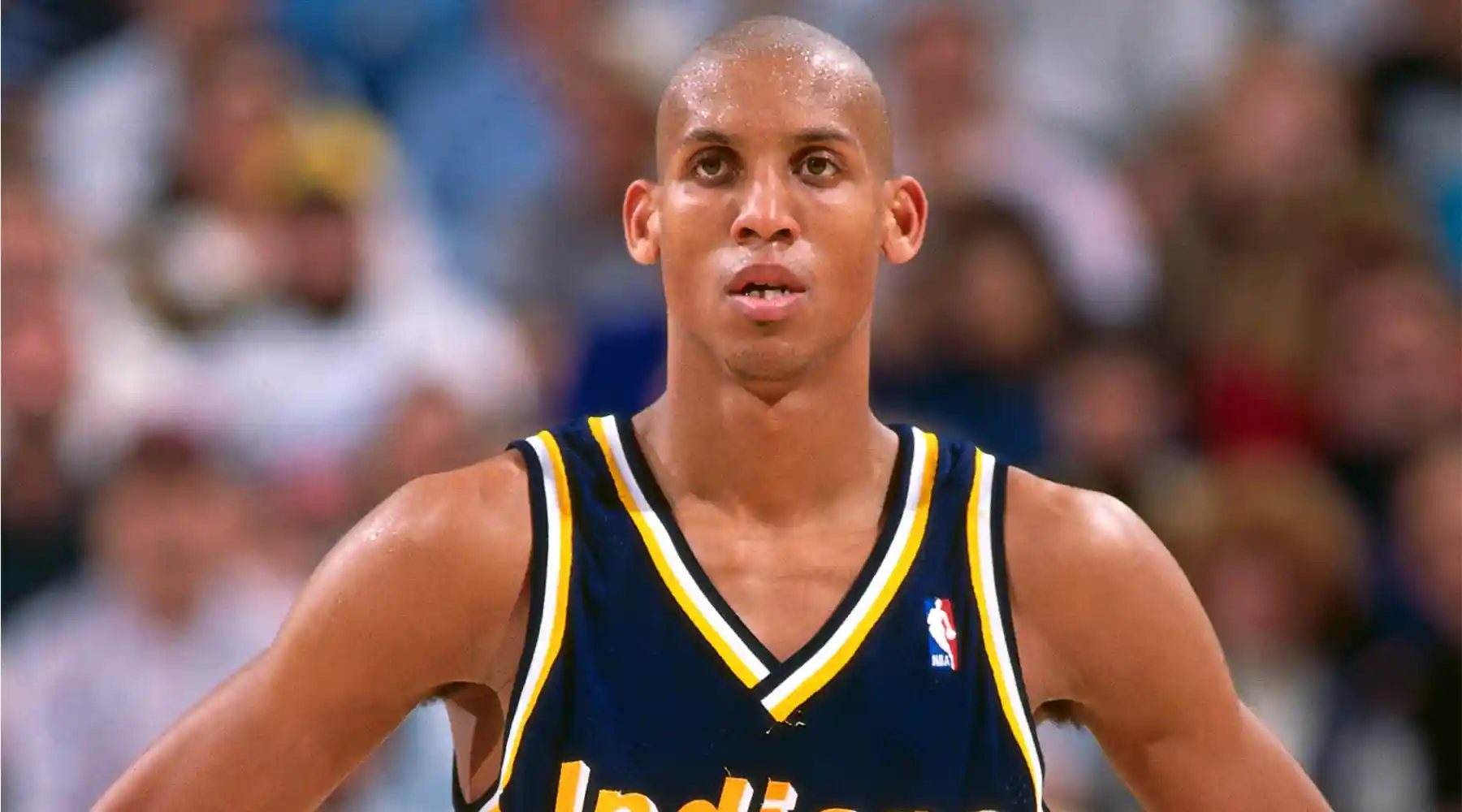
Originally published on October 12, 2022
Discipline, recovery, and athletic longevity are learned through daily habits, not just game-day talent. In Episode 193 of the WHOOP Podcast, Reggie Miller explains how a baseball-first kid became one of basketball's best shooters, why practice mattered more to him than competition, and how retirement pushed him into a new endurance chapter in cycling. Miller spent 18 seasons with the Indiana Pacers, earned five NBA All-Star selections, won Olympic gold with Team USA, and now trains for long gravel races while tracking Sleep, Recovery, Strain, and Health Monitor trends on WHOOP. His perspective is useful for anyone trying to stay competitive, adapt training with age, and build routines that still hold up when family, work, and fatigue all compete for time.
To listen to episode 193 in full, head to the WHOOP Podcast on YouTube.
How did Reggie Miller become elite after starting basketball later than most prospects?
Miller became elite by specializing later, avoiding burnout, and turning one skill into a daily obsession. Basketball was not his first sport. Baseball was, and he only shifted his full attention to basketball around age 13 or 14.
That late start mattered. Miller said the move away from baseball came after his high school coach wanted him to keep pitching, while Miller already felt basketball deserved his full focus. He also thinks starting later helped him avoid the year-round overload many young athletes face now. Instead of constant travel competition, he spent his early teens practicing, playing pickup, and building a complete game around one clear advantage, shooting.
Miller traced that identity back to a simple question he kept asking himself. His framing is still useful for any athlete trying to build a durable edge.
"If I can shoot anywhere in the half court, how is anyone ever going to be able to guard me?"
The other major influence was Cheryl Miller. Reggie Miller grew up seeing what true greatness looked like because his older sister was already dominant. That gave him both a standard and a daily reminder that praise meant very little unless the work kept improving.
What you should take away
- A later start in one sport can reduce burnout and still leave plenty of time to build elite skill.
- A repeatable advantage, such as shooting range, becomes more valuable when practice turns it into an automatic strength.
- Daily exposure to high standards can keep confidence grounded in work instead of hype.
If you want to hear Miller unpack late specialization and how he built his shot, listen to the full episode on Spotify.
What does practice teach that game day cannot?
That early focus on skill led directly to Miller's larger point, practice is where identity gets tested. Games reveal what is there, but training builds it.
At UCLA, summer open gyms put Miller on the floor with Los Angeles Lakers players such as Magic Johnson, Byron Scott, Michael Cooper, Kareem Abdul-Jabbar, and James Worthy, along with other stars from the era. Those runs were the first time he felt he could hold his own against professionals. Later, as an NBA rookie, he played in all 82 games, never started once, and learned from veteran John Long. Miller said his minutes grew from roughly 15 to 17 a night to about 25 to 30 by the end of the season, which set up his jump in year two.
His summary of the training mindset is blunt.
"The hard work was all what I did during the summer. The games are the easy part. The training to me is the hard part."
That mindset shows up across other WHOOP conversations on mental performance and preparation. Miller's version was practical. Study the scouting report. Watch film. Repeat the hard work until competition feels smaller than the preparation behind it.
What you should take away
- Practice creates the confidence that keeps big moments from feeling bigger than they are.
- Playing limited minutes early can still be useful when the role comes with film study, mentorship, and steady growth.
- Training volume only becomes valuable when it is tied to a clear competitive purpose.
For Miller's full take on summer runs, rookie development, and why preparation matters most, watch the full episode on YouTube.
How did Reggie Miller build an edge through mindset and opponent study?
Preparation gave Miller a physical base, and mindset gave him leverage inside competition. He did not rely on emotion alone. He relied on observation.
Miller said he studied tendencies, watched body language, and looked for signs that an opponent was tired, frustrated, overconfident, or close to cracking. He also credits his family and early road environments for building the mental toughness to stay locked in while fans were chanting Cheryl Miller's name or trying to get in his head. For him, the point of trash talk was never volume. It was timing.
That is where his broader competitive philosophy comes through.
"The great ones know how to play chess, and they're 3, 4, 5 moves ahead of you."
Miller's description helps explain why he valued rivalry so highly. He respected opponents, but he did not want closeness to dilute competition. That mentality differs from the current era, yet the underlying lesson still applies. A strong mindset is usually built from attention, preparation, and self-control, not from speeches.
What you should take away
- Film study becomes more useful when it includes body language, tendencies, and timing, not only plays on paper.
- Competitive confidence often starts with preparation that makes you less reactive in the moment.
- Mental edge is easier to sustain when you know exactly what signs to look for in an opponent.
If you want to hear Miller go deeper on rivalries, body language, and game psychology, listen to the full episode on Spotify.
What changes when an elite athlete becomes a beginner again in cycling?
The shift from basketball to cycling forced Miller into a different challenge, becoming a novice again while still thinking like a professional. That made recovery data more useful because the training stress was new, prolonged, and easier to misread.
Miller said a riding partner, professional cyclist Isabel King, first pushed him to try WHOOP. He was hesitant because with three young children he assumed the data would mostly confirm that he needed more sleep. Instead, WHOOP helped him pace effort, notice patterns, and understand what different kinds of fatigue actually looked like.
During the conversation, Will Ahmed referenced Miller's previous 30 days of training: 12 activities between 18 and 21 Strain, 10 activities between 14 and 18 Strain, and 8 more activities above 10 Strain. Recovery was tilted toward overload as he prepared for a 100-mile gravel race, with 2 green recoveries, 21 yellow recoveries, and 8 red recoveries. Miller also noted that training in Steamboat Springs, Colorado, pushed his resting heart rate higher because of altitude.
When he checks WHOOP each morning, Miller starts with the same five Health Monitor signals.
"I always want to know what the health monitor, the 5 things, the respiratory rate, blood oxygen, HRV, resting heart rate, and the skin temp."
That kind of second-career curiosity echoes other WHOOP stories about endurance and reinvention, including Rich Roll on training and recovery after 40. It also overlaps with the training question raised in strength training and rest, how much work can recovery actually support on a given day.
What you should take away
- Starting a new sport later in life often requires more attention to recovery because the stress profile is unfamiliar.
- WHOOP trends can help separate normal training fatigue from overload caused by volume, altitude, or poor sleep.
- Health Monitor checks are useful when they are repeated consistently and read as patterns over time.
For Miller's full take on cycling, altitude, and how he uses WHOOP during race prep, watch the full episode on YouTube.
What daily habits support training, parenting, and recovery in midlife?
Metrics became useful to Miller because they fit inside a real schedule. His routine is demanding, but it is also structured enough to repeat.
He said he typically wakes around 5:00 a.m., unloads the dishwasher, folds laundry, helps get breakfast ready, and handles school drop-off before heading out for a 3 to 4 hour ride. Later in the day he shifts into family time, homework, play, dinner, baths, and bedtime. Once the house settles, he stretches, may use Normatec, checks tape for upcoming broadcast work, and aims to be asleep between 10:00 and 11:00 p.m.
WHOOP helped him sharpen one habit in particular, the difference between a short, intentional nap and a long nap that leaves him flat.
"It taught me the power of a 15, 20-minute nap versus a 45-minute nap or an hour and a half nap."
Miller also said sleep became more of a household priority once he saw how much it affected recovery. He uses Normatec and Hyperice regularly, especially for his legs and lower back, and he takes magnesium before races to help with cramping. He also said he does not use caffeine and has largely stepped away from alcohol. That recovery-first approach lines up with other NBA-centered WHOOP conversations on sleep and recovery from Marc Gasol and workload management from Mike Mancias.
What you should take away
- A repeatable routine makes recovery habits easier to hold when training, work, and parenting all compete for time.
- Short naps can be more useful than long naps when the goal is alertness instead of extra sleep time.
- Sleep routines become easier to protect when the whole household follows consistent timing.
- Recovery tools are most useful when they support habits that already fit the day.
If you want to hear Miller unpack family routine, naps, and recovery tools, listen to the full episode on Spotify.
The bottom line
- Reggie Miller did not specialize in basketball until his early teens, and he believes that later start helped him avoid burnout.
- Miller built his game around one repeatable edge, shooting range, then expanded the rest of his skill set around it.
- Summer practice sessions against NBA veterans gave Miller proof that preparation could shrink the pressure of competition.
- Miller treated film study and body language as competitive tools, using them to anticipate fatigue, frustration, and timing.
- WHOOP became more valuable to Miller in cycling because a new sport created longer, less familiar training stress.
- Miller checks Health Monitor trends, including respiratory rate, blood oxygen, HRV, resting heart rate, and skin temperature, to understand daily readiness.
- A 15 to 20 minute nap fits Miller's schedule better than longer naps and helps him manage energy across training and family life.
- Sleep consistency, reduced alcohol use, and regular recovery work became more important to Miller once training volume increased in retirement.
Frequently asked questions about things discussed in this episode
How does WHOOP help with overreaching during endurance training?
WHOOP helps by showing whether recent Strain is lining up with Recovery trends. Miller's training block included repeated high-Strain rides and a run of yellow and red recoveries, which made the workload visible instead of guesswork.
What does WHOOP Health Monitor track that mattered to Reggie Miller?
WHOOP Health Monitor tracks daily trends in respiratory rate, blood oxygen, resting heart rate, HRV, and skin temperature. Miller said those five signals are the first things he checks each morning.
How does WHOOP support better nap decisions?
WHOOP supports better nap decisions by helping connect energy levels and recovery patterns to the length of the nap. Miller said WHOOP helped him see the practical difference between a 15 to 20 minute nap and a much longer one.
What does WHOOP do for athletes starting a new sport later in life?
WHOOP helps athletes starting a new sport see whether the new workload is sustainable. Miller used WHOOP to understand how cycling volume, altitude, and recovery interacted while he trained for a 100-mile gravel race.
How does WHOOP fit into a busy family schedule?
WHOOP fits into a busy family schedule by making key signals quick to review each morning and easier to connect to routine. Miller used that feedback to tighten sleep timing, manage effort, and choose recovery work that fit around parenting and training.
What does WHOOP show about sleep consistency?
WHOOP shows whether bedtime habits are producing enough sleep to support training and next-day readiness. Miller said the data reinforced an earlier household lights-out routine once he saw how important sleep was for recovery.
For people balancing hard training with parenting, work, and a second athletic chapter, WHOOP gives Miller a clearer read on which routines are actually helping him recover for the next ride.