Topics
- Article
- Golf
Golf Workouts: 4 Exercises for Swing Speed & Strength
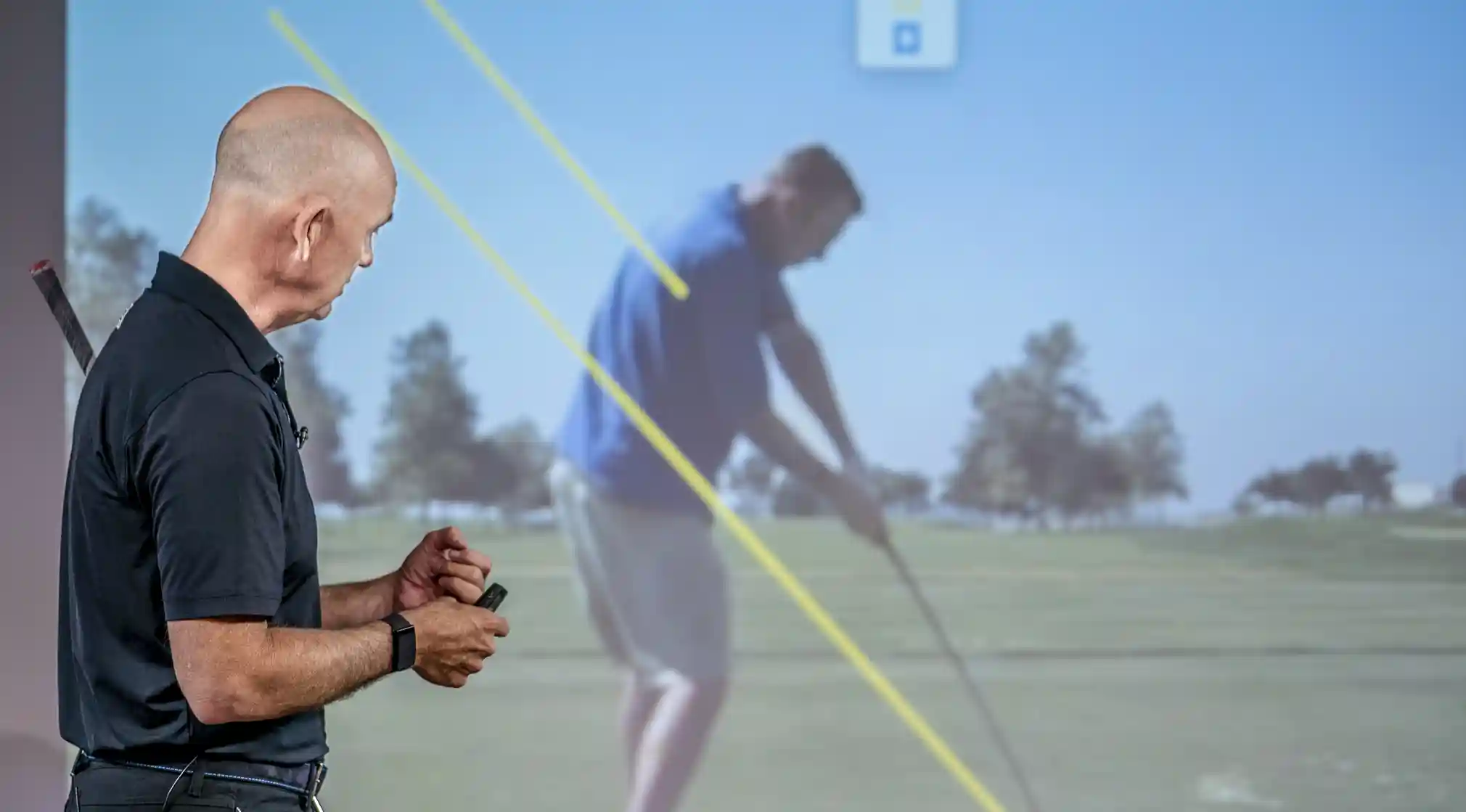
A PGA coach shares how to optimize your golf exercises and workouts.
Several years ago, I attended a conference in Europe in which multiple studies were presented by Dr. Sergio Marta from the University of Lisbon on the muscles that are used in a golf swing. His research indicated that the key lower body muscle group was the gluteus maximus—more famously known as your butt. Additionally, the most important upper body muscles were the pectoralis major (chest), latissimus dorsi (back), core muscles, and forearm muscles.
Key muscles used in golf
The gluteus maximus drives external and internal hip rotation on the backswing and downswing, plus hip extension for a balanced finish. Pectorals and latissimus muscles create strong shoulder adductors, allowing you to bring your arms across your body and raise them overhead. Your core transmits force from the lower body into the upper body and rotates your torso.
The forearms direct all force created by the upper and lower body into the golf club and the ball. Start with your gluteus maximus—the largest muscle group in your body. Follow that up by working on your chest, latissimus dorsi, core, and forearms.
How to work out for golf: mobility and strength
A great golf swing requires a balance of mobility and strength. Mobility allows you to rotate fully through your backswing and follow-through without restriction. Strength gives you the power to drive the ball further and maintain clubhead speed through impact.
Training both elements ensures you can perform the necessary movements efficiently while protecting your joints from repetitive strain. Building strength in your lower body and core, paired with flexibility in your shoulders and hips, translates directly to better performance on the course.
4 best golf workouts and exercises
Below are some great exercises and strength training workouts to get started with to improve your golf game, swing speed, and how you hit the ball. They focus on the major muscles listed above, with links to video tutorials of how each is done. Before you dive into the workouts, here's a little more on the basics of stretching for golf, as well as why getting out on the golf course is a great form of exercise—for professional golfers, senior golfers, and everyone in between.
1. Box squats
This exercise builds strength and power in the legs. Start by standing tall with a box or chair placed directly behind you. Perform a squat with your weight equal on both sides, slowly going down until you are sitting on the box, then return to the starting position and repeat.
2. Chop
This exercise increases upper body strength, shoulder and spine range of motion, and core stability. You'll need a functional movement trainer or cable cross machine with a bar attachment. Get into a half kneeling position with your down knee away from the machine, grab the bar with both hands, and keep your posture tall.
Perform a chop diagonally across your body, keeping your hands and the bar close to your chest throughout the movement. Make a full shoulder turn as you chop, then slowly return to the starting position. Repeat the appropriate number of sets and reps.
3. I-Y-T with resistance band or TRX
These exercises build strong shoulders. Facing the high attachment, grab both handles of the TRX and start in the full lean back row position—the closer to the attachment, the harder the exercise. Perform I's, Y's, T's and W's by bringing your arms (elbows locked) straight out to your sides with thumbs up, forming the letter "T" with your body.
Next, bring both arms up above your shoulders to form the letter "Y." Then, with shoulders and elbows bent to 90 degrees, rotate the back of your hands to the sky. Finally, with elbows slightly bent and arms out in front of your body, raise your arms to form a "W."
4. Turkish get up
Excellent total body exercises for strength and golf fitness. Start without weight, using just your shoe at first, then progress to weight. Lie down next to a kettlebell, roll to your left side facing it, grab it with your left hand, and roll onto your back bringing the kettlebell with you.
Bend your left knee and place your foot flat on the ground. Press the kettlebell directly up in front of your chest, extending your arm completely. Next, place your right arm down by your side to help perform the get-up.
Curl up to your right elbow, driving through your left heel while lengthening through your right heel to keep your right leg straight. Shift your weight from your right elbow to your right hand, keeping the bell directly vertical. From the "on the hand" position, actively drive through your left heel into a bridge, focusing on hip extension rather than lumbar spine extension.
From the high bridge position, sweep your right leg back so your right knee is on the ground underneath your body, keeping your lumbar spine neutral. Rotate your right lower leg so it's straight and in line with your body, then straighten your trunk so you're up tall. Once you're in the "tall half-kneeling" position, refocus with chest up, long spine, and shoulder packed, then perform a split squat to stand tall.
Frequently asked questions about golf exercises
What is the 80/20 rule in golf?
The 80/20 rule in golf suggests spending 80 percent of your practice time on the short game and 20 percent on the long game. Focusing on putting, chipping, and pitching often leads to faster score improvements than exclusively hitting drivers on the range.
Is golf good for high blood pressure?
Walking a golf course provides steady cardiovascular exercise that supports heart health. Regular, moderate-intensity activity like playing a round of golf helps improve circulation and can contribute to maintaining healthy blood pressure levels over time.
What is the 70/30 rule in golf?
The 70/30 rule refers to course management and decision-making. It advises playing conservative, high-percentage shots 70 percent of the time and taking calculated risks for the remaining 30 percent. This approach helps minimize large numbers on your scorecard while still allowing for aggressive play when the situation favors it.