Topics
- Post
- Training & Exercise
- Member Stories
How to build consistency and durability with Larry Fitzgerald
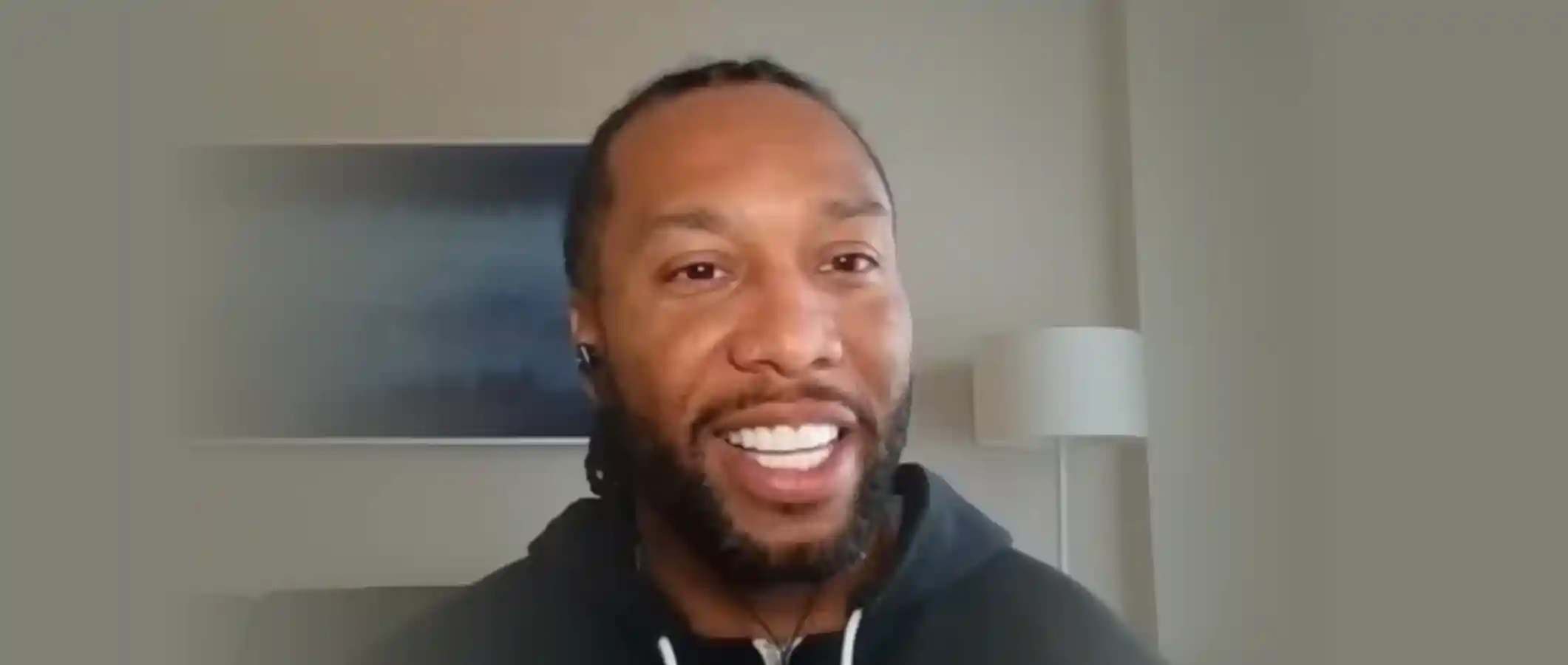
Originally published on December 7, 2021
Building consistency and durability over a long career starts with what you do when nobody is watching. In Episode 151 of the WHOOP Podcast, Larry Fitzgerald explains how early exposure to elite habits, hard structure, recovery discipline, and beginner's humility shaped 17 NFL seasons and a second act in business.
Fitzgerald finished his NFL career second all time in receptions and receiving yards, spent 17 seasons with the Arizona Cardinals, and built a reputation for reliability that extended far beyond Sundays. This conversation with host Will Ahmed is useful for anyone trying to sustain high performance, whether that means sport, parenting, travel, or leadership.
To listen to episode 151 in full, head to the WHOOP Podcast on YouTube.
What can you learn from watching professionals before you become one?
Early exposure can turn a distant goal into a daily standard. Fitzgerald says his years as a ball boy for the Minnesota Vikings mattered because they let him see the work behind game day, not only the results.
From ages 12 to 17, he watched Randy Moss, Cris Carter, John Randle, and other veterans prepare Monday through Saturday. That gave him a concrete picture of how elite players practiced, recovered, and repeated the same details for years. It also made the NFL feel reachable instead of abstract.
Fitzgerald framed that lesson this way:
“Most people only get a chance to really watch professionals. You only see the 66 that he posts during his round. You don't see all the grind that goes behind it. And I got a chance to see all of that work that was behind the scenes.”
That same respect for process shows up in other WHOOP Podcast episodes with Patrick Mahomes, who also described how repeated preparation helps performance hold up under pressure.
If you want to hear Fitzgerald unpack what he saw behind the scenes with Randy Moss and Cris Carter, listen to the full episode on Youtube.
What you should take away
- Seeing elite preparation up close can make high performance feel concrete and repeatable.
- Fitzgerald credits his ball boy years with teaching him that hidden work is what separates top performers.
- Process awareness started for Fitzgerald long before he entered the NFL.
How do hard environments build discipline that lasts?
That early look at professional habits set the stage for the next step, which was learning structure under pressure. Fitzgerald says Valley Forge Military Academy gave him routines that later helped him handle college football, film study, and adult responsibility.
He described the year and a half there as the toughest stretch of his young life. Waking at 5 a.m., living with strict rules, and spending mandatory evening hours in study hall helped him build the repetition he later relied on at the University of Pittsburgh and in the NFL.
As Fitzgerald put it:
“It was the toughest year and a half that I've had. Moving away from home for the first time, not really wanting to do it. Going to a military environment was very difficult for me to deal with.”
He links that structure to better study habits, faster play memorization, and a stronger ability to work through discomfort. That theme also echoes what Eli Manning shared about routine, mental training, and showing up for teammates.
If you want to hear Fitzgerald go deeper on Valley Forge Military Academy and the discipline it built, listen to the full episode on Youtube.
What you should take away
- Fitzgerald says strict structure helped him build study habits that carried into football.
- Discipline in sleep, study, and routine often starts before the biggest stage arrives.
- Hard environments can teach repeatable behaviors that still matter years later.
How did Larry Fitzgerald stay durable for 17 NFL seasons?
Once structure became habit, Fitzgerald turned it into longevity. He says durability came from moderation, body care, and finally paying closer attention to sleep.
He avoided heavy nightlife, stayed consistent with massage, chiropractic work, acupuncture, saunas, and cold tubs, and took seriously the idea that performance compounds over time. Fitzgerald also says WHOOP changed how he thought about sleep. After Kelvin Beachum introduced him to WHOOP, he started tracking nightly patterns more closely and noticed repeated disruptions that led him to address sleep apnea with a mouthpiece.
Fitzgerald gave one of the clearest examples in the episode:
“I was waking up 7 times a night just because of sleep apnea.”
That is a useful reminder that sleep problems can hide inside an otherwise high performing routine. WHOOP can show trends in Sleep and Recovery that help people spot issues worth discussing with a clinician, even though it does not diagnose sleep apnea. Fitzgerald also said travel consistency mattered so much that he had the same mattress delivered to road hotels, a level of repeatability that fits well with the sleep and routine focus discussed by Steve Weatherford.
If you want to hear Fitzgerald unpack sleep apnea, travel sleep, and the routines that supported his longevity, listen to the full episode on Youtube.
What you should take away
- Fitzgerald built durability through repeatable recovery habits, not occasional fixes.
- WHOOP helped Fitzgerald notice disrupted sleep patterns that pushed him to address sleep apnea.
- Consistent sleep setup, including during travel, was part of Fitzgerald's performance routine.
- Long careers often depend on moderation and daily body care more than dramatic changes.
Why did Larry Fitzgerald choose to become a beginner again in business?
The same mindset that supported longevity in football shaped Fitzgerald's post football life. Instead of assuming fame would transfer into expertise, he chose to start at the bottom and learn.
During his playing career, Fitzgerald accepted an internship at JPMorgan after meeting executive Frank Bisignano at a New York Knicks game. He spent time in private wealth management, estate planning, and on the bond floor, and he says that experience changed how he understood money, business, and founders.
Fitzgerald explained the value of that reset like this:
“You really do have to kind of just humble yourself and realize you just don't know. You don't have the expertise in these fields. And if you want to, this is where you have to start.”
That approach now informs his investing, philanthropy, and work across travel, hospitality, and business education. It also fits a larger pattern from the episode: consistency is easier to sustain when ego does not block learning.
If you want to hear Fitzgerald go deeper on his JPMorgan internship and founder investing, listen to the full episode on Youtube.
What you should take away
- Fitzgerald treated business education as a fresh craft, not as a shortcut created by fame.
- Starting as a beginner helped Fitzgerald build real knowledge outside football.
- Humility supported Fitzgerald's transition from athlete to investor and operator.
The bottom line
- Fitzgerald says hidden preparation, not public performance, is where long term excellence is built.
- Years as a Minnesota Vikings ball boy gave Fitzgerald a direct view of how elite players train and recover.
- Valley Forge Military Academy helped Fitzgerald build structure, study habits, and resilience that carried into the NFL.
- Fitzgerald credits moderation and routine body care as core reasons he stayed available across 17 seasons.
- WHOOP helped Fitzgerald notice repeated sleep disruptions that led him to address sleep apnea.
- Consistent travel sleep mattered enough to Fitzgerald that he arranged to sleep on the same mattress at home and on the road.
- Fitzgerald approached business the same way he approached football, by accepting beginner status and learning from the ground up.
Frequently asked questions about things discussed in this episode
How does WHOOP help you spot sleep issues that affect recovery?
WHOOP can surface repeat sleep disruption patterns through Sleep and Recovery trends. Fitzgerald said WHOOP helped him notice frequent nightly awakenings, which led him to address sleep apnea with a mouthpiece, but WHOOP does not diagnose sleep apnea.
What does WHOOP do for sleep consistency during travel?
WHOOP shows how travel habits affect Sleep and Recovery from one night to the next. That kind of feedback can help people test whether a familiar mattress, pillow setup, room temperature, or bedtime routine improves travel sleep.
How does WHOOP support long term durability?
WHOOP helps people connect daily behavior to readiness by tracking Sleep, Recovery, and Strain together. For someone following Fitzgerald's approach, that means using data to reinforce moderation, body care, and repeatable routines.
What does WHOOP measure that is useful for bedtime habits?
WHOOP measures sleep duration, sleep performance, and overnight recovery signals that help people evaluate their routine. Fitzgerald said paying attention to pillows, sleep setup, and bedtime habits became more important once he could see how sleep quality changed.
How does WHOOP fit into a routine built around consistency?
WHOOP works best when it becomes part of a daily feedback loop. Fitzgerald used it to pay closer attention to sleep quality, recovery patterns, and the behaviors that helped him feel more refreshed.
For people chasing Fitzgerald-level consistency, WHOOP can make the sleep, recovery, and routine patterns behind daily readiness easier to see and act on.