Topics
- Article
- Healthspan
- Longevity
- Aging
How Healthspan on WHOOP Helps You Optimize Longevity
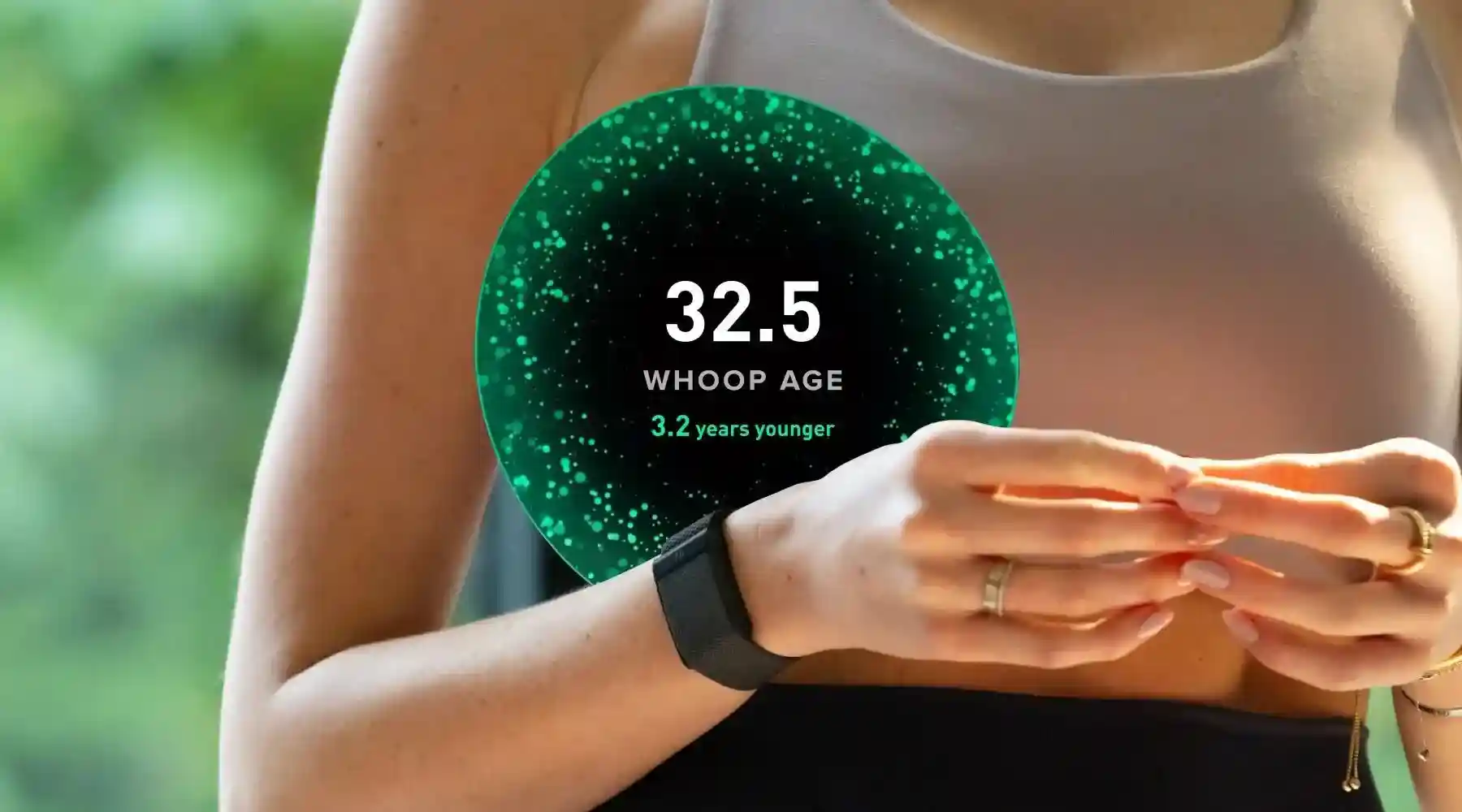
Life expectancy has risen worldwide, but people aren't necessarily living healthier for longer. Americans can expect to spend 15% of their lives in poor health, and by age 65, over 85% of individuals will live with at least one chronic condition. Decades of research have established clear relationships between lifestyle behaviors and physiological metrics with important health outcomes like morbidity and mortality. Healthspan, a feature introduced with the launch of WHOOP 5.0 and MG, interprets key WHOOP metrics in the context of this research, providing an unprecedented view of how daily behaviors impact long-term health.
What is healthspan?
Healthspan is the period of your life spent in good health, free from the chronic diseases and disabilities of aging. It focuses on the quality of your years, rather than just the quantity. This holistic perspective on longevity prioritizes your long-term vitality and well-being.
Healthspan vs. lifespan: what's the difference?
The key difference between healthspan and lifespan is a focus on quality versus quantity. While related, they measure two distinct aspects of a long life.
Healthspan measures the years lived in good health, focusing on the quality of life and vitality. The goal of healthspan is to minimize time spent with disease or disability.
Lifespan measures the total years lived, focusing on the quantity of years. The goal of lifespan is to maximize total age.
The "healthspan-lifespan gap" is the period you might live with preventable conditions. Closing this gap means adding more healthy, high-quality years to your life.
Why your healthspan matters
Focusing on your healthspan empowers you to take control of your aging process. It shifts the goal from simply living longer to living better for longer. Nearly 47% of WHOOP members cite "overall health improvement" as their primary goal. The Healthspan feature provides a clear answer to the questions, "How healthy am I?" and "Am I on the right track?" by providing transparent metrics and personalized coaching.
How WHOOP measures your healthspan
The Healthspan feature provides two key insights to help you understand and improve your long-term health. Both metrics update weekly, providing a continuous feedback loop on your progress.
- WHOOP Age: This is an estimate of your physiological age based on the last six months of individual health data. A WHOOP Age equal to your actual age means you're meeting the WHOOP recommendations for good long-term health. If your WHOOP Age is lower than your chronological age, it indicates your body is aging slower.
- Pace of Aging: This is a dynamic score ranging from -1x to 3x, based on the difference between your most recent 30-day averages for Healthspan metrics compared to your current WHOOP Age. -1x is optimal and means you're aging slower, while 1x or higher means your WHOOP Age is increasing faster, indicating potential health risks. Pace of Aging is more likely to exhibit changes on a week-to-week basis, while WHOOP Age is a slower-moving metric.
The Healthspan feature unlocks once you achieve 21 Recoveries in a 31-day period. You must have 21 Recoveries within every 31-day period for Healthspan to continue to update. In the initial first weeks after Healthspan is unlocked, WHOOP Age may exhibit more rapid changes on a weekly basis as it fully calibrates to behavioral and metric baselines.
The nine metrics that power your Healthspan
Healthspan combines nine science-backed metrics shown to relate to long-term health across sleep, activity, and cardiovascular fitness.
- Sleep consistency: Consistent sleep and wake times promote cognitive function, mental health, and cardiovascular health.
- Sleep duration: Sufficient sleep supports recovery, metabolic health, and brain function.
- Daily steps: Higher step counts are associated with a lower risk of cardiovascular mortality.
- Time in Heart Rate Zones 1–3: Moderate activity supports endurance and metabolic health.
- Time in Heart Rate Zones 4–5: High-intensity work improves cardiovascular fitness.
- Strength activity time: Regular strength work, from powerlifting to yoga, supports musculoskeletal and neuromuscular health.
- VO2 Max: A powerful predictor of long-term health and overall fitness.
- Resting heart rate: Lower RHR aligns with cardiovascular efficiency and autonomic balance.
- Lean body mass: Maintaining muscle mass is critical for bone density, metabolism, and long-term mobility.
How to use Healthspan to improve your long-term health
- Spot strengths and gaps: See which contributors are slowing down or speeding up your Pace of Aging.
- Adjust habits with coaching: Based on these insights into how everyday habits influence Healthspan metrics, incorporate lifestyle adjustments to promote long-term health. Examples of habit changes that can be supported by Healthspan include:
- Improve sleep habits → Enhance recovery and cognitive function.
- Increase daily movement → Lower risk of cardiovascular mortality.
- Incorporate strength training → Maintain muscle mass and metabolic health.
- Set sustainable goals: Healthspan offers actionable insights and individualized recommendations that suggest high-impact behaviors to improve longevity. Set goals and follow targeted recommendations tailored to your baseline.
- Make it a weekly ritual: Because Healthspan updates on Sundays, you get a natural rhythm for checking in, seeing what moved your Pace of Aging and adjusting for the week ahead. Notifications about updates and in-app coaching insights encourage consistent engagement.
Take control of your longevity with WHOOP
Healthspan on WHOOP represents a unique opportunity to bridge the gap between lifespan and healthspan. Whether your focus is preventing future health risks, optimizing fitness, or finding a science-based strategy for tracking longevity, Healthspan empowers you to take control of your aging and health. Ready to extend your prime for years to come? Join WHOOP and start optimizing your healthspan today.
Frequently asked questions about Healthspan
Can my WHOOP Age be younger than my actual age?
Yes. If your physiological metrics and lifestyle behaviors are stronger than what is typical for your age, your WHOOP Age can be lower than your chronological age. This is a key indicator that your habits are positively influencing your long-term health trajectory.
How long does it take to improve my Pace of Aging?
Pace of Aging is a dynamic metric that updates weekly based on your last 30 days of data. You can see changes in your Pace of Aging relatively quickly as you adopt healthier habits. Consistent positive changes in your behaviors will lead to a sustained improvement over time.
What is the single most important metric for improving Healthspan?
There is no single most important metric, as Healthspan is a holistic measure of your health. The feature will highlight which of the nine inputs offers you the biggest opportunity for improvement.
Healthspan: This feature is not available for users under the age of 18. This feature is for wellness purposes only and not for medical use.