Topics
- Article
- Health & Wellness
- Respiratory Rate
Why Your Respiratory Rate Matters — And How WHOOP Helps You Understand It
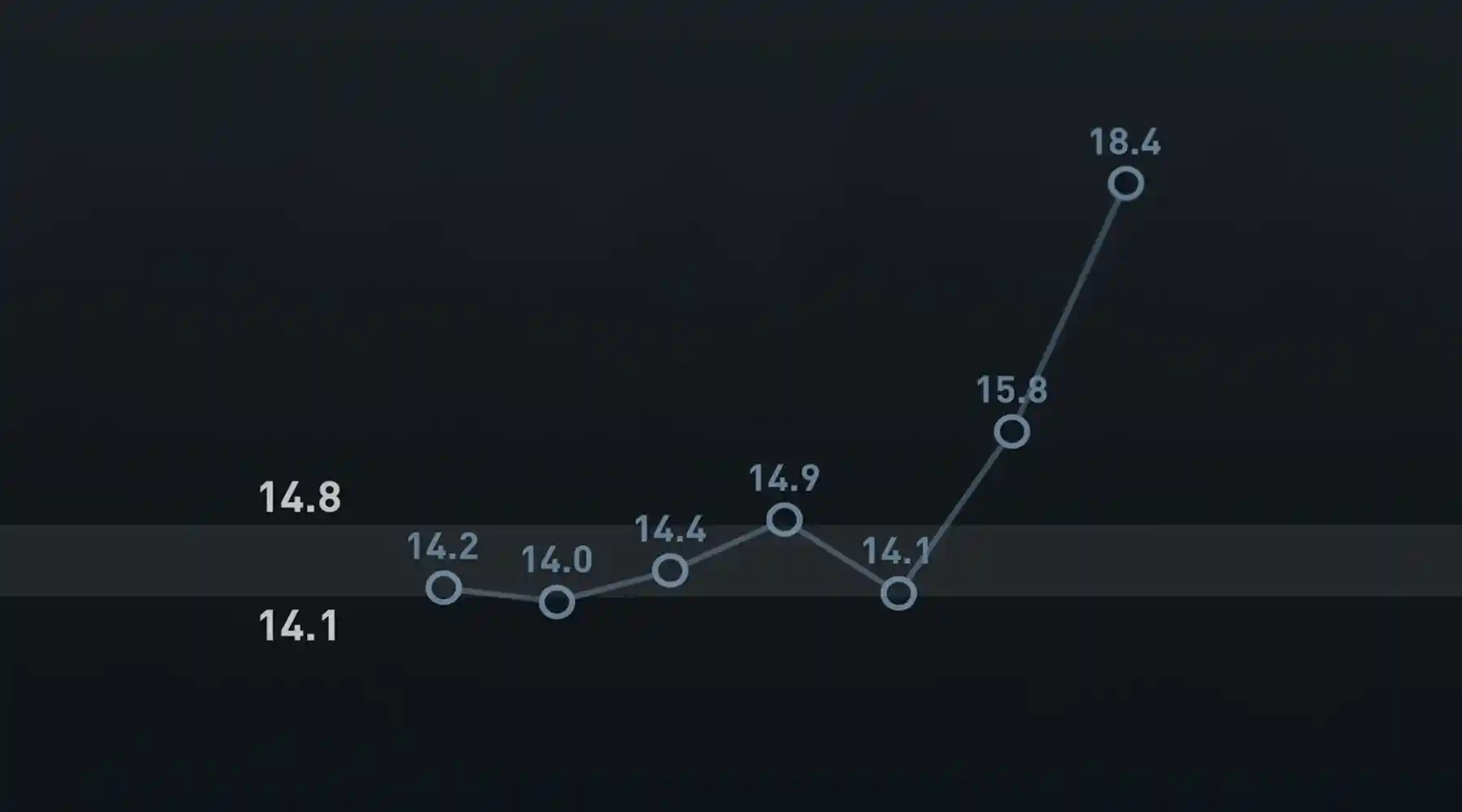
Respiratory rate refers to the number of breaths you take per minute. For most adults, a typical resting respiratory rate falls between 12 and 20 respirations per minute. While that range might sound broad, respiratory rate is remarkably stable in most individuals — far more so than many other physiological metrics. That’s precisely what makes it so powerful: when it changes, it might signal that something is happening in your body.
How WHOOP monitors respiratory rate and more
WHOOP measures respiratory rate during sleep, using a phenomenon called Respiratory Sinus Arrhythmia — where your heart rate slightly increases when you inhale and decreases when you exhale. This method provides a consistent, reliable read on how many breaths you're taking per minute overnight. WHOOP is the first wrist-worn wearable to have the accuracy of its respiratory rate third-party validated in a peer-reviewed publication.
WHOOP tracks this metric alongside others like heart rate variability (HRV), resting heart rate (RHR), blood oxygen levels, and skin temperature, all of which are viewable in Health Monitor.
WHOOP uses these metrics to calculate your scores such as Recovery. Changes in respiratory rate can affect recovery, with increased respiratory rate contributing to lower Recovery. In addition, Health Monitor gives you a daily snapshot of these signals, helping you easily see what’s in range, and sometimes more importantly, what’s not. Because WHOOP learns your unique baseline over time, it can flag subtle but potentially important changes.
Why respiratory rate matters
Respiratory rate tends to remain a consistent metric. Any unexplained deviation from your personal baseline can be one of the earliest indicators that something may be off.
Elevated respiratory rate has been associated with a variety of potential causes, such as:
- Dehydration
- Elevated stress levels
- High-altitude exposure
- Alcohol consumption
- Intense exercise
- Medical conditions such as viral respiratory infections (e.g., COVID-19, influenza, bronchitis), asthma exacerbations, or heart-related conditions
WHOOP is not a medical device and does not diagnose illness. However, it can provide meaningful early insights. When your respiratory rate is off, you might want to get checked out, particularly if you aren’t feeling well.
Take the story of professional golfer Nick Watney. In June 2020, Nick noticed a sudden but dramatic jump in his respiratory rate from his usual.
“I checked the [WHOOP] data and my respiratory rate had gone up. I’m usually in the low 14s [and it had gone up] to the low 18s,” Nick told us on the WHOOP Podcast.
Concerned, he withdrew from a PGA Tour event and sought out medical testing. That testing came back positive for COVID-19. Nick’s story reflects a powerful reality: when you know your baseline, you know a lot more about what’s going on inside your body. Not every variation from your baseline will mean you’re sick, or that you need to change your routine. But you’re more empowered to pay attention to whether something may be wrong and get checked out sooner than you otherwise might.
Your baseline matters more than the numbers
When it comes to metrics like respiratory rate, what’s "normal" varies from person to person. That’s why comparing your numbers to others — or even to standard ranges — isn’t always helpful. Instead, the most powerful insights come from understanding your own baseline.
WHOOP personalizes every data point, learning what’s typical for you so you can identify unexpected deviations that may require more attention. If something looks off, it might be a signal to check in with yourself, or your doctor. Whether it’s an early sign of illness or just a cue that you should focus on your hydration or recovery, knowing your baseline gives you a clearer window into your health and well-being.
Daily, personalized insights from WHOOP mean you're never guessing where you stand. With a consistent understanding of your baseline, you're not just monitoring, you’re learning to listen to your body in a deeper, more meaningful way.