Topics
- Article
- Sensors
- Metrics
Skin Temperature: What It Means and How to Monitor Changes
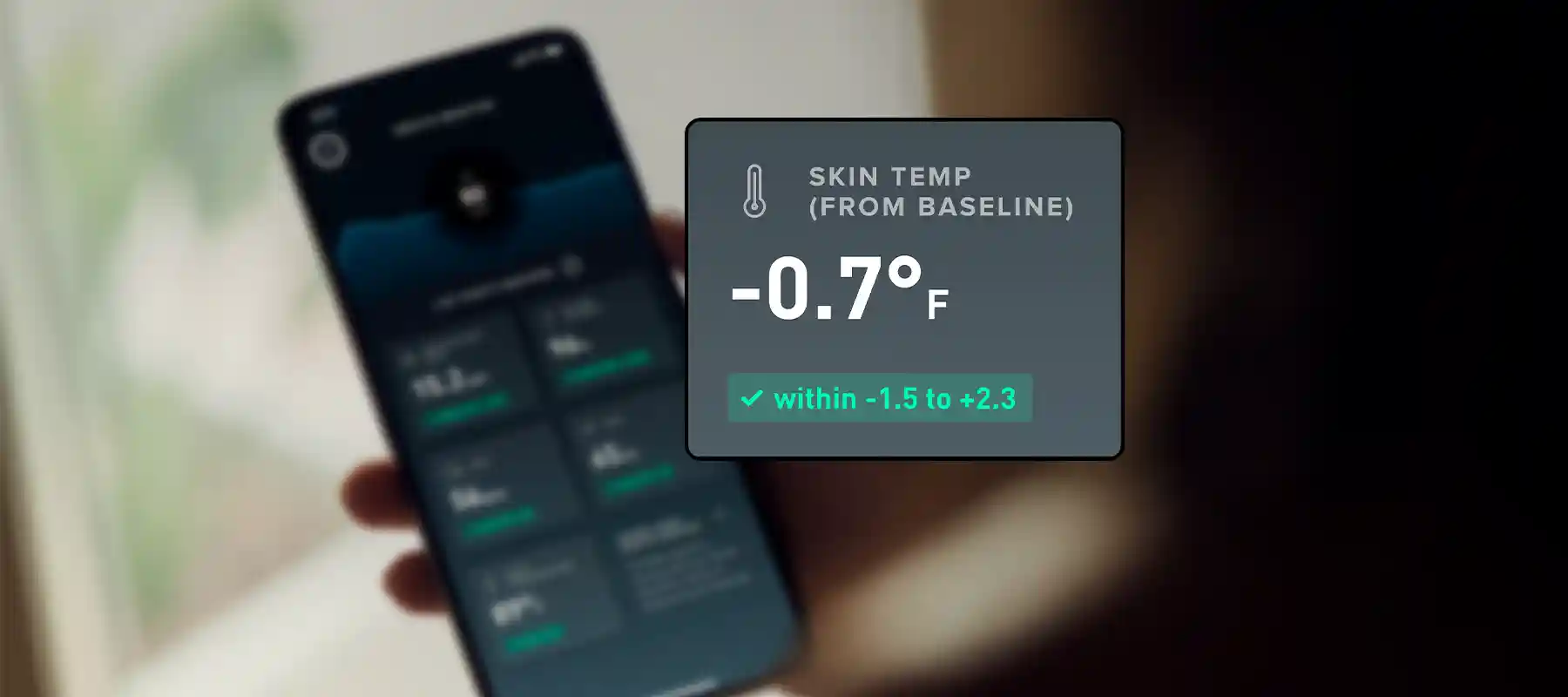
Skin temperature is a measurement of the heat in the outermost surface of the body. It can be significantly lower than your core temperature in the limbs and extremities. Understanding how your skin temperature fluctuates and what it means can provide valuable insight into your recovery, sleep quality, and overall health.
By tracking your skin temperature trends over time, you can better interpret your body's signals and make informed decisions that support your long-term health.
How your skin helps regulate body temperature
Your skin is your largest organ, making up approximately 15% of your total weight. The surface volume of skin means there are regional variations in temperature. The skin of your fingers and toes may be drastically lower from the temperature taken on your forehead.
Having such large surface volume means that your skin plays a significant role in regulating your body temperature. This is called thermoregulation and allows your body to preserve or discharge heat based on its needs.
For example, as you near your normal bedtime, your circadian rhythm cycle prepares your body by drawing heat away from the core, slowing your activity level and lowering your metabolism. This action allows your core temperature to slowly decrease, starting the sleep cycle, and prepares the body for other natural processes such as producing hormones, cell regeneration and immune system responses.
Additionally, in cold conditions your body can draw heat away from the skin to keep your core temperature stable.
What is a normal skin temperature?
Normal skin temperature for healthy adults ranges between 92.3 and 98.4 Fahrenheit or 33-37 Celsius, far lower than the 98.6 F average core temp. Changes in skin temperature may indicate potential illness or injuries.
What does a high or low skin temperature mean?
High skin temperature may indicate fever or illness, but it may simply mean you are too close to a heat source, or you had too many blankets over you while you slept. Working out may also temporarily affect skin temperature.
Significantly low skin temperature may mean you are suffering from hypothermia, and the body is drawing off surface heat to keep your core temperature high. But, low skin temperatures may also be less serious. You could be sitting in a chilly room or too close to an air conditioner.
What factors influence your skin temperature?
Your skin temperature is dynamic and responds to both your internal state and your external environment. Several key factors can cause it to fluctuate:
- Illness or fever: An elevated skin temperature can be one of the first signs that your body is fighting off an illness.
- Sleep environment: A room that is too hot or cold, or even the number of blankets you use, can directly impact your skin temperature overnight.
- Exercise: Strenuous activity can temporarily raise skin temperature as your body works to dissipate heat.
- Menstrual cycle: For those who menstruate, skin temperature often fluctuates predictably throughout the different phases of the cycle.
Understanding these influences helps you better interpret changes in your data and distinguish between a normal variation and a trend that might need your attention.
How to monitor skin temperature with WHOOP
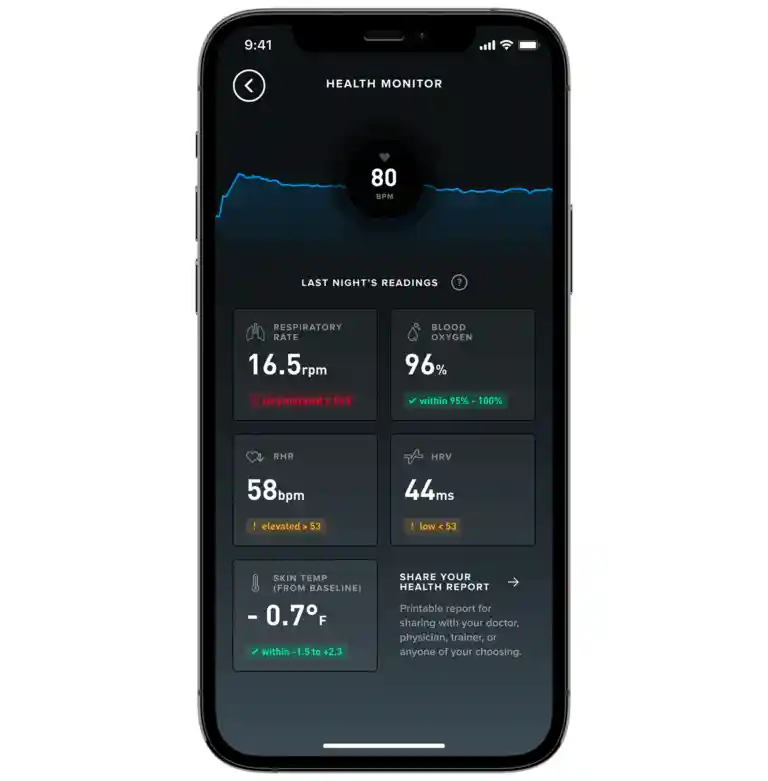
WHOOP includes a skin temperature sensor that allows you to track your daily skin temperature in the Health Monitor feature. WHOOP uses data from your previous 90 nights to personalize a baseline for your skin temperature.
You can use the data in conjunction with Sleep Planner to experiment with factors while you sleep to see if those changes help you sleep comfortably. For example, if your skin temperature registers as high even on cold nights, you might consider taking off a blanket or turning on a fan.
The Health Monitor lets you view all of your personal metrics in a single location, including skin temperature, live heart rate, HRV, resting heart rate, pulse oximetry and respiratory rate.
Understand your body's trends to optimize your health
Your daily skin temperature is another piece of the puzzle, giving you insight into how your body is adapting to sleep, strain, and potential stressors.
Frequently asked questions about skin temperature
What does my daily skin temperature tell me?
Your daily skin temperature provides a valuable look into your body's recovery and readiness, alongside HRV. When measured consistently during sleep, deviations from your personal baseline can indicate potential illness, changes in your sleep environment, or shifts in your menstrual cycle, helping you connect your data to how you feel.
What skin temperature indicates a fever?
While skin temperature is not the same as a core body temperature measurement taken with a thermometer, a sustained increase above your personalized baseline can be an early indicator of a fever or that your body is fighting an illness, especially when your respiratory rate shifts at the same time.
How is skin temperature different from core body temperature?
Core body temperature is the temperature of your internal organs, which your body keeps within a very narrow range. Skin temperature is the temperature at the surface of your body. It is typically lower and fluctuates more widely as it helps regulate your core temperature by releasing or preserving heat.
Can my menstrual cycle affect my skin temperature?
Yes, skin temperature typically changes in response to hormonal fluctuations during the menstrual cycle. It is often lower during the follicular phase and rises after ovulation during the luteal phase.
The products and services of WHOOP are not medical devices, are not intended to diagnose COVID-19, the flu or any other disease, and should not be used as a substitute for professional medical advice, diagnosis or treatment. All content available through the products and services of WHOOP is for general informational purposes only.