Topics
- Article
- Mental Health
- Sleep
- Stress
Sleep and Mental Health: WHOOP Data on Recovery, Stress
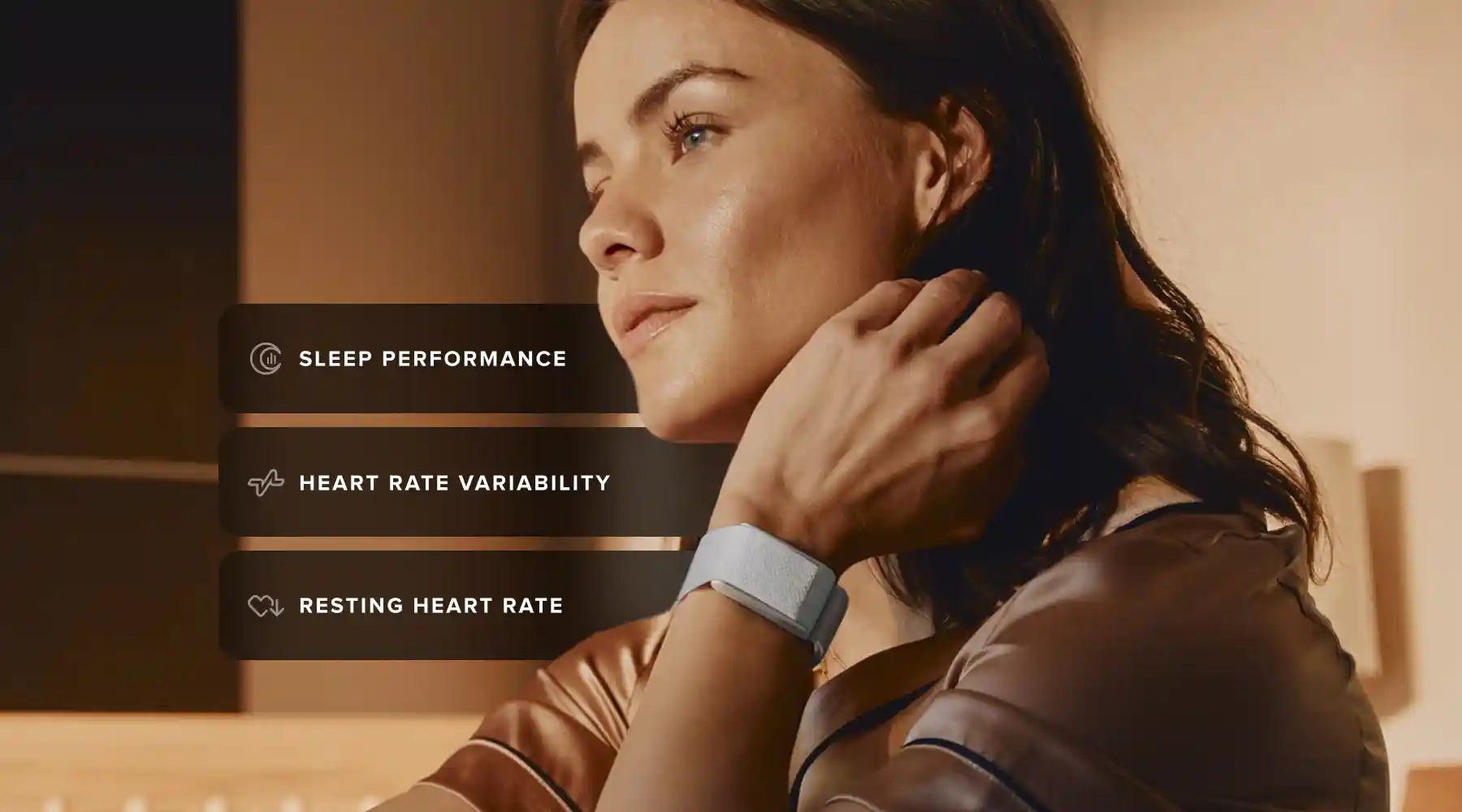
If you've ever noticed you feel more anxious after a night of broken sleep, or that stress lingers in your body long after a tough day, you're not imagining it. The connection between sleep and mental health is real, measurable, and deeply rooted in your physiology. This article explores how sleep patterns, recovery metrics, and stress levels interact to shape your mental well-being.
The connection between sleep and mental health
The relationship between sleep and mental health is bidirectional. Poor sleep can make you feel more irritable, anxious, or low, while stress and anxiety can disrupt your ability to fall asleep and stay asleep. Understanding this physiological connection is the first step toward breaking the cycle.
Your body provides the data you need to see how your mental state and sleep patterns influence each other. This insight creates a clear path to improvement.
How poor sleep impacts your mental state
When you don't get enough sleep, your brain's ability to process emotions becomes impaired. Lack of sleep heightens activity in the amygdala, your brain's emotional control center, making you more reactive to stressors. This can manifest as increased anxiety, irritability, or low mood.
Sleep deprivation also impacts cognitive functions like focus and decision-making. These responses are measurable changes in your body that reflect the connection between rest and resilience.
What WHOOP data shows about your physiology and mental well-being
In a peer-reviewed study published in the Journal of Medical Internet Research, WHOOP researchers analyzed over 300,000 monthly mental health surveys from more than 170,000 WHOOP members over 13 months. They linked these surveys to 7.9 million days of biometric data to understand how sleep patterns, Resting Heart Rate (RHR), and Heart Rate Variability (HRV) relate to stress, anxiety, and depression. The findings confirm what many people intuitively feel: our bodies and minds are in constant conversation.
The big picture: your physiology reflects how you feel
This study looked at three key self-reported mental health markers:
- Stress (via the Perceived Stress Scale)
- Anxiety (via the GAD-2 survey)
- Depression (via the PHQ-2 screening tool)
Then researchers compared those results to WHOOP data like:
- Sleep timing and consistency
- Heart Rate Variability (HRV)
- Resting Heart Rate (RHR)
- Physical activity (based on heart rate zones)
WHOOP members who showed more consistent sleep, higher HRV, and lower RHR were more likely to report lower stress, anxiety, and depression symptoms.
Sleep is more than hours, it's timing
When it comes to mental health, sleep consistency may matter just as much as duration. People who went to bed and woke up at roughly the same time each day reported better mental health outcomes. Higher variability in sleep and wake times aligned with poorer psychological well-being.
Your Recovery Score tells more than you think
Higher HRV and lower RHR were both associated with healthier reports of mental well-being. HRV is one of the clearest indicators of how your autonomic nervous system adapts to stress, while RHR reflects your cardiovascular efficiency. In this study, these two metrics were consistently aligned with lower levels of anxiety, depression, and perceived stress.
Reports of Stress predict physiological changes
When WHOOP members reported feeling stressed, it was often followed by noticeable changes in their physiological metrics:
- Increase in RHR
- Decrease in HRV
- More variability in sleep and wake times
These findings suggest that subjective reports of stress can predict physiological disruptions. WHOOP data serves as an indicator of when you're experiencing stress.
How to use WHOOP to support your mental well-being
Mental health isn't just about what's happening in your mind — it's reflected in your body too. This study found that better sleep habits, stronger recovery signals, and consistent routines were all tied to better mental health. WHOOP helps you understand how you're doing, holistically.
Here's how WHOOP helps you support both body and mind:
- Sleep Planner helps build healthier bedtime routines and better rest
- Recovery Scores, HRV, and RHR trends reveal how your body is adapting to life stressors
- The Journal helps you log and track mood, stress, and habits — so you can connect how you feel with how your body responds
- Stress Monitor observe your stress level in real time
- Weekly Plan set goals to keep yourself accountable across behaviors, activities, and habits
Whether you're feeling great or going through a challenging stretch, WHOOP gives you the insights to recognize patterns and make small adjustments. You gain more control of your well-being.
Taking control of your health
Understanding the link between your physiology and your mental state is powerful. It moves the conversation from guessing how you feel to knowing why you feel that way. By monitoring your sleep, recovery, and stress, you can make targeted changes to your daily routines that lead to improvements in your mental well-being.
Frequently asked questions about sleep and mental health
How much sleep do I need for good mental health?
Sleep needs vary from person to person. WHOOP calculates your personal Sleep Need each day based on your recent activity, accumulated sleep debt, and circadian rhythm. Meeting your daily Sleep Need ensures you get enough rest to support both physical and mental recovery.
Does the timing of my sleep matter more than the duration?
Both are critical. Sleep consistency — going to bed and waking up around the same time each day — is strongly linked to better mental health outcomes because it regulates your body's internal clock. However, consistency alone isn't enough if you're not getting sufficient duration to meet your body's needs.
Can WHOOP tell me if I am stressed or anxious?
WHOOP is not a medical device and cannot diagnose conditions like anxiety. The Stress Monitor feature quantifies the physiological stress your body experiences by analyzing heart rate and HRV. Your Stress score reflects your body's state, not a specific emotion or diagnosis.
What is the most important sleep stage for mental recovery?
Both REM and Deep Sleep (Slow Wave Sleep) play vital roles. Deep Sleep supports physical restoration, while REM sleep is crucial for cognitive functions like memory consolidation and emotional processing. A healthy night includes multiple cycles of both stages, and both contribute to feeling mentally refreshed.