Topics
- Post
- Health & Wellness
- Member Stories
How to transform your health and habits after 40 with Rich Roll
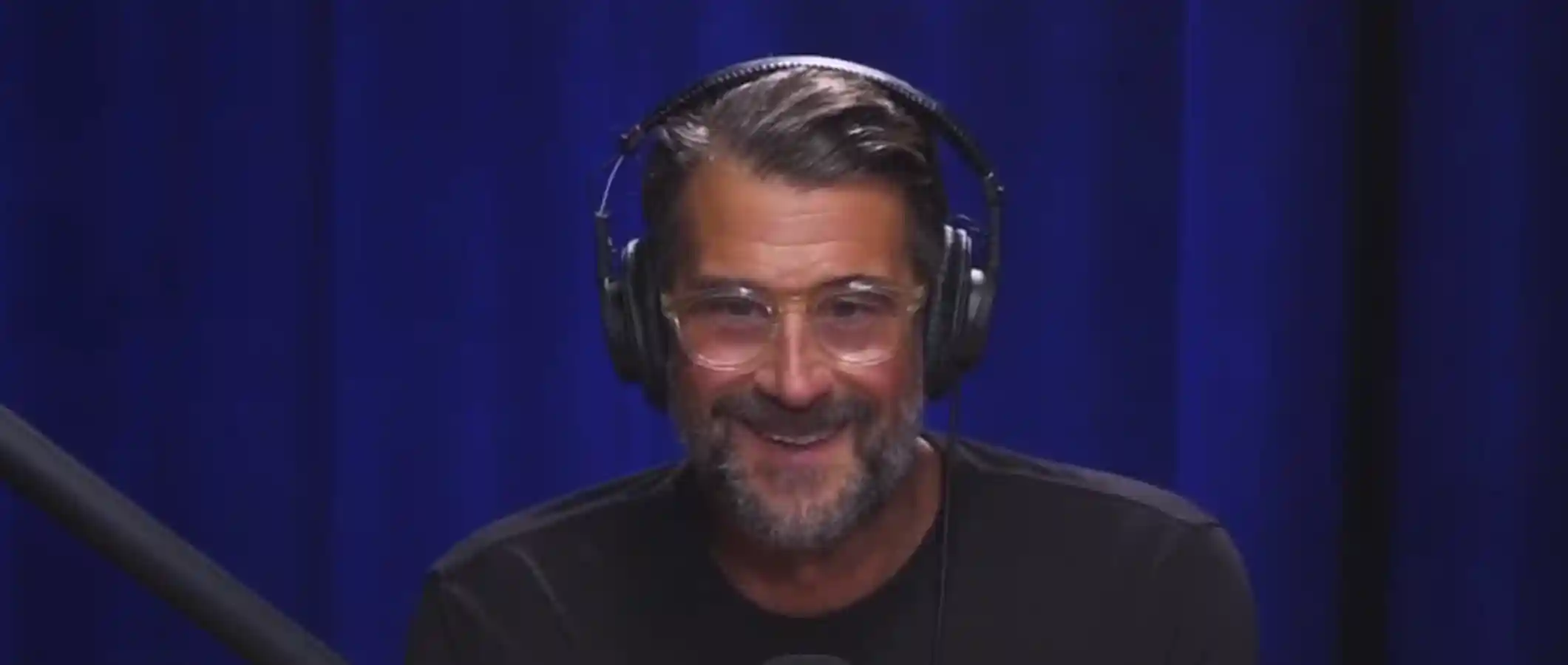
Originally published on October 26, 2021
Changing your health after 40 starts with honest self-assessment, repeatable habits, and enough patience to let small actions compound. In Episode 146 of the WHOOP Podcast, Rich Roll explains how he moved from addiction and burnout to sobriety, endurance sport, and a career built around purpose.
Roll is an ultra-endurance athlete, bestselling author of Finding Ultra, and host of the Rich Roll Podcast. His conversation with Will Ahmed covers what it means to become teachable, how diet and training reshaped his energy, why sleep became central to his recovery, and how to tell when ambition is helping you versus driving you off course.
To listen to episode 146 in full, head to the WHOOP Podcast on YouTube.
How do you know when your life needs a real reset?
A real reset usually starts when your current pattern becomes impossible to defend. For Roll, that point came when alcohol had stripped away his relationships, stability, and ability to function well at work.
Roll said he knew early that his relationship with alcohol was different from that of his peers, but denial let that knowledge sit in the background for years. He kept moving forward through Stanford University, law school, and a prestigious legal career while his drinking escalated. By the end, the gap between outward competence and internal collapse had become too large to ignore.
Roll described the cost in practical terms, not abstract ones:
"At the end of my drinking career, I was drinking round the clock [...] I was sleeping on a bare mattress on the floor of a crappy apartment in Los Angeles on the precipice of losing my job and facing potential jail time for multiple DUIs."
That level of detail matters because it shows what a turning point often looks like. It is usually less about a single dramatic moment and more about accumulated damage, what Roll called "death by a thousand cuts." Pain forced clarity, and clarity finally made change feel less frightening than staying the same.
If you want to hear Roll unpack addiction, denial, and the cost of waiting too long, listen to the full episode on Youtube.
What you should take away
- A reset often starts when daily life becomes harder to manage than the uncertainty of change.
- High achievement can hide serious health or behavior problems for a long time.
- Self-awareness without action rarely changes a destructive pattern.
- Accumulated consequences can create the urgency that finally makes change possible.
What does it mean to become teachable?
Once Roll accepted that his old pattern was failing, the next step was learning how to stop trusting only his own instincts. He argues that becoming teachable means admitting that your current thinking may be the thing keeping you stuck.
At 31, Roll checked himself into treatment and stayed for 100 days. He describes that period as deeply humbling, especially for someone who had long identified as smart, accomplished, and self-directed. The value of that experience was not only sobriety itself. It was the realization that his best thinking had brought him to a place he never wanted to revisit.
Roll framed that lesson with a number that gives the moment weight:
"At 31, I made the decision to check myself into a treatment center [...] and that was a place that I made my home for 100 days."
From there, teachability became a daily practice. Roll still measures it by how he reacts when someone offers a worldview he does not share. Curiosity, restraint, and willingness to absorb useful feedback matter more than winning the exchange. He connects that habit to both personal growth and healthier public discourse.
For Roll's full take on humility, recovery, and staying open to new ideas, listen to the full episode on Youtube.
What you should take away
- Teachability starts when you stop assuming your current framework is enough.
- Humbling experiences can create the conditions for lasting change.
- Feedback is more useful when you can hear it without treating disagreement as a threat.
- Long-term growth depends on staying open to new ideas after the crisis has passed.
How can tiny habits change your health after 40?
After sobriety came another reckoning. Roll reached 40 feeling lethargic, overweight, and disconnected from his body, and he says the path back began with small daily actions, not a single breakthrough.
He described entering that period about 50 pounds overweight and dealing with a health scare shortly before his 40th birthday. The first major shift was dietary. Roll moved to a plant-based approach and quickly noticed a rise in energy, which made exercise feel possible again. That energy supported training, training supported weight loss, and better health fed more motivation. The loop strengthened because each gain made the next choice easier.
His clearest description of the starting point is still the most useful one:
"I was on the precipice of turning 40 and found myself 50 pounds overweight and just really lethargic, unhappy with this career that I had chosen."
Roll is careful not to present this as an overnight transformation. He keeps returning to process, patience, and what he calls microscopic improvements. The habit that helped him most was approaching food with more mindfulness, then stacking movement, consistency, and recovery on top of that base. His mantra, "mood follows action," captures the sequence. You take the action first, then let the emotional reward catch up.
People interested in how later-life change can keep building over time may also like Roll's later WHOOP Podcast conversation on meditation, growth, and connection.
If you want to hear Roll go deeper on plant-based eating, energy, and the first stages of training, listen to the full episode on Youtube.
What you should take away
- Health changes after 40 can start with one practical shift, such as changing how you eat.
- Small daily actions create momentum faster than waiting for perfect motivation.
- Extra energy from better habits often makes exercise easier to sustain.
- Patience matters because microscopic improvements can still change your life trajectory.
When is it time to take a leap into a new career?
As Roll's health improved, his professional identity started to change too. He did not leave law in a single jump, and that gradual exit is one of the most grounded parts of his story.
Roll continued practicing law for years while building a different life around training, writing, and eventually media. He reduced legal work step by step, then closed the door fully when his first book came out in 2012. He argues that major changes require both courage and responsibility. If you grip too tightly to a path that is no longer working, nothing new can enter. At the same time, an abrupt leap without self-knowledge or practical planning can create fresh instability.
Roll put the tension this way:
"You're not allowing anything new to come into your life if you're holding on too tightly to the thing that's not working."
He also makes a deeper point that often gets skipped in career advice. Before trusting an impulse to start over, you need enough internal clarity to know whether that impulse comes from purpose or from unresolved turmoil. For him, that meant years of work through Alcoholics Anonymous, therapy, journaling, meditation, yoga, and conversations with people whose judgment he trusted.
That theme connects with other WHOOP Podcast episodes on identity and performance, including Rich Diviney on control, resilience, and microrecoveries and Steve-O on recovery, meditation, and building a different life.
If you want to hear Roll unpack career pivots, self-trust, and leaps of faith, listen to the full episode on Youtube.
What you should take away
- Career change is often more durable when it happens through a planned transition.
- Internal work can help you distinguish a useful instinct from a reactive escape.
- Letting go of an identity takes as much effort as building a new one.
- Responsible risk still requires a point where you accept uncertainty and move.
What actually improves recovery for endurance training?
By the time Roll was deep into endurance sport, recovery had become the limiting factor. His answer is direct: sleep is the first place to look, then use data as a tool to sharpen intuition instead of replacing it.
Roll's training history helps explain why this matters. As a swimmer in the 1980s, he grew up in a volume-heavy system with little objective feedback beyond how tired he felt. He learned to read effort closely, but he also learned how easy it is to drift into exhaustion when intuition is your only guide. Later, while training for ultra-endurance events, he crossed that line again. In 2011, he overtrained, became too lean, had to stop racing, and relapsed briefly after 13 years of sobriety. For him, imbalance in training and imbalance in life were connected.
That is why Roll values tools such as WHOOP for tracking Sleep, Recovery, HRV, and resting heart rate. He describes checking his data after a poor night and sometimes finding that his body is in better shape to train than his mood suggests. He also warns against treating any wearable as destiny. Data can inform a warmup, a recovery plan, or a day of caution. It should not become a self-fulfilling prophecy.
Roll's strongest recovery statement is simple and specific:
"There's nothing better than sleep. Sleep is, in my opinion, the best recovery tool available and it's totally free."
His own sleep routine is unusually committed. He sleeps outside in a tent, uses cold outdoor air, a weighted blanket, and a sleep mask, and keeps experimenting with what helps him sleep best. The principle matters more than the exact setup. Protect sleep first, then use feedback to understand whether your training load and recovery are in balance. Readers who want more on how objective recovery data can shape training might also like Rich Froning on training with red Recoveries and Dr. Bob Arnot on Recovery, HRV, and aging.
For Roll's full take on sleep, recovery, and using data without becoming dependent on it, listen to the full episode on Youtube.
What you should take away
- Sleep is the first recovery habit to fix when training starts to outpace adaptation.
- Wearable data is most useful when it sharpens intuition instead of replacing it.
- Overtraining can spill into other parts of life when physical stress and emotional stress pile up together.
- Recovery determines how often and how well you can train, not just how rested you feel today.
The bottom line
- Rich Roll's health transformation began when the pain of staying the same became greater than the uncertainty of change.
- Roll spent 100 days in treatment at age 31, and he credits that humbling experience with making him teachable.
- The phrase "mood follows action" summarizes Roll's approach to behavior change, where small actions come before motivation.
- Roll reached age 40 about 50 pounds overweight, then rebuilt his energy through diet, movement, consistency, and patience.
- A gradual career exit helped Roll move from law into writing and podcasting without turning one crisis into another.
- Roll says recovery is where athletic progress actually happens, because adaptation occurs between workouts.
- Sleep is Roll's highest-priority recovery tool, and he structures his environment aggressively to protect it.
- WHOOP data fits Roll's training philosophy best when it helps calibrate intuition around Sleep, Recovery, HRV, and readiness.
Frequently asked questions about things discussed in this episode
How does WHOOP help you spot patterns that make training feel harder than expected?
WHOOP helps you compare subjective fatigue with objective trends in Sleep, Recovery, HRV, resting heart rate, and Strain. That makes it easier to see whether a hard day is tied to poor sleep, cumulative training load, or a broader routine issue.
What does WHOOP track if sleep is your main recovery priority?
WHOOP tracks sleep duration, sleep need, sleep consistency, and recovery-related signals that help you understand how well sleep is supporting training. Those trends can show whether your bedtime habits are matching the demands of your workouts and daily stress.
How does WHOOP fit with the idea that mood follows action?
WHOOP gives you a daily read on physical readiness, while your actions still shape the longer trend. That pairing can help you keep taking small, useful steps even when motivation is low, then evaluate how those choices affect recovery over time.
What does WHOOP do for people trying to change their health after 40?
WHOOP turns daily behaviors into visible patterns, which is useful when progress is gradual. Sleep, training load, and recovery trends can help you see whether your new habits are building momentum or creating more stress than expected.
How does WHOOP help balance intuition with data?
WHOOP gives you data that can confirm or challenge how you feel, which is exactly how Roll describes using it. A poor mood does not always mean your body is unprepared, and a good mood does not always mean recovery is complete.
What does WHOOP show when recovery starts limiting performance?
WHOOP shows recovery strain through trends in Recovery, HRV, resting heart rate, and sleep performance. Those signals can help you catch the buildup of fatigue before it turns into a longer stretch of underperformance.
For a story built on patience, recovery, and honest self-assessment, WHOOP makes it easier to see whether your daily choices are moving you toward better health after 40.